New GPU Software Boosts Astronomy Data Processing Speed Seven Hundredfold
A newly developed differentiable pipeline enables direct propagation of measurement derivatives to characterize survey systematics in space telescope data.
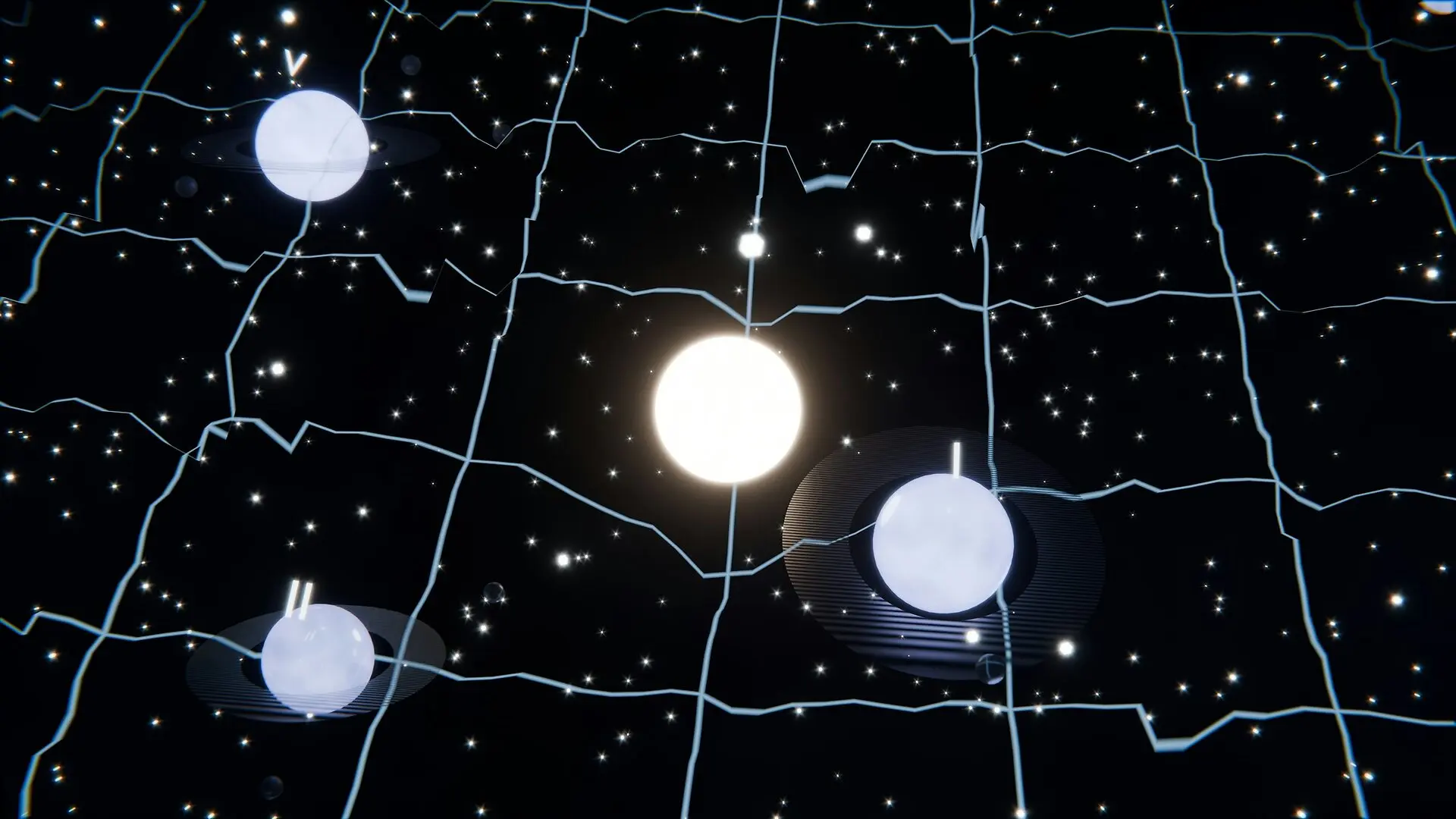
A new graphics processing unit accelerated software pipeline achieves a seven hundredfold boost in data processing speed for the Spectro-Photometer for the History of the Universe, Epoch of Reionization, and Ices Explorer mission. James Cheshire and colleagues at the California Institute of Technology developed the system, which couples a forced-photometry measurement operator named Hesperos with a spectrophotometric forward model named Eosphoros. Implemented as differentiable JAX programs running on graphics processing units, the framework models how instrumental systematics propagate through the full data reduction pipeline.
Modern cosmological surveys like SPHEREx face immense challenges when measuring large-scale structures to constrain local primordial non-Gaussianity, a faint signal that can easily be mimicked by observational artifacts such as Galactic dust extinction or stellar contamination. Traditional data cleaning relies on empirical template deprojection or synthetic source injection, which can introduce biases due to imperfect matching between proxies and real sky conditions. The new JAX-based framework, published in the arXiv preprint server, avoids these limitations by making the entire photometric measurement and redshift estimation chain mathematically differentiable.
How Do Hesperos And Eosphoros Accelerate Astronomical Data Processing?
The measurement operator Hesperos reorganizes the traditional windowed weighted least-squares fitting problem into a batched linear system solved via Cholesky decomposition on graphics hardware. By dividing detector exposures into uniform buckets and padding small source windows, the software avoids slow iterative loops. Benchmarked on thousands of exposures, a single NVIDIA GH200 node sustains nearly thirty thousand exposures per hour in point-source mode, while a four-graphics-unit Blackwell node reaches about eighty-five thousand exposures per hour. This performance represents a roughly seven hundredfold increase in throughput per compute allocation compared to previous central processing unit architectures.
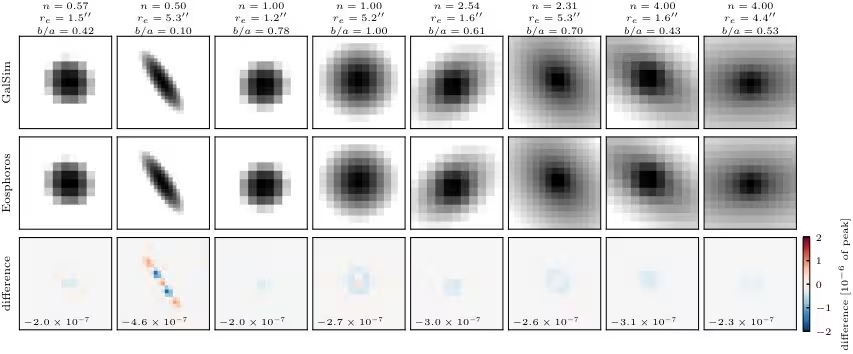
Meanwhile, the forward model Eosphoros renders synthetic sources into detector frames while incorporating spatial and spectral coupling from linear variable filters. These specialized filters map wavelengths across detector arrays, meaning that tiny astrometric shifts directly alter the recovered spectral properties and redshift estimates of distant galaxies. By separating discrete geometry from continuous sub-pixel positioning with smooth deposition kernels, the authors ensured that automatic differentiation flows reliably through the rendering and measurement steps.
What Does The Pipeline Reveal About Instrument Misalignments?
When the researchers composed the forward model and measurement operator to test an astrometric perturbation, the system successfully quantified the downstream impact on galaxy density fields without requiring expensive Monte Carlo simulations. The pipeline detected a highly significant response of roughly one hundred ninety-five to three hundred sigma across detector arrays when comparing scenes rendered with a pre-flight ray-traced point spread function against data-derived effective point spread functions. This discrepancy highlighted an unmodeled optical mismatch in early calibration files.
Furthermore, the authors demonstrated that the calculated derivatives can marginalize over systematic offsets during flux recovery, successfully eliminating biases in measured source fluxes across various signal-to-noise regimes. The entire first-year survey dataset containing over one million exposures was reprocessed in a fraction of a day using the new tools. These capabilities pave the way for gradient-based sampling techniques and advanced Bayesian treatments of survey systematics in future cosmological analyses.
The study was posted to the arXiv preprint server on November 24, 2026.
This article has been fact checked for accuracy, with information verified against reputable sources. Learn more about us and our editorial process.
Last reviewed on .
Article history
- Latest version
Reference(s)
- Cheshire, James. “Hesperos & Eosphoros: A Coupled Differentiable Forced-Photometry Operator and Forward Model for SPHEREx Spectrophotometry.” arXiv.org <http://arxiv.org/abs/2611.33092v1>.
Cite this page:
- Posted by Karan Das