Why Juvenile Salmon Face Severe Predation Risks Far Upstream in California Rivers
A five-year study across a 130-kilometer migration corridor reveals that nonnative bass consume young Chinook Salmon almost exclusively in upstream tributaries rather than the delta.
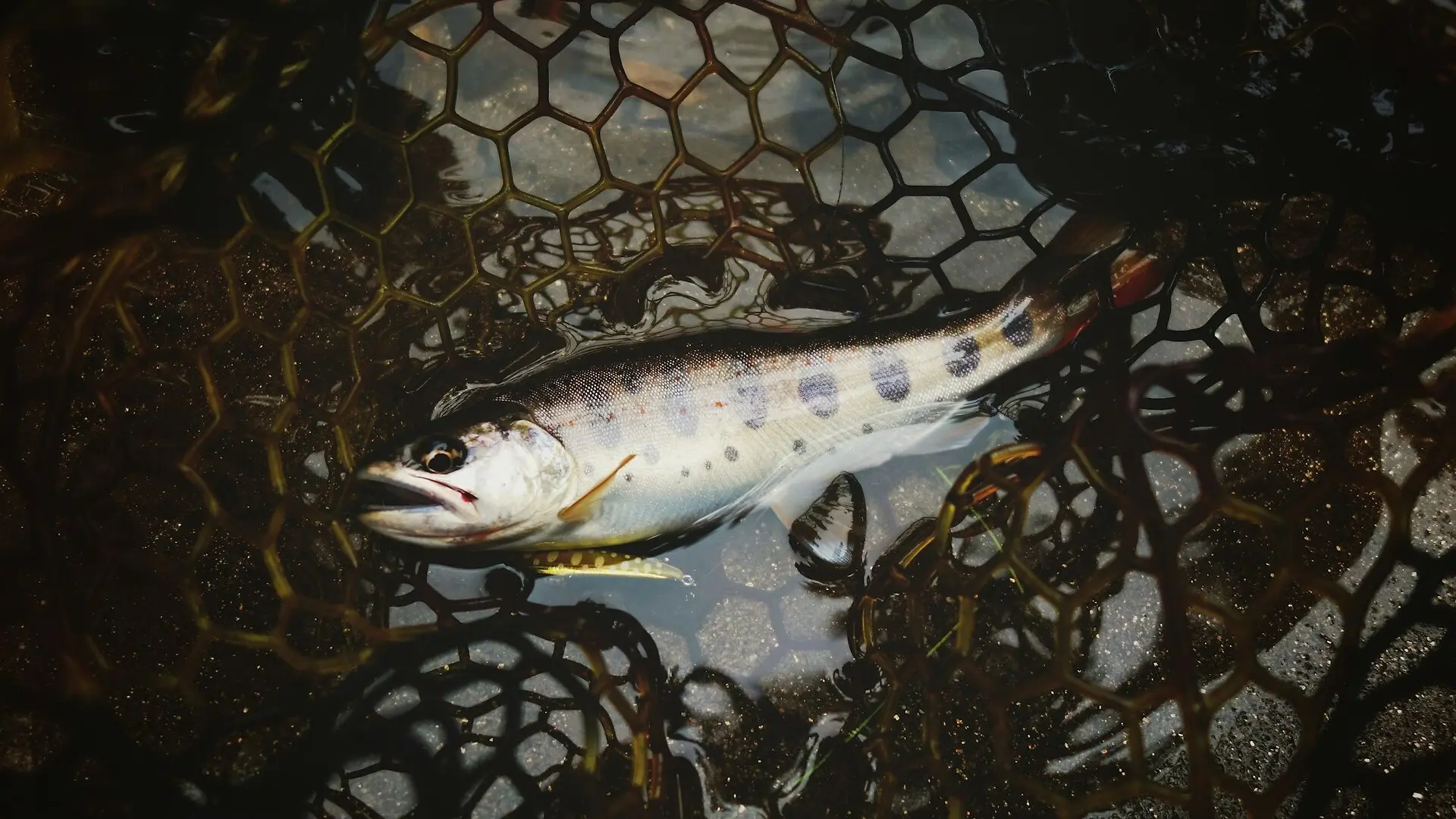
Juvenile Chinook Salmon face intense predation pressures during their freshwater migration in California, with consumption rates heavily concentrated in upstream tributaries rather than the downstream delta. Researchers examining a 130-kilometer migration corridor found that nonnative predatory fish consumed young salmon almost exclusively in the Stanislaus River, while leaving no detectable salmon remains in predator stomachs further downstream in the Sacramento-San Joaquin River Delta.
The study, published in Ecology and Evolution by Matthew Peterson of the FISHBIO research team and his colleagues, investigates how spatial patterns, predator sizes, and seasonal timing drive mortality in an iconic anadromous fish. Anadromous fishes begin their life cycle in freshwater habitats and migrate to the ocean, making their journey a high-stakes gauntlet where predation mortality is distributed across both space and time.
How Far Downstream Do Nonnative Predators Hunt Migrating Salmon?
To map where and when predation occurs, the team collected distribution and diet data from 8,814 black bass (including Largemouth Bass, Smallmouth Bass, Spotted Bass, and Redeye Bass) and 970 Striped Bass across five years of sampling between 2019 and 2023. Using a nonlethal gastric lavage technique to flush and examine gut contents, the investigators tracked prey items from 4,604 black bass and 704 Striped Bass that contained food.
The results revealed a striking spatial trend. Consumed juvenile Chinook Salmon were found in predators at about ninety-two percent of sampled sites within the Stanislaus River. However, despite examining 1,453 black bass and 281 Striped Bass over three years of sampling in the south Delta, the researchers found zero instances of juvenile Chinook Salmon in predator stomachs in that lower region.
Why Did Predators in the South Delta Contain No Salmon DNA?
The absence of salmon in delta predator diets contrasts with previous work that used sensitive genetic testing on sacrificed fish to detect trace salmon DNA. The authors note that the lower density of juvenile salmon in the delta, combined with a diverse community of alternative nonnative prey fishes, means opportunistic predators likely target more abundant food sources. Additionally, warmer water temperatures in the delta accelerate digestion rates, which may cause soft-bodied juvenile salmon to be fully digested before detection.
Statistical models identified distance downstream from Goodwin Dam as the single strongest predictor of salmon consumption frequency. As juvenile salmon migrate away from natal rearing areas, their numbers drop due to cumulative mortality, and their spatial overlap with predators diminishes. For Striped Bass, the probability of consuming a juvenile salmon reached up to eighty percent at upstream sites near the start of the study area, but dropped sharply toward the confluence with the San Joaquin River.
Which Predator Sizes Pose the Greatest Threat to Young Salmon?
Predator body size emerged as another major factor influencing consumption rates. The data showed that intermediate-sized predators were far more likely to contain juvenile salmon than very small or very large individuals. Black bass measuring between 205 and 263 millimeters in fork length and Striped Bass measuring between 315 and 471 millimeters accounted for the highest predation probabilities, aligning with optimal predator-prey size ratios.
Seasonality also played a distinct role for Striped Bass, whose predation frequency increased steadily from February through June. This temporal peak coincided with seasonal migrations of adult and subadult Striped Bass entering the Stanislaus River, as well as a growing match between predator mouth sizes and the increasing length of growing juvenile salmon.
What Does This Mean for Future River Management and Salmon Conservation?
Populations of fall-run Chinook Salmon in California’s Central Valley sit at the southernmost edge of their natural range and suffer from critically low freshwater survival. While habitat restoration and environmental flow releases remain primary management tools, these findings suggest that targeting conservation actions in upstream tributaries could protect a larger proportion of migrating fish.
The authors conclude that altering the size structure of nonnative bass populations to reduce the abundance of intermediate-sized predators, potentially through modified sportfishing regulations, might help lower overall predation pressure. Nevertheless, because predation represents only one piece of a complex survival puzzle, safeguarding the future of Central Valley salmon will require continued, multifaceted research across their entire migratory pathway.
The research was published in Ecology and evolution on November 23, 2026.
This article has been fact checked for accuracy, with information verified against reputable sources. Learn more about us and our editorial process.
Last reviewed on .
Article history
- Latest version
Reference(s)
- Peterson, Matthew L.., et al. “Longitudinal Patterns in Predator Diets Reveal Juvenile Chinook Salmon Predation Is Concentrated Upstream.” Ecology and Evolution, vol. 16, no. 11, November 23, 2026 Wiley, doi: 10.1002/ece3.74653. <https://doi.org/10.1002/ece3.74653>.
Cite this page:
- Posted by Vikram Desai