Teacher Trainees Using 360-Degree Virtual Reality Videos Spotted More Student Cues But Faced Higher Cognitive Overload, And How Scaffolding Could Help
Immersive classroom simulations show promise for science teacher training, but free perspective-taking requires careful cognitive support.
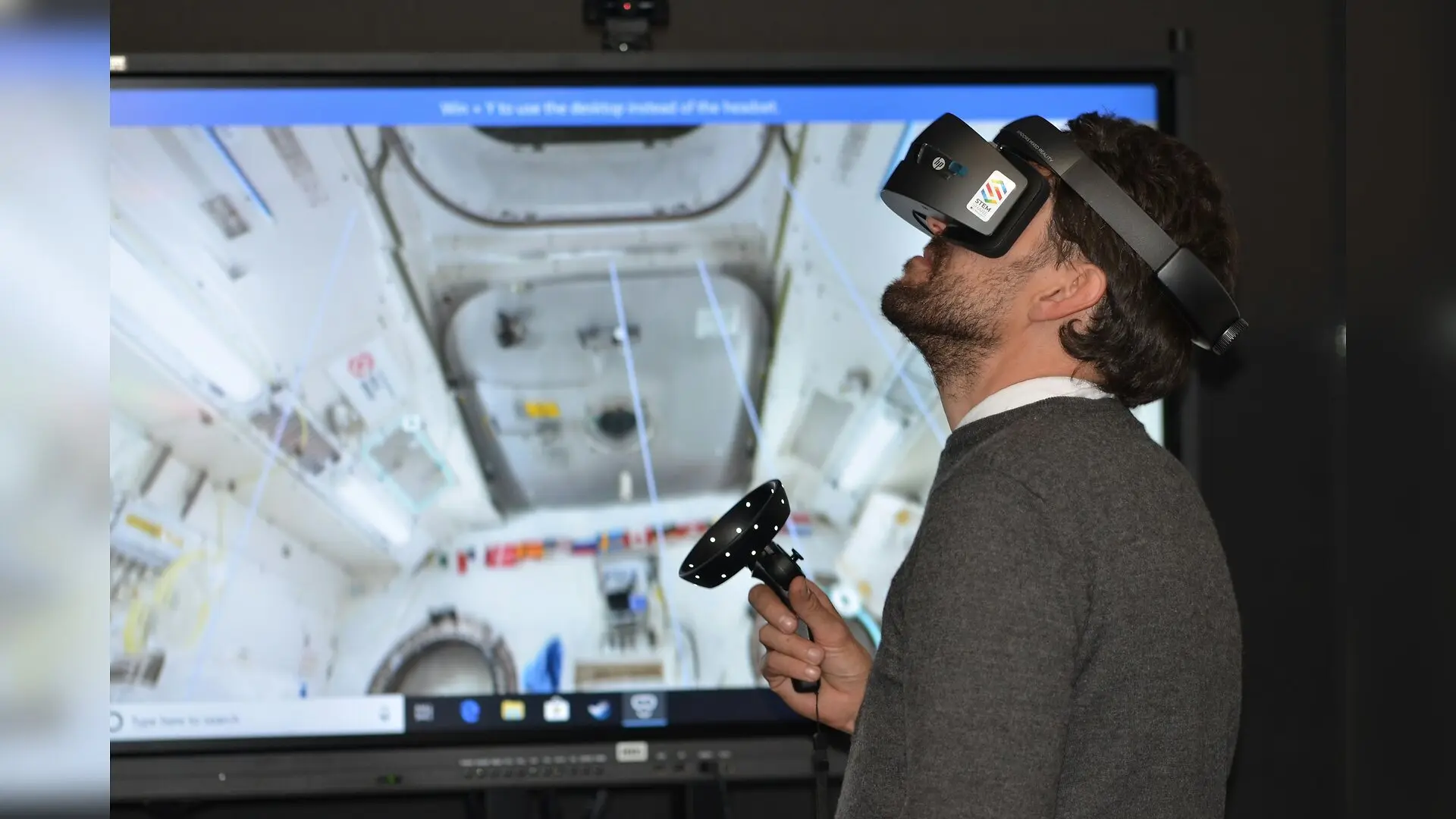
Teacher trainees examining 360-degree virtual reality videos of students conducting laboratory experiments experienced heightened immersion and spotted more nonverbal behavioral cues, but they also faced cognitive overload from managing a 360-degree field of view. In a qualitative study with 10 science education student teachers, researchers at TU Braunschweig explored how immersive video formats can train future educators to diagnose and reflect upon scientific reasoning in the classroom.
Scientific reasoning encompasses core competencies like forming hypotheses, planning experiments, and analyzing data. However, direct access to authentic school laboratory settings is often limited during initial university training. Traditional two-dimensional video recordings with fixed camera angles frequently capture only surface-level interactions, missing peripheral student discussions or simultaneous group dynamics. Immersive virtual reality environments promise to bridge this gap by offering a complete wrap-around view where users can freely choose their perspective. This approach aligns with pedagogical content knowledge frameworks, which emphasize the importance of understanding student hurdles and instructional strategies.
How Do Immersive Videos Shape Professional Perception?
Professional vision involves noticing specific classroom events and reasoning about them to make informed instructional choices. Studies indicate that student teachers left without structured guidance often struggle to move beyond superficial classroom descriptions. By utilizing virtual reality headsets, educators can immerse themselves in complex laboratory scenarios and examine multiple student groups simultaneously. The study published in the Forschung zu Kompetenzen der Erkenntnisgewinnung: Zukunftsweisende Praxis volume details how participants observed two actors performing thermal insulation experiments while intentionally making scripted methodological errors.
Participants reported a strong sense of being right inside the classroom alongside high authenticity. At the same time, the freedom to look in any direction required constant readjustment of their observation focus. This constant shifting of attention led to measurable cognitive strain, demonstrating that perceptual immersion alone does not automatically translate into effective diagnostic skill without proper structural support.
Can Cognitive Overload Be Reduced With Guided Scaffolding?
Managing multiple events occurring at the same time across different lab benches can overwhelm novice observers. Researchers noted that while expert teachers tend to distribute their gaze systematically across relevant interaction patterns, novices often fixate on nearby groups. To prevent this cognitive bottleneck, immersive tools require targeted instructional aids known as scaffolds, which guide the viewer’s attention toward crucial pedagogical moments without destroying the realism of the scene.
Integrating annotation tools and timed reflection prompts helps structure the multi-directional visual input. By combining individual video analysis with collaborative discussions, student teachers can compare their observations and refine their diagnostic strategies. This multi-layered approach helps bridge the persistent gap between theoretical university training and practical school placement.
What Role Does Collaborative Reflection Play in Teacher Training?
Long-term professional development relies on connecting isolated video analysis with moderated peer discussions and actual classroom practice. Online platforms and digital portfolios allow educators to document their diagnostic conclusions and track their progress over time. Author Dagmar Hilfert-Rüppell and colleagues emphasize that 360-degree video formats yield the best results when embedded within a continuous cycle of practical experimentation, guided observation, and shared reflection across different phases of teacher education.
The research was published in Forschung zu Kompetenzen der Erkenntnisgewinnung: Zukunftsweisende Praxis on November 28, 2026.
This article has been fact checked for accuracy, with information verified against reputable sources. Learn more about us and our editorial process.
Last reviewed on .
Article history
- Latest version
Reference(s)
- Hilfert-Rüppell, Dagmar. “Zwischen Theorie und Praxis: 360°-Videos in Virtual Reality zur Erkenntnisgewinnung als Möglichkeit zur Förderung der Diagnose- und Reflexionsfähigkeit von (angehenden) Lehrpersonen.” Forschung zu Kompetenzen der Erkenntnisgewinnung: Zukunftsweisende Praxis, November 28, 2026, pp. 83-95. Springer Berlin Heidelberg, doi: 10.1007/978-3-662-73960-0_7. <https://doi.org/10.1007/978-3-662-73960-0_7>.
Cite this page:
- Posted by Bilal Abbasi