Researchers Find Dual Science Teachers Show Higher Reasoning Skills, and Interdisciplinary Training Could Transform Education
Combining biology and chemistry studies with integrated pedagogical training significantly boosts the scientific reasoning competencies of future educators.
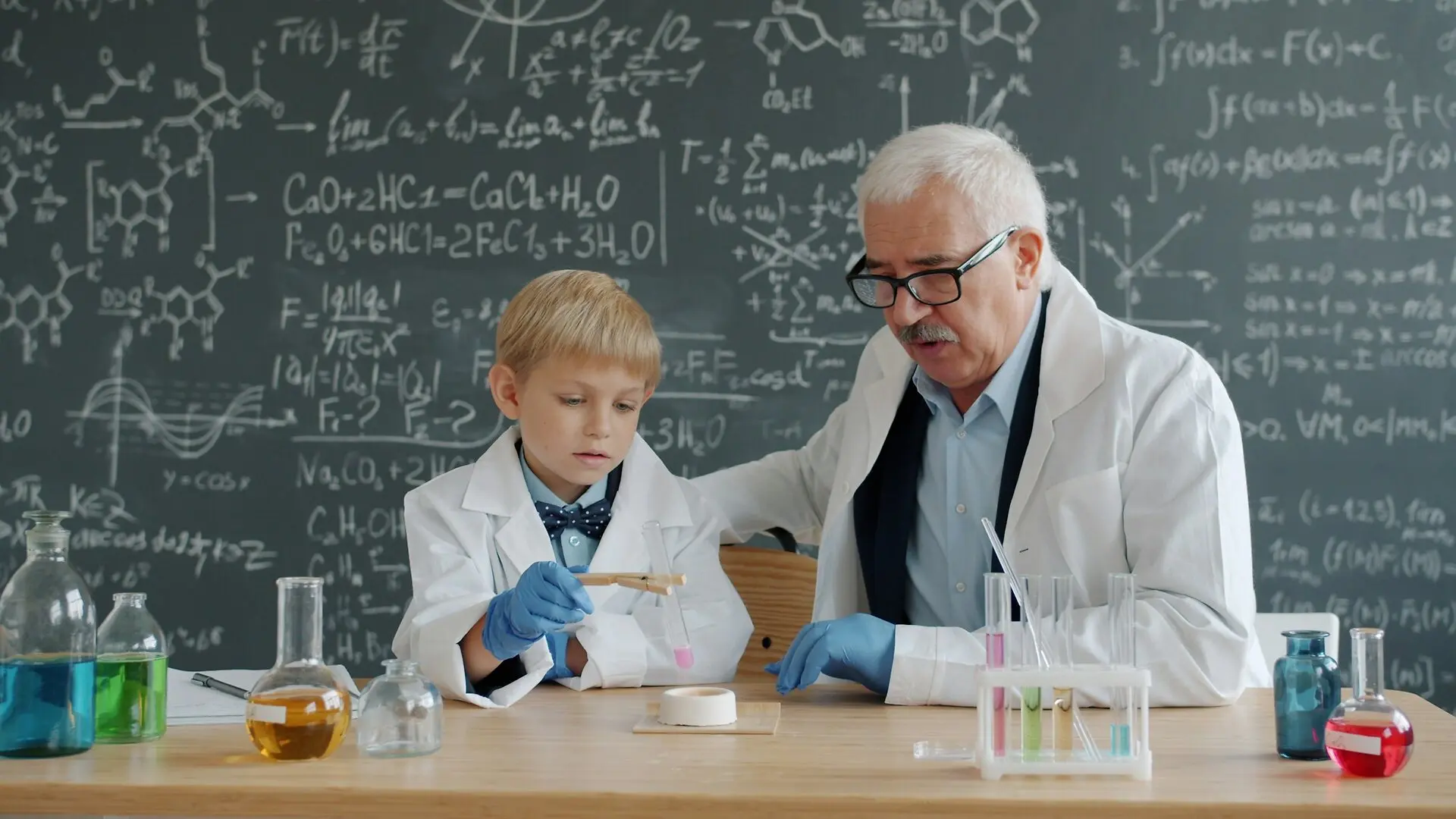
Researchers found that pre-service biology teachers who study two natural science subjects show significantly higher scientific reasoning competencies than those studying a single science discipline, according to a work published in the volume Forschung zu Kompetenzen der Erkenntnisgewinnung. This study explores how connecting scientific content knowledge with pedagogical training and combining multiple science subjects can improve teacher education.
Preparing future educators involves building two core pillars of professional knowledge. Content Knowledge refers to a deep understanding of scientific concepts and methods, while Pedagogical Content Knowledge covers the ability to teach those concepts effectively to students. Researchers have long known that these two domains develop together rather than in isolation.
How Does Scientific Knowledge Grow During Teacher Training?
For years, educational programs treated academic disciplines, teaching methods, and educational sciences as completely separate silos. Now, empirical evidence suggests that strong content knowledge acts as a vital foundation for teaching skills. When teachers understand how experiments work and how variables are controlled, they can better anticipate student learning difficulties.
At the same time, practical teaching experience feeds back into academic understanding. As student teachers gain classroom practice, their ability to reflect on scientific methods improves. This mutual reinforcement means that integrating academic content with teaching methodology can yield powerful benefits for professional development.
What Happens When Biology Meets Chemistry in the Classroom?
Studying two natural science subjects gives prospective teachers more opportunities to practice scientific inquiry. Biology and chemistry share fundamental practices like forming hypotheses, planning experiments, and analyzing empirical data. Combining these subjects helps students build a stronger grasp of how science actually works.
Data from the Ko-WADiS project demonstrate that educators trained in two sciences achieve higher competence scores. They also report greater self-efficacy when it comes to running laboratory experiments with students. These dual-subject teachers can bridge different disciplinary perspectives to make scientific methods clearer.
Can Universities Connect Theory and Practice Through Plastics?
To put these ideas into practice, universities can design interdisciplinary modules around real-world topics. One promising approach uses the topic of microplastics in the environment to link biology and chemistry. Students examine plastic materials in the chemistry lab to understand their molecular structures and degradation properties.
In the biology section, learners investigate everyday products for microplastic contamination and discuss ecological impacts. By combining these findings, future teachers experience scientific inquiry as a continuous, cross-disciplinary process. This method helps students move beyond isolated facts and see the broader picture of environmental science.
What Are the Limits of Interdisciplinary Teacher Training?
While combining science subjects shows clear advantages, several questions remain open for future research. It is still unclear whether explicit curricular design adds measurable value beyond simply studying two science subjects in parallel. Furthermore, successful integration relies heavily on active collaboration between university departments that often operate independently.
The research was published in Forschung zu Kompetenzen der Erkenntnisgewinnung: Zukunftsweisende Praxis on November 28, 2026.
This article has been fact checked for accuracy, with information verified against reputable sources. Learn more about us and our editorial process.
Last reviewed on .
Article history
- Latest version
Reference(s)
- Haizmann, Kajal., et al. “Biologielehrkräfte im Bereich Erkenntnisgewinnungskompetenz professionalisieren: Interdisziplinäre Perspektiven.” Forschung zu Kompetenzen der Erkenntnisgewinnung: Zukunftsweisende Praxis, November 28, 2026, pp. 27-38. Springer Berlin Heidelberg, doi: 10.1007/978-3-662-73960-0_3. <https://doi.org/10.1007/978-3-662-73960-0_3>.
Cite this page:
- Posted by Anjali Singh