Rats Reveal How The Hippocampus Separates Panic From Cautious Hesitation And Decides When To Flee
Brain recordings during robotic predator threats show that hesitation and panic trigger entirely distinct spatial maps in the rodent hippocampus.
Brown Norway rats navigating a risky foraging track show that the brain region responsible for memory and navigation keeps track of potential dangers and rewards in distinct ways, separating sudden panic from careful hesitation. Researchers from the University of Minnesota recorded brain activity from the hippocampus, the seahorse-shaped structure in the brain known for mapping space, while rodents weighed the temptation of food against the threat of a robotic predator.
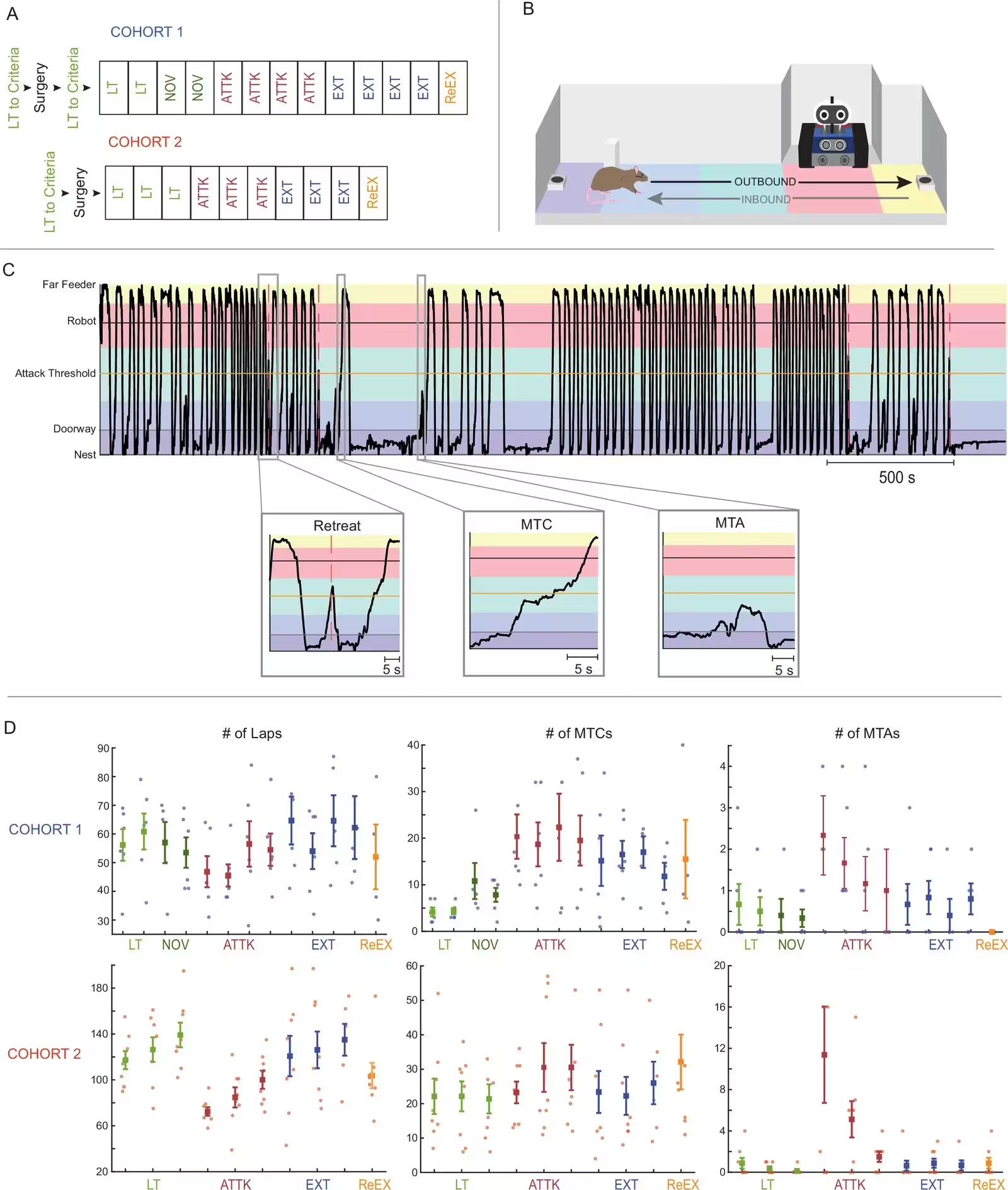
During experiments published in eLife, scientists led by Chelsey Damphousse and A David Redish analyzed neural recordings from 14 rats across two separate cohorts. The animals had to run past a motorized obstacle that could lunge forward unexpectedly, creating a high-stakes puzzle where moving forward meant risking an attack, but staying put meant getting no reward.
How Do Rats Decide to Flee or Freeze?
When the robotic predator lunged, the rats did not hesitate to react. They executed lightning-fast retreats toward the safety of their nest without pausing first. These rapid escapes, termed reactive responses, happened on a fixed schedule regardless of how much experience the animal had with the robot.
Brain scans during these emergency retreats revealed that hippocampal activity remained tightly anchored to the recent site of danger. Even as the animals sprinted backward toward safety, their internal map of space lingered around the threat zone. This suggests that acute fear locks the brain into processing immediate peril rather than planning future moves.
What Happens When Animals Hesitate Instead of Fleeing?
Not every encounter with danger resulted in a panicked sprint. Often, the rats simply stopped along the track before deciding whether to press on toward the food pellet or turn back to the nest. These mid-track pauses served as critical decision-making crossroads where the animals weighed their options.
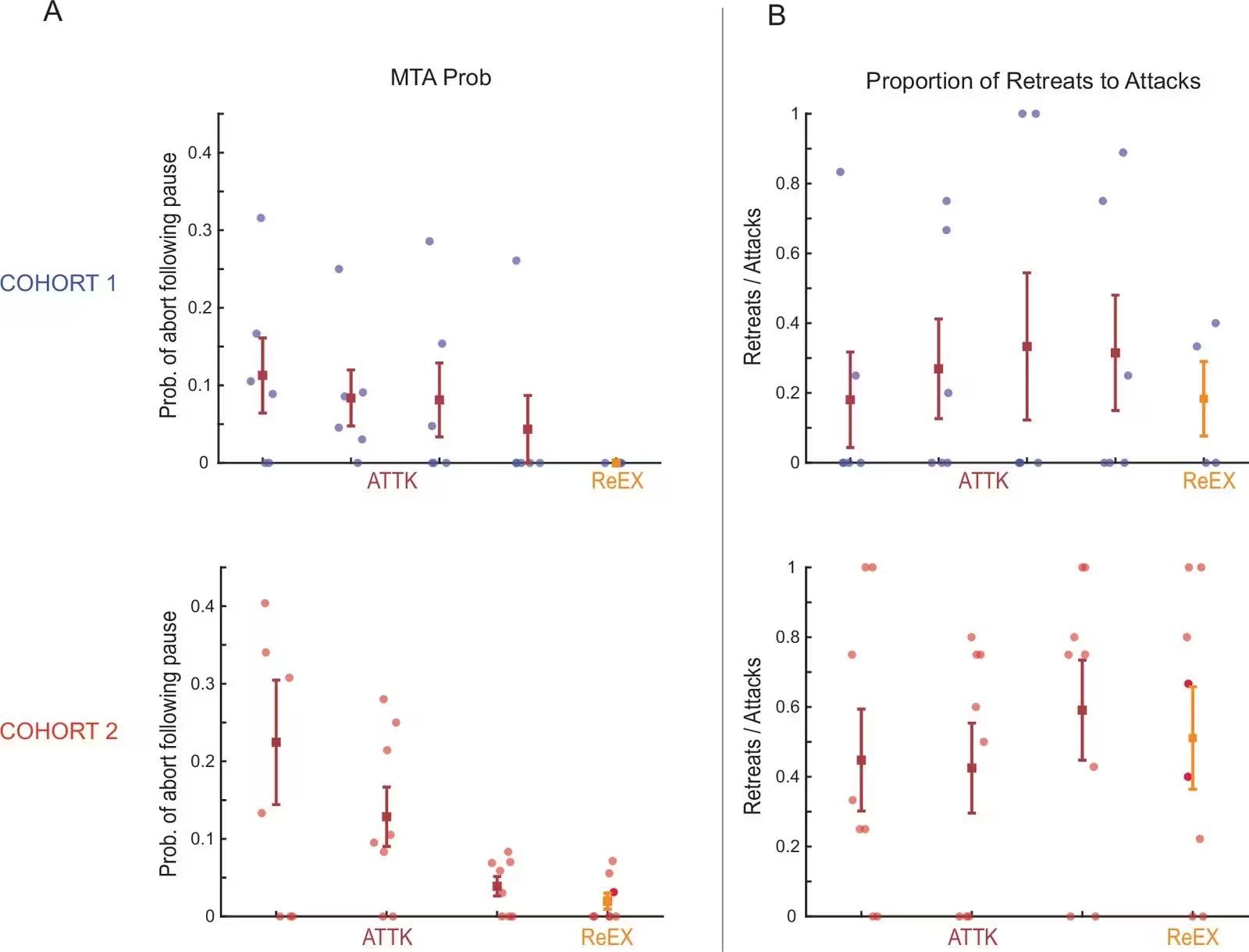
When a pause ended in an abortive return home, the underlying neural representations looked completely different from a panicked escape. Instead of dwelling on the danger zone, the rats showed brain activity focused on safe locations and distant destinations. This cautious withdrawal reflected an anticipatory, anxiety-like decision state rather than an automatic reflex.
Can Brain Activity Predict Choices Before They Happen?
The researchers discovered that these neural biases appeared long before the animals physically stopped moving. Outbound journeys that ultimately ended in a retreat toward the nest showed elevated threat representation right from the start of the run. The brain was already leaning toward caution before the physical pause even began.
By comparing mid-track aborts with mid-track continues, where the rat paused and then chose to push forward anyway, the team found that pausing itself represents a shared evaluative state. The critical difference between giving up and pressing onward lies not in a total shift of brain state, but in the specific spatial locations being simulated inside the hippocampal map.
The research was published in eLife on November 26, 2026.
This article has been fact checked for accuracy, with information verified against reputable sources. Learn more about us and our editorial process.
Last reviewed on .
Article history
- Latest version
Reference(s)
- Damphousse, Chelsey C., et al. “Hippocampal representations differentiate reactive and anticipatory responses during foraging under threat.” eLife, vol. 15, November 26, 2026 eLife Sciences Publications, Ltd, doi: 10.7554/eLife.111762. <https://doi.org/10.7554/eLife.111762>.
Cite this page:
- Posted by Priya Sharma