Xiamen University Researchers Find Vitamin C And Lisaftoclax Eradicate Leukemia Cells And Extend Survival
Combining vitamin C with the BCL-2 inhibitor lisaftoclax triggers dual cell death pathways in acute myeloid leukemia while uncovering a new resistance axis.
Researchers at Xiamen University found that combining high-dose vitamin C with the targeted cancer drug lisaftoclax clears out acute myeloid leukemia cells by triggering two separate cell-destruction programs at once, while extending survival in mouse models.
Acute myeloid leukemia is an aggressive cancer of the blood and bone marrow that carries a poor prognosis, particularly for older adults who cannot withstand intensive chemotherapy regimens. While intravenous vitamin C generates hydrogen peroxide inside malignant cells and disrupts their iron balance, standalone treatments rarely achieve lasting remissions. To discover how to boost its tumor-killing power, Guangze Wang and colleagues published in Advanced Science and used gene-screening technology to pinpoint cellular vulnerabilities.
How Do Vitamin C And Lisaftoclax Kill Cancer Cells Together?
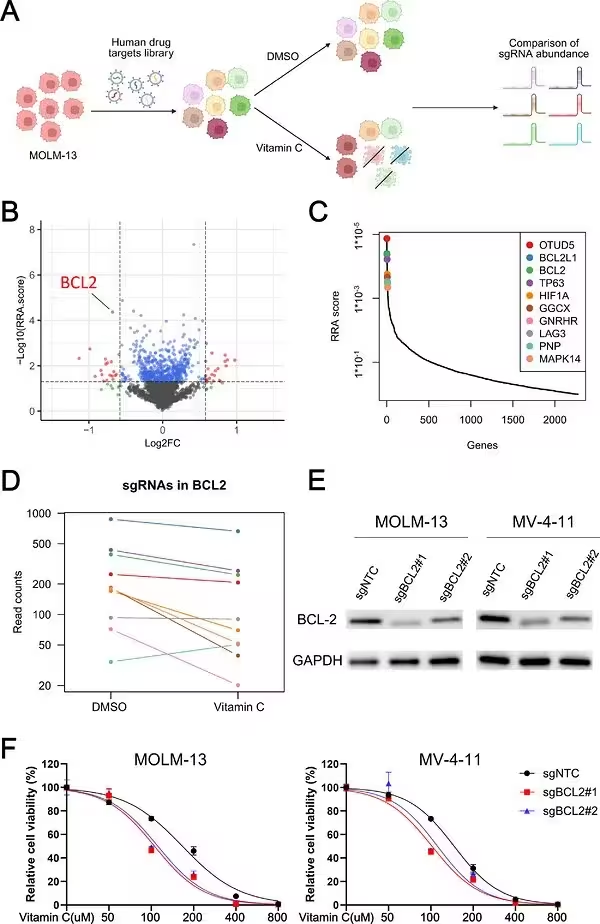
The team performed a genome-wide drug-target screen and identified BCL-2 as a major sensitizer to vitamin C. BCL-2 is a protein that cancer cells use to stay alive by blocking normal programmed cell death. When the researchers combined vitamin C with lisaftoclax, which is an orally active drug that inhibits BCL-2, the treatment achieved a strong synergistic effect in human leukemia cell lines.
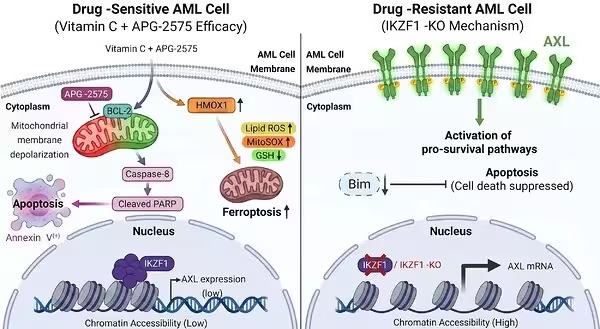
Laboratory tests showed that this combination simultaneously activated two distinct cell-death pathways. One path was caspase-dependent apoptosis, which is a classic form of programmed cellular self-destruction. The second path was ferroptosis, an iron-driven form of cell death caused by the accumulation of toxic lipid peroxides. Crucially, blocking one pathway with chemical inhibitors did not stop the other, proving that the two mechanisms operate independently.
What Role Does The HMOX1 Protein Play In The Response?
RNA sequencing and biochemical analyses revealed that the combination therapy significantly upregulated HMOX1, an enzyme involved in managing oxidative stress. Although cells often increase HMOX1 to protect themselves from damage, the enzyme also raises intracellular iron levels. By tracking lipid reactive oxygen species and using transmission electron microscopy to spot mitochondrial shrinkage, the authors confirmed that HMOX1 acts as a critical driver of ferroptosis under the treatment.
Further experiments using genetic knockdown demonstrated that removing HMOX1 protected the cancer cells and reduced lipid damage. When tested in mice engrafted with human leukemia cells, daily treatments of vitamin C combined with lisaftoclax significantly reduced tumor progression and prolonged overall survival without causing excessive body weight loss or tissue toxicity.
Why Do Some Leukemia Cells Develop Resistance?
To understand why certain cancer cells evade the therapy, the team conducted a secondary genetic screen targeting transcription factors. They discovered that losing the gene IKZF1 conferred broad drug resistance and blunted the synergy between vitamin C and lisaftoclax. Multi-omics profiling showed that IKZF1 loss alters chromatin accessibility, leading to the transcriptional activation of AXL, a receptor tyrosine kinase linked to cancer survival.
When the investigators used genetic editing or a targeted pharmacological inhibitor named R428 to block AXL, they successfully restored the cancer cells’ sensitivity to the combination treatment. While the findings provide a robust preclinical rationale for combining vitamin C with BCL-2 inhibition, the authors emphasize that further clinical evaluation is necessary to determine how these pathways operate in diverse patient populations.
The research was published in Advanced science (Weinheim, Baden-Wurttemberg, Germany) on November 25, 2026.
This article has been fact checked for accuracy, with information verified against reputable sources. Learn more about us and our editorial process.
Last reviewed on .
Article history
- Latest version
Reference(s)
- Wang, Guangze., et al. “Vitamin C Synergy With the BCL‐2 Inhibitor APG‐2575 Induces Concurrent Apoptosis and HMOX1‐Dependent Ferroptosis in Acute Myeloid Leukemia.” Advanced Science, November 25, 2026 Wiley, doi: 10.1002/advs.78866. <https://doi.org/10.1002/advs.78866>.
Cite this page:
- Posted by Hassan Raza