Engineered Gel Patch Restores Spinal Cord Barriers And Promotes Nerve Regeneration In Rats
A redox-responsive hydrogel releases healing growth factors in response to oxidative stress, restoring blood vessels and guiding stem cells.
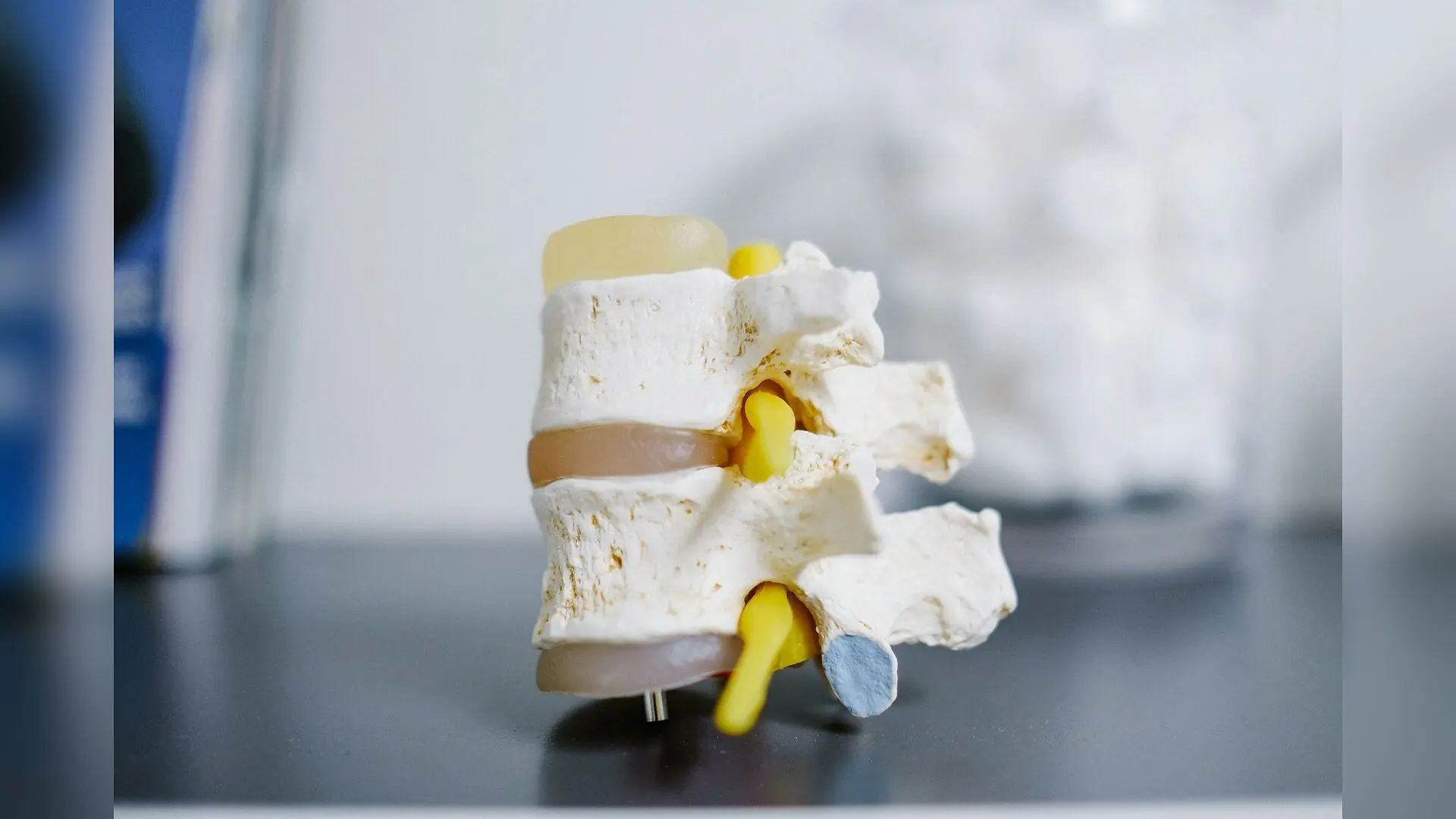
Researchers in China and Thailand developed a smart gel patch that adapts to chemical shifts in damaged spinal cord tissue to release healing compounds in rats. The material, published in Advanced Science, successfully restored blood vessel barriers and encouraged nerve regrowth after traumatic spinal injuries.
How Does The Smart Gel React To Chemical Changes?
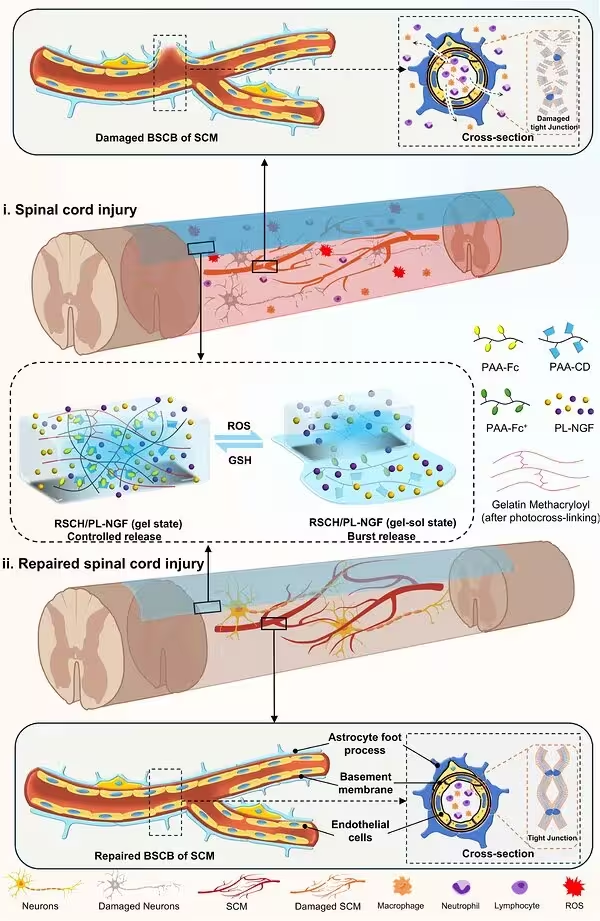
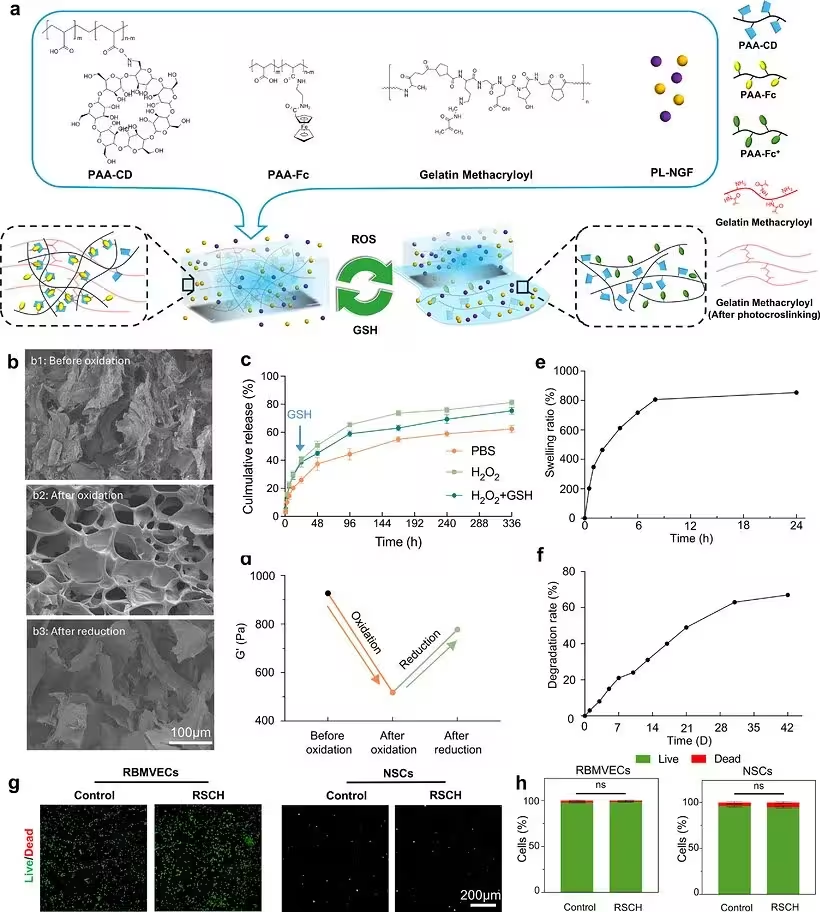
Following a severe spinal cord injury, cells release high levels of reactive oxygen species (ROS), which are unstable molecules that cause widespread inflammation and tissue damage. To combat this harsh environment, Wu Xue and colleagues at Jilin University designed a semi-convertible hydrogel that changes its physical state based on chemical cues. The gel incorporates a dual network combining a structural polymer framework with a redox-responsive supramolecular system that shifts between solid and loose states.
When reactive oxygen species levels spike during the acute phase of injury, the gel rapidly shifts its structure to trigger a burst release of therapeutic cargo. Once oxidative stress subsides, the introduction of reducing agents like glutathione causes the material to firm back up, slowing down the delivery of remaining drugs for long-term recovery. This adaptive release mechanism matches the changing biochemical needs of healing spinal tissue over time.
What Ingredients Power The Regenerative Patch?
The research team loaded the gel with platelet lysate, which is a purified extract derived from platelet-rich blood products containing high concentrations of growth factors. Because platelet extract lacks strong neurotrophic factors needed for nerve repair, the scientists enriched the formulation with nerve growth factor (NGF). Laboratory assays showed that the enriched gel significantly boosted the proliferation of rat brain microvascular endothelial cells, which line blood vessels.
Furthermore, tube formation assays demonstrated that the bioactive gel significantly enhanced capillary-like network formation compared to untreated controls. The combination of blood-derived growth factors and nerve growth factor worked together to address both vascular damage and neural degeneration simultaneously.
Can The Treatment Repair The Blood-Spinal Cord Barrier?
Trauma to the spinal cord destroys the delicate blood-spinal cord barrier (BSCB), leading to dangerous leakage of immune cells and toxins into neural tissue. Laboratory tests using an in vitro barrier model subjected to oxygen and glucose deprivation revealed that the smart gel effectively protected tight junction proteins such as ZO-1 and occludin from degradation. Treatment with a higher concentration of nerve growth factor reduced molecular permeability significantly better than standard formulations.
When tested in living rats with spinal cord contusions, administration of the optimized gel significantly reduced dye leakage through damaged blood vessels after 2 weeks. Histological staining at 4 weeks showed restored expression of tight junction proteins including Claudin-5, indicating substantial structural repair of the vascular barrier.
How Do Neural Stem Cells Respond To The Therapy?
Spinal cord injuries typically cause endogenous neural stem cells to differentiate into astrocytes, creating glial scars that block nerve regeneration. Cell culture experiments revealed that the nerve growth factor-enriched gel successfully steered stem cells away from scar-forming pathways and toward functional neurons and oligodendrocytes. Transcriptomic analyses via RNA sequencing showed that treated stem cells upregulated biological processes related to cytoskeletal remodeling and axoneme assembly.
Behavioral testing using the Basso-Beattie-Bresnahan locomotor rating scale showed that treated rats achieved marked improvements in hindlimb motor function and muscle coordination by 16 days post-injury. Footprint analysis confirmed that animals receiving the fully loaded hydrogel exhibited reduced dragging and more stable stepping patterns compared to untreated injury groups.
The research was published in Advanced science (Weinheim, Baden-Wurttemberg, Germany) on November 25, 2026.
This article has been fact checked for accuracy, with information verified against reputable sources. Learn more about us and our editorial process.
Last reviewed on .
Article history
- Latest version
Reference(s)
- Xue, Wu., et al. “Blood‐Spinal Cord Barrier Repair and Axonal Regeneration Based on Redox‐Triggered PL‐NGF Release Semi‐Convertible Hydrogel.” Advanced Science, November 25, 2026 Wiley, doi: 10.1002/advs.78938. <https://doi.org/10.1002/advs.78938>.
Cite this page:
- Posted by Priya Sharma