Common Gemstone Mineral Found to Harbor Complex Quantum Magnetism
Physicists decode the atomic interactions of almandine garnet, revealing a frustrated three-dimensional magnetic state governed by toroidal octupolar order.
Common silicate minerals hiding in the Earth crust might hold the key to understanding a complex form of quantum-adjacent magnetism known as hyperkagome antiferromagnetism. Researchers have discovered that almandine, an iron-rich gemstone and common rock-forming mineral, acts as a natural spin-2 hyperkagome antiferromagnet.
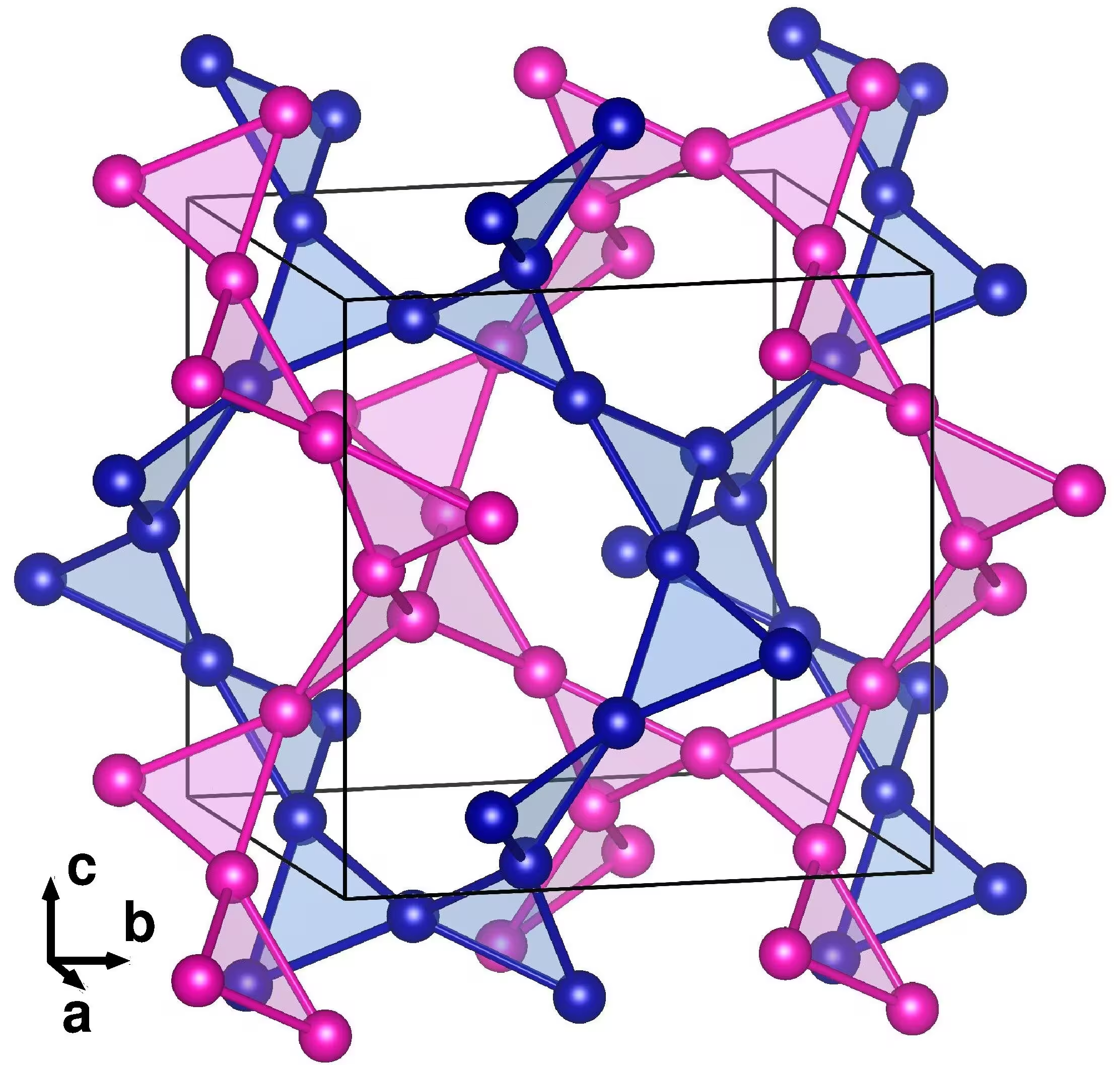
Magnetic frustration occurs when competing atomic interactions prevent a material from settling into a simple ordered magnetic state. On two-dimensional kagome lattices, this frustration leads to exotic states like quantum spin liquids, but finding clean three-dimensional equivalents in real materials has proven difficult. The garnet crystal structure naturally features two interpenetrating hyperkagome networks of magnetic ions, yet finding systems without chemical disorder or unwanted background interactions has remained a major hurdle.
Decoding the Atomic Interactions in Iron Garnet
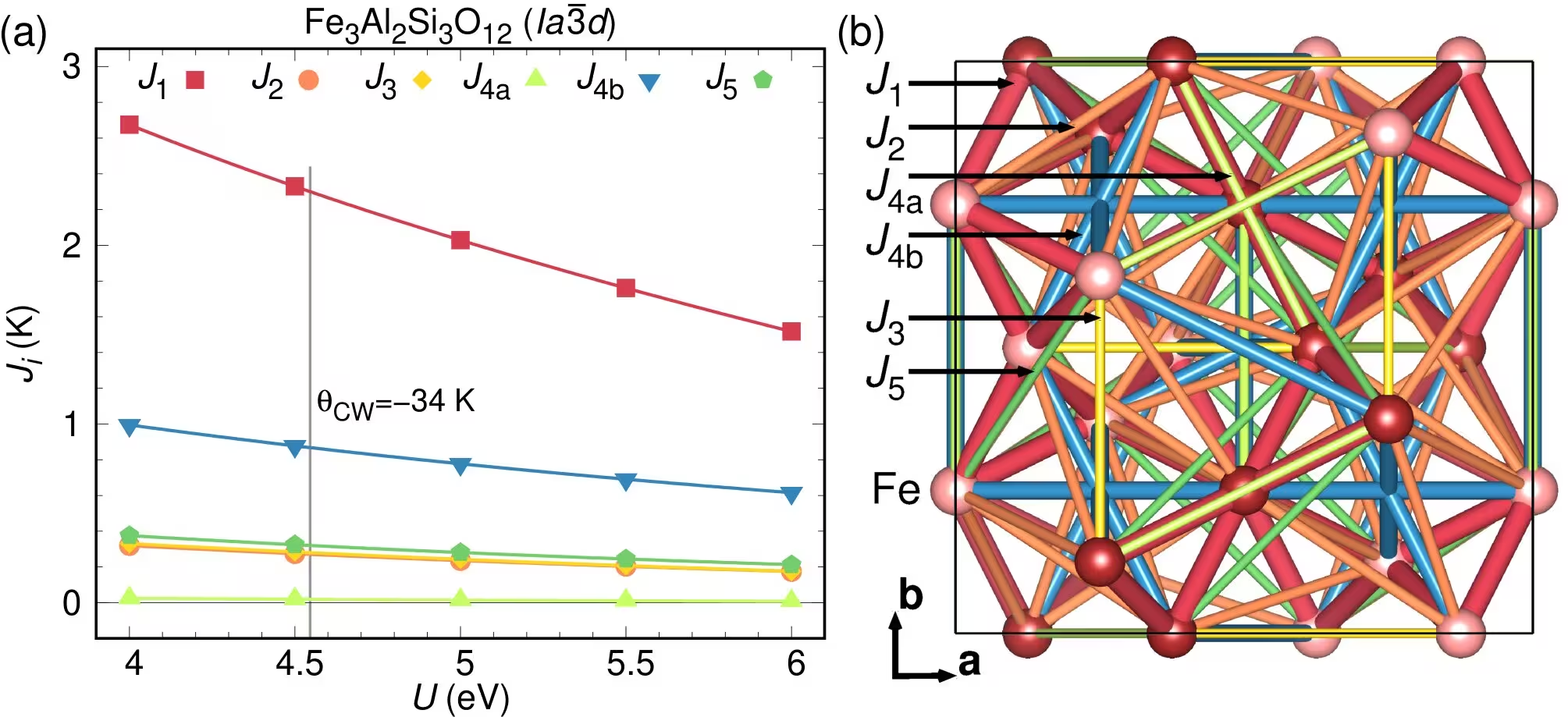
To understand how almandine behaves magnetically, the research team used advanced computational methods based on density functional theory energy mapping to calculate the exchange interactions between iron ions. Their analysis, published in arXiv, revealed that the material possesses dominant nearest-neighbor antiferromagnetic exchange, alongside crucial longer-range interactions that shape its low-temperature behavior.
Specifically, the authors identified an inter-hyperkagome coupling pathway, designated as $J_{4b}$, which plays a decisive role. While nearest-neighbor interactions force a 120-degree arrangement on local triangular units, this subdominant coupling links the two interpenetrating lattices and lifts the ground-state degeneracy that normally plagues hyperkagome systems.
Simulating Magnetic Order and Thermodynacic Properties
Using classical Monte Carlo simulations combined with quantum-to-classical spin length rescaling, the team modeled the thermodynamic properties of the iron moments. The simulations produced a sharp anomaly in the specific heat and a pronounced peak in magnetic susceptibility around 6.5 Kelvin, which scales to a Néel temperature of approximately 9.8 Kelvin when adjusted for quantum effects. This theoretical transition temperature matches well with historical thermal and magnetic measurements on pure samples.
The resulting magnetic ground state is non-collinear, meaning the spins do not all point in the same or opposite directions. Instead, they organize into a sophisticated texture that is naturally described by magnetic toroidal octupolar order. This exotic order parameter shares conceptual ties with hidden-order states previously studied in gadolinium gallium garnet, providing a bridge between mineralogy and fundamental frustration physics.
Predicting Neutron Scattering Signatures
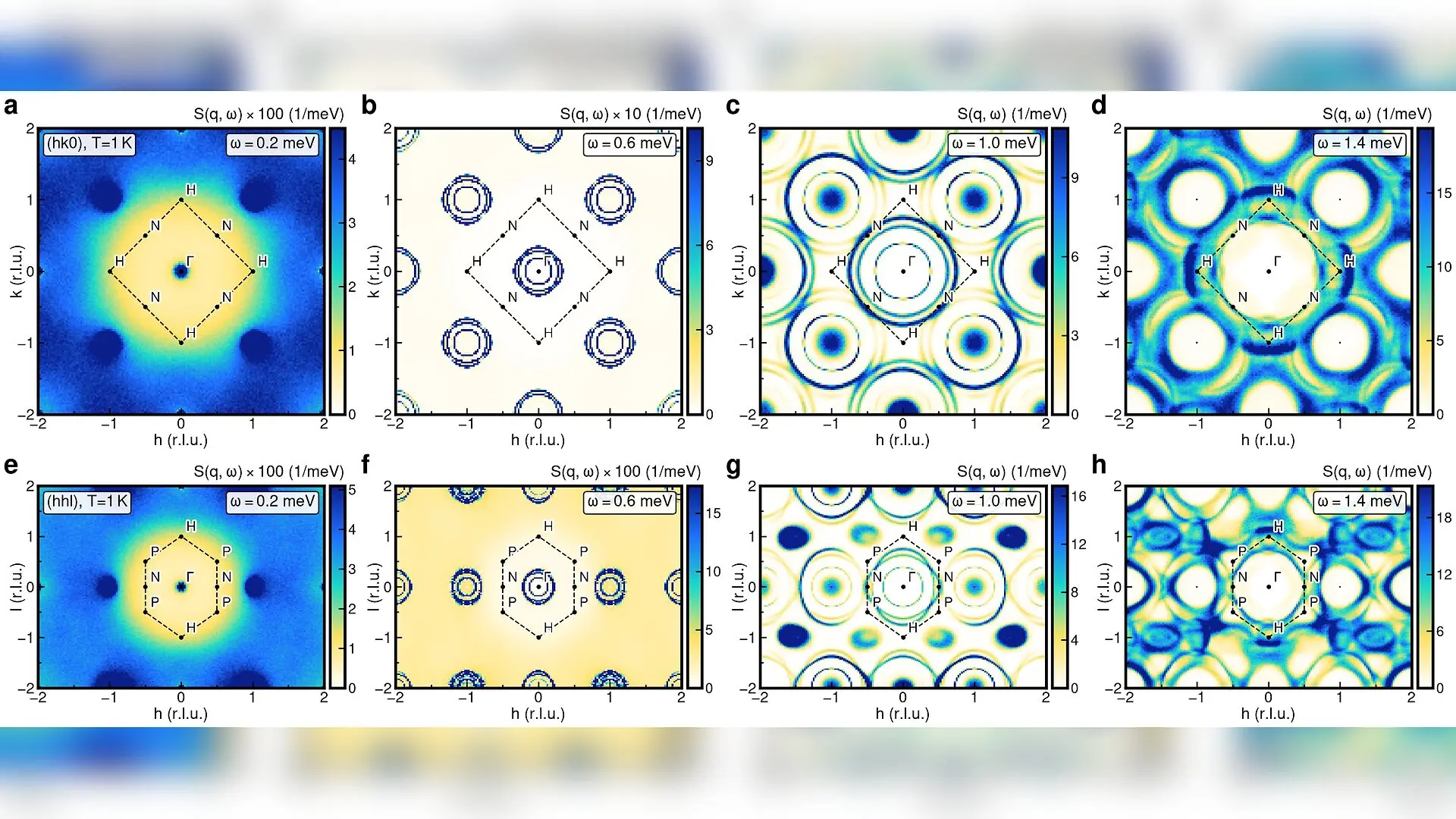
To enable future experimental validation, the investigators calculated static and dynamical structure factors using linear spin-wave theory and semiclassical dynamics. Their models predict that weak dipole-dipole interactions open a small excitation gap of about 0.2 milli-electronvolts in the magnetic spectrum. Furthermore, simulated single-crystal neutron diffraction amplitudes show close agreement with older physical datasets, resolving discrepancies that troubled earlier theoretical attempts.
The identification of almandine as a chemically accessible hyperkagome magnet suggests that other aluminosilicate and germanate garnets may harbor undiscovered frustrated states. By connecting a common geological mineral to the physics of quantum materials, this work opens new avenues for exploring complex magnetism in everyday crystal structures.
The study was posted to the arXiv preprint server on November 16, 2026.
This article has been fact checked for accuracy, with information verified against reputable sources. Learn more about us and our editorial process.
Last reviewed on .
Article history
- Latest version
Reference(s)
- Zhang, Minnong. “Hyperkagome antiferromagnetism in the iron garnet Almandine Fe$_3$Al$_2$Si$_3$O$_{12}$.” arXiv.org <http://arxiv.org/abs/2611.21610v1>.
Cite this page:
- Posted by Anjali Singh