Doping Strategy Boosts Solid Battery Safety By Rewiring Crystal Tunnels
Targeted atomic substitutions in sulfide solid electrolytes accelerate ion transport while suppressing toxic gas release.
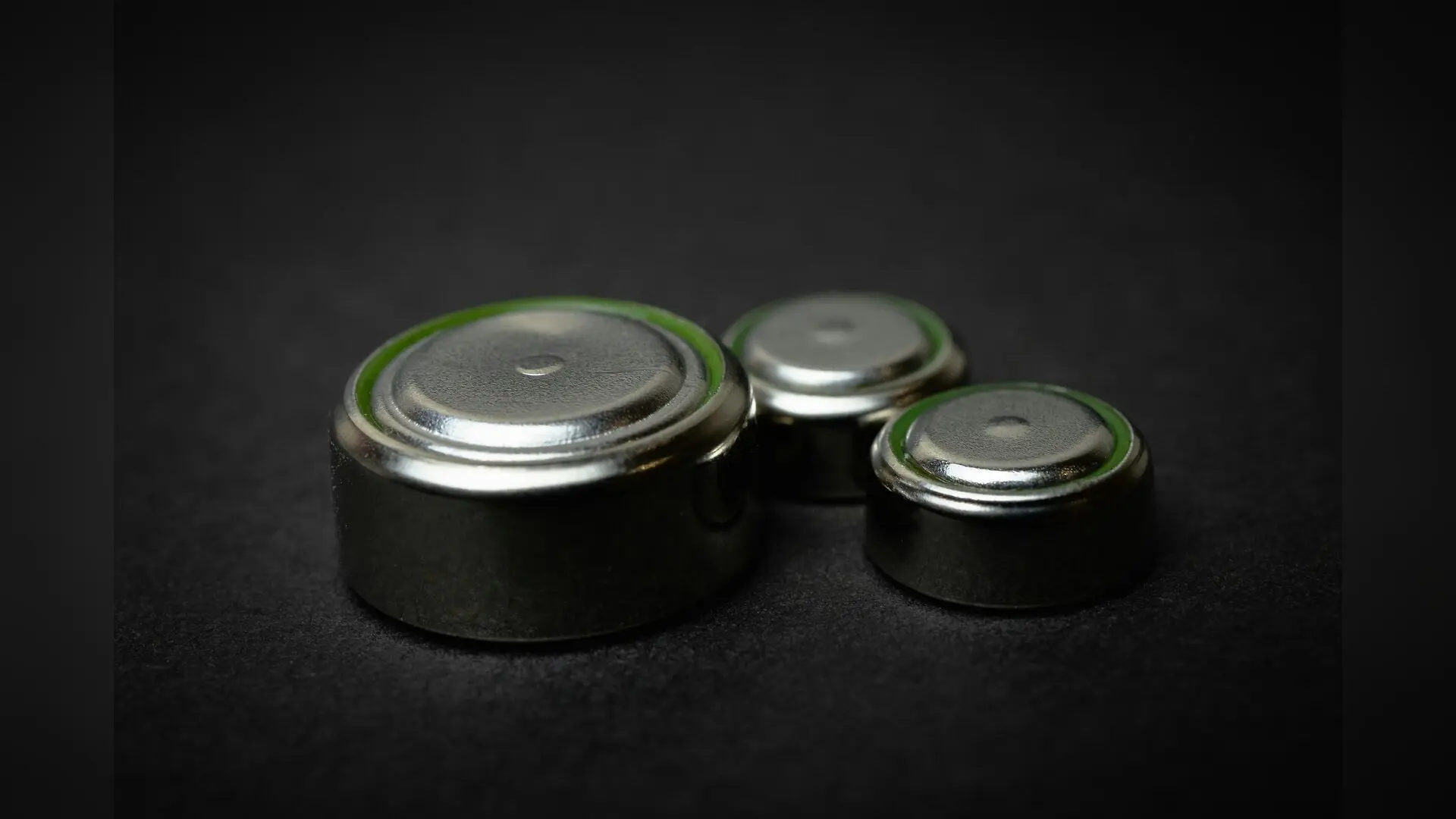
Sulfide-based solid-state electrolytes offer exceptionally fast lithium-ion transport to make rechargeable batteries safer and more energy-dense, but their tendency to degrade in moisture and react destructively with electrode materials has long stalled practical use. To solve this dilemma, material scientists are turning to atomic doping, a laboratory technique where foreign atoms are intentionally injected into the crystal lattice of the solid material.
By inserting carefully chosen metal cations, halogen anions, or multiple elements at once, researchers can physically widen the microscopic tunnels that lithium ions travel through. This precise chemical tuning achieves a dual breakthrough by accelerating ion mobility while simultaneously pacifying the chemical side reactions that usually compromise battery longevity and safety.
How Does Elemental Substitution Alter Crystal Behavior Inside Solid Batteries?
When foreign atoms replace standard positions in a crystal lattice, they trigger structural shifts that redefine how electricity moves through the solid. For instance, introducing a smaller metal ion like zirconium into a lithium-phosphorus-sulfur host framework forces the lattice to create missing lithium sites known as vacancies. These vacancies act like empty seats on a crowded train, giving migrating lithium ions more open pathways and lowering the energy barrier required for movement.
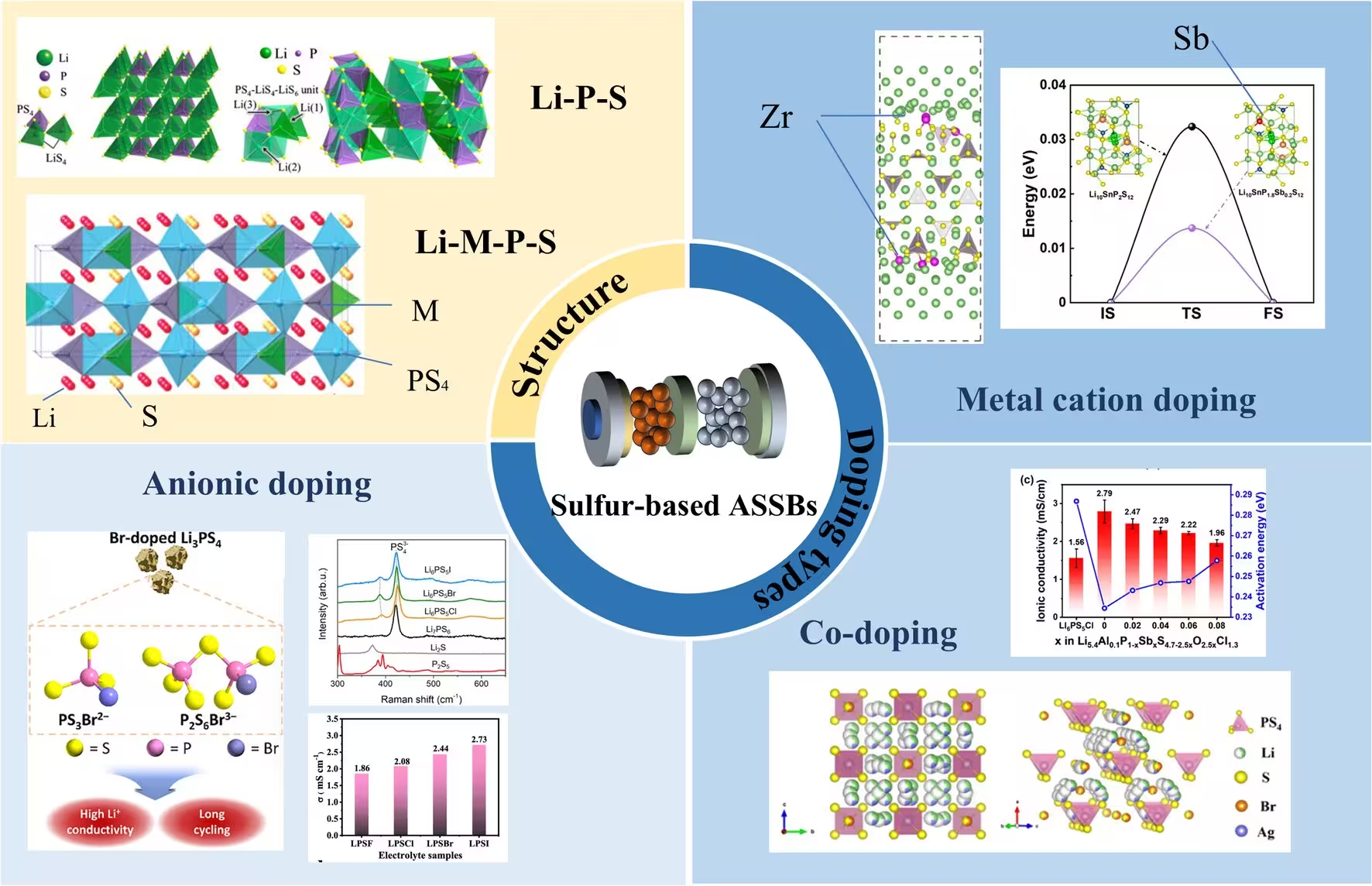
Beyond simply speeding up ion transport, atomic doping also alters local bond strengths and electronic structures to protect the vulnerable electrolyte boundaries. As detailed in a review published in the Journal of Saudi Chemical Society by Siying Li and colleagues from the Chinese Academy of Sciences and partner institutions, these customized substitution strategies successfully stabilize the fragile interfaces where the solid electrolyte meets the lithium metal anode.
Can Multi-Element Co-Doping Finally Eliminate Toxic Gas Release in Humid Air?
One of the most persistent hazards associated with sulfide electrolytes is their unfortunate tendency to react violently with ambient moisture, releasing toxic hydrogen sulfide gas. To counteract this vulnerability, recent laboratory experiments have explored co-doping strategies that combine metal cations and halogen anions to strengthen the chemical bonds within the material network. Introducing elements like antimony, tin, or oxygen creates stronger covalent bonds that significantly lower the rate of gas generation upon atmospheric exposure.
While some moisture-resistant modifications impose a slight penalty on raw room-temperature ionic conductivity, the overall trade-off is often overwhelmingly positive for real-world battery applications. For instance, specific tin and oxygen dual-doped electrolyte formulations experience a moderate drop in initial conductivity but manage to retain over eighty-six percent of their discharge capacity after two hundred rigorous charge cycles.
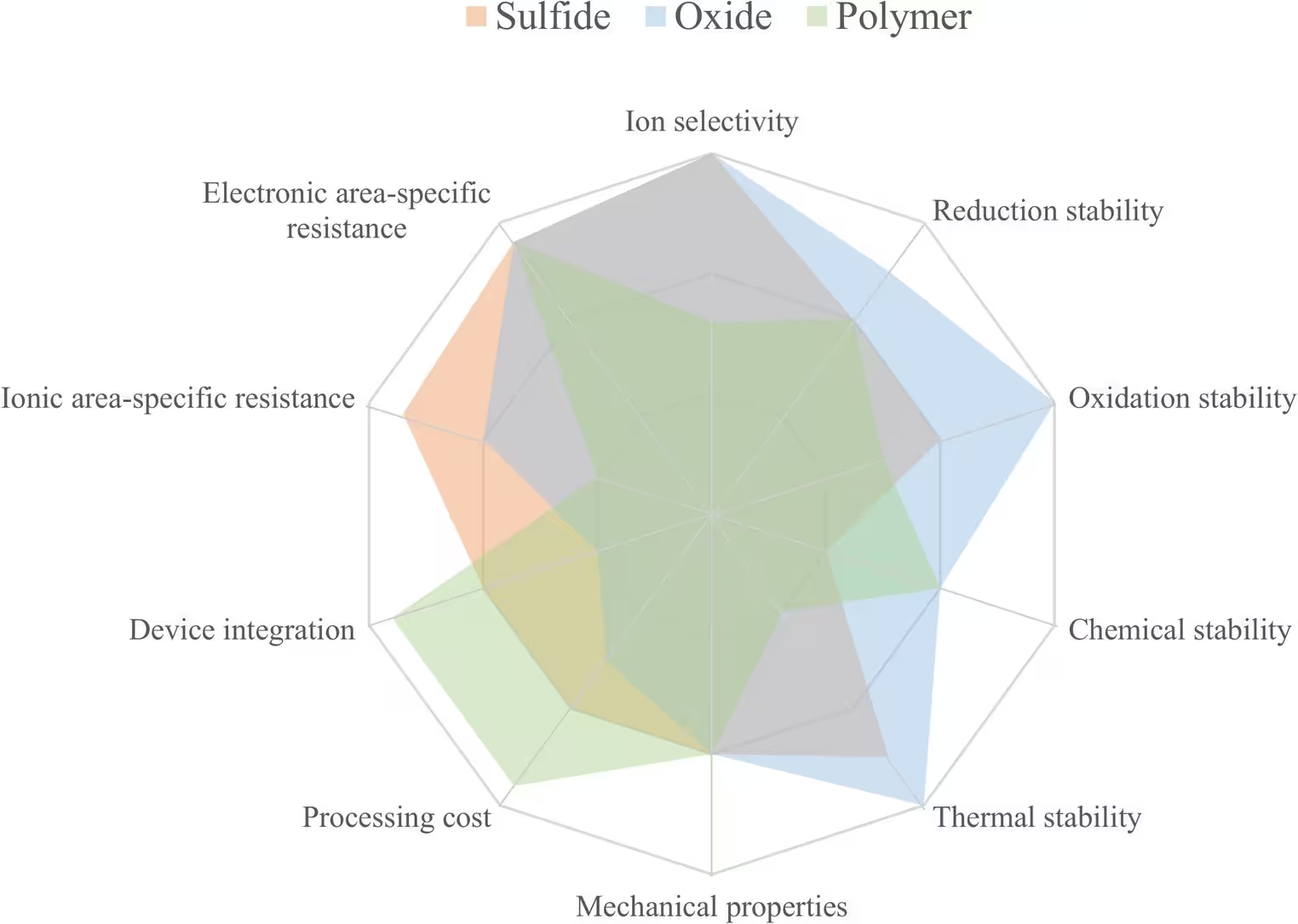
What Obstacles Remain Before Industrial Mass Production Becomes Viable?
Despite impressive laboratory milestones achieved through single and multi-element doping, several hurdles still block the path to widespread commercialization. Achieving the exact chemical ratios required for successful doping demands highly specialized synthesis methods, such as high-energy ball milling and precise thermal annealing, which can be expensive and difficult to scale up.
Furthermore, researchers emphasize that excessive doping often triggers the unwanted precipitation of secondary impurity phases that disrupt the continuous ionic conduction network. Future developments will likely rely on high-entropy co-doping strategies and standardized manufacturing protocols to balance high conductivity, moisture stability, and production cost for the next generation of electric vehicles.
The research was published in Journal of Saudi Chemical Society on November 26, 2026.
This article has been fact checked for accuracy, with information verified against reputable sources. Learn more about us and our editorial process.
Last reviewed on .
Article history
- Latest version
Reference(s)
- Li, Siying., et al. “Doping in sulfide solid-state electrolytes for lithium batteries: a review.” Journal of Saudi Chemical Society, vol. 30, no. 6, November 26, 2026 Springer Science and Business Media LLC, doi: 10.1007/s44442-026-00141-2. <https://doi.org/10.1007/s44442-026-00141-2>.
Cite this page:
- Posted by Anjali Singh