Israeli Flag Stickers Removed Twice As Often As German Flags In German University Study
A 24-week field experiment tracking 600 political stickers on campus notice boards reveals a stark asymmetry in how national symbols are treated during the Gaza war.

University students interacting with public notice boards in Germany during the spring and fall semesters of 2024 were far more likely to tear down stickers displaying the Israeli flag than symbols representing other nations or social movements. The behavioral study tracked 600 small stickers across 50 public notice boards on a campus in North Rhine-Westphalia over a 24-week period starting in May 2024, approximately seven months after the October 7 attacks and the outbreak of the Gaza war.
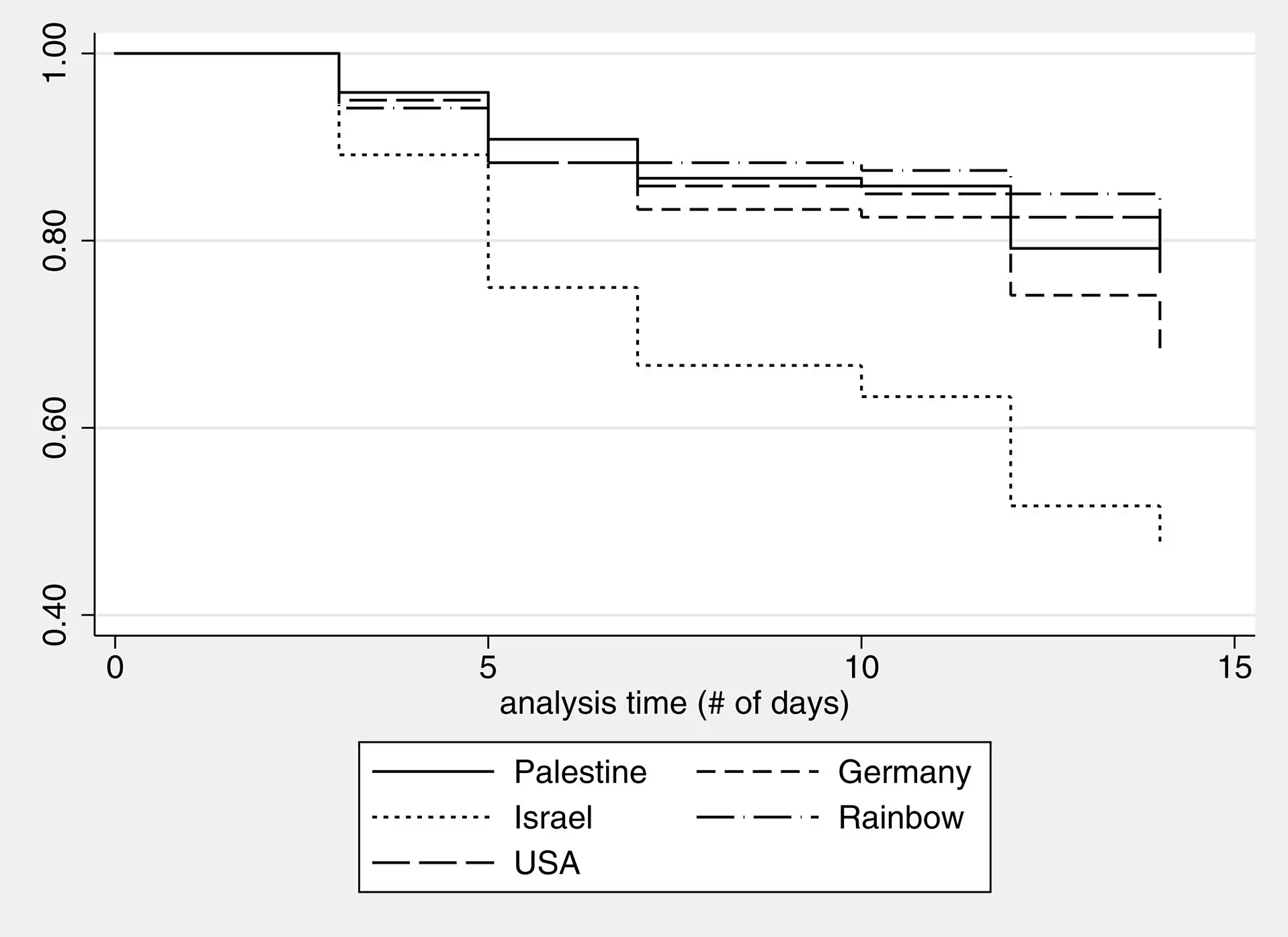
By the end of each 14-day observation cycle, only 47.5 percent of the Israeli flag stickers remained intact on the boards. In contrast, stickers featuring the German flag survived at a rate of 68.3 percent, the Palestinian flag at 76.7 percent, the United States flag at 78.3 percent, and the rainbow flag associated with the LGBTQ+ movement at 80.8 percent. The findings were published in PLOS One by Mark Lutter from the University of Wuppertal and his colleagues, who sought to overcome the social-desirability biases that often distort survey-based research on politically sensitive attitudes.
Why Do Israeli Symbols Face Higher Removal Rates on Campus?
To determine whether the destruction of Israeli symbols reflected general vandalism or specific political animosity, the researchers deployed a comparative field experiment. They utilized five standardized sticker motifs measuring about four by five centimeters, placed randomly on notice boards in corridors, near dining halls, and close to libraries. Because all conditions shared identical physical properties and adhesives, non-symbolic factors such as routine cleaning should affect every flag equally unless a particular motif triggered targeted hostility.
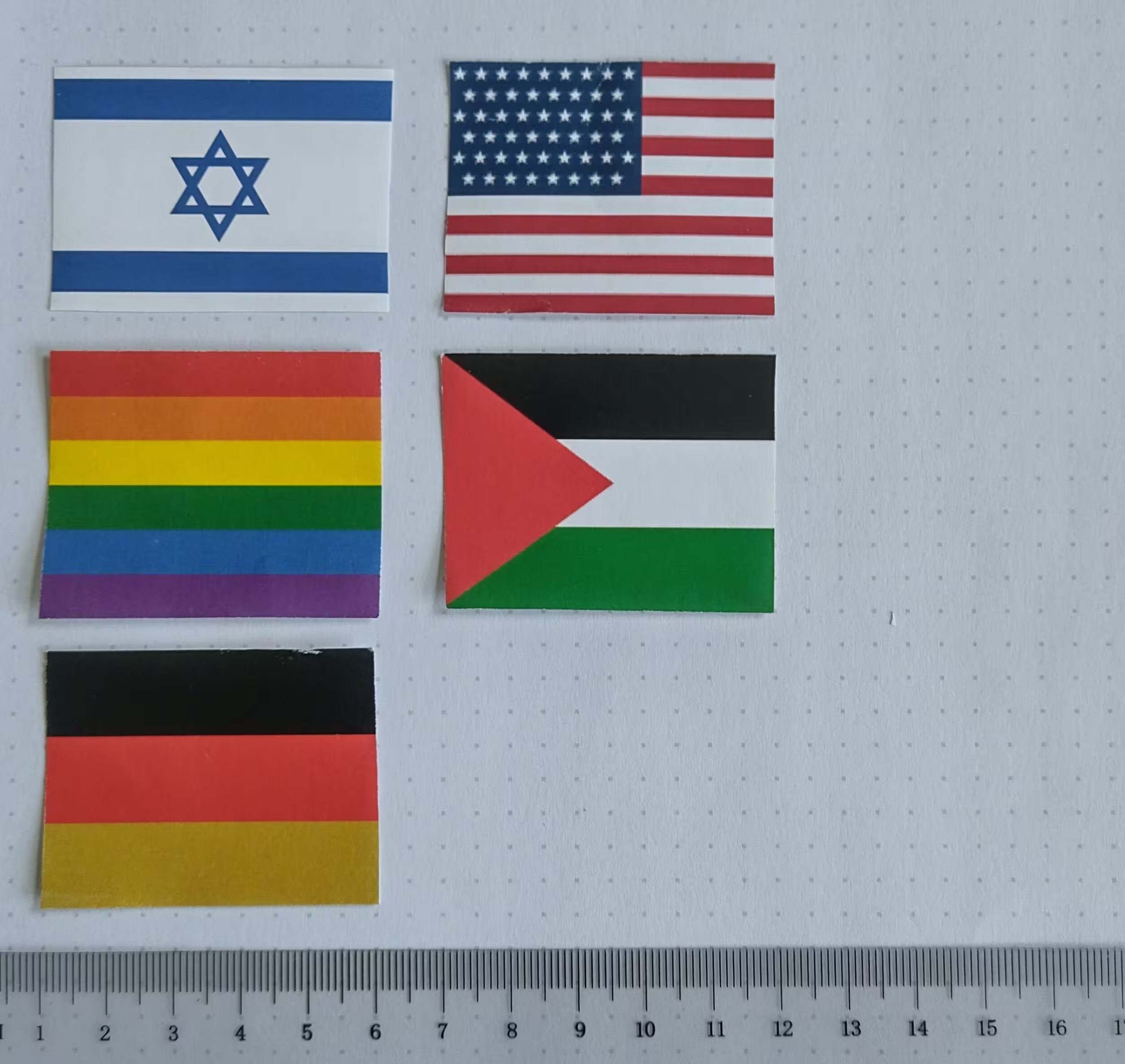
Statistical models using event history analysis revealed that the removal hazard for the Israeli flag was between 3.7 and 4.4 times higher than that of the rainbow flag, and between 2.2 and 2.6 times higher than that of the German flag. The authors noted that general explanations such as indiscriminate vandalism, anti-nationalism, or anti-imperialism cannot easily account for the pattern. If anti-imperialist sentiment were driving the removals, the United States flag should have faced similar hostility, yet it remained among the most durable stickers in the experiment.
How Did Different University Departments Compare in Sticker Survival?
The physical location of the notice boards played a substantial role in the survival rates of the political symbols. Removal hazards were notably higher in the humanities departments, shared humanities and social science hallways, and central campus facilities. Conversely, natural science departments, human and social science institutes, and economics departments recorded lower removal rates.
Foot traffic also influenced the outcomes, as notice boards located in heavily trafficked hallways exhibited lower removal hazards overall. The researchers suggest that greater social visibility may discourage individuals from openly tampering with posted materials. Furthermore, exploratory tracking of overtly political interventions—such as placing protest flyers directly over a sticker—showed that the Israeli flag accounted for the highest number of politically motivated events among the tested motifs, though the total count of such explicit actions remained relatively small.
What Are the Limits of Interpreting Unobtrusive Behavioral Data?
The authors emphasize strict caution regarding what the behavioral data can prove about individual motivations. Because the experimental design recorded only the physical status of the stickers rather than the identities or inner thoughts of the people removing them, the study cannot establish whether the differential treatment stemmed from opposition to the Israeli government, objections to military actions in Gaza, broader anti-Zionist sentiment, or antisemitism.
The historical timing of the study during an active and devastating war means the results reflect a highly polarized moment in public discourse. The authors recommend that future research combine unobtrusive behavioral tracking with anonymous campus surveys or list experiments to better understand the psychological mechanisms driving political expression and intolerance in academic environments.
The research was published in PLOS One on November 25, 2026.
This article has been fact checked for accuracy, with information verified against reputable sources. Learn more about us and our editorial process.
Last reviewed on .
Article history
- Latest version
Reference(s)
- Lutter, Mark., et al. “The limits of tolerance: A field experiment on anti-Israel bias at a German University.” PLOS One, vol. 21, no. 11, November 25, 2026, pp. e0361376 Public Library of Science (PLoS), doi: 10.1371/journal.pone.0361376. <https://doi.org/10.1371/journal.pone.0361376>.
Cite this page:
- Posted by Jessica Martin