Over Half Of Household Water Containers In Bouaké Harbor Disease-Carrying Mosquitoes
A year-long survey across urban and rural Côte d’Ivoire reveals that water storage habits and discarded tyres sustain high dengue and yellow fever risks year-round.
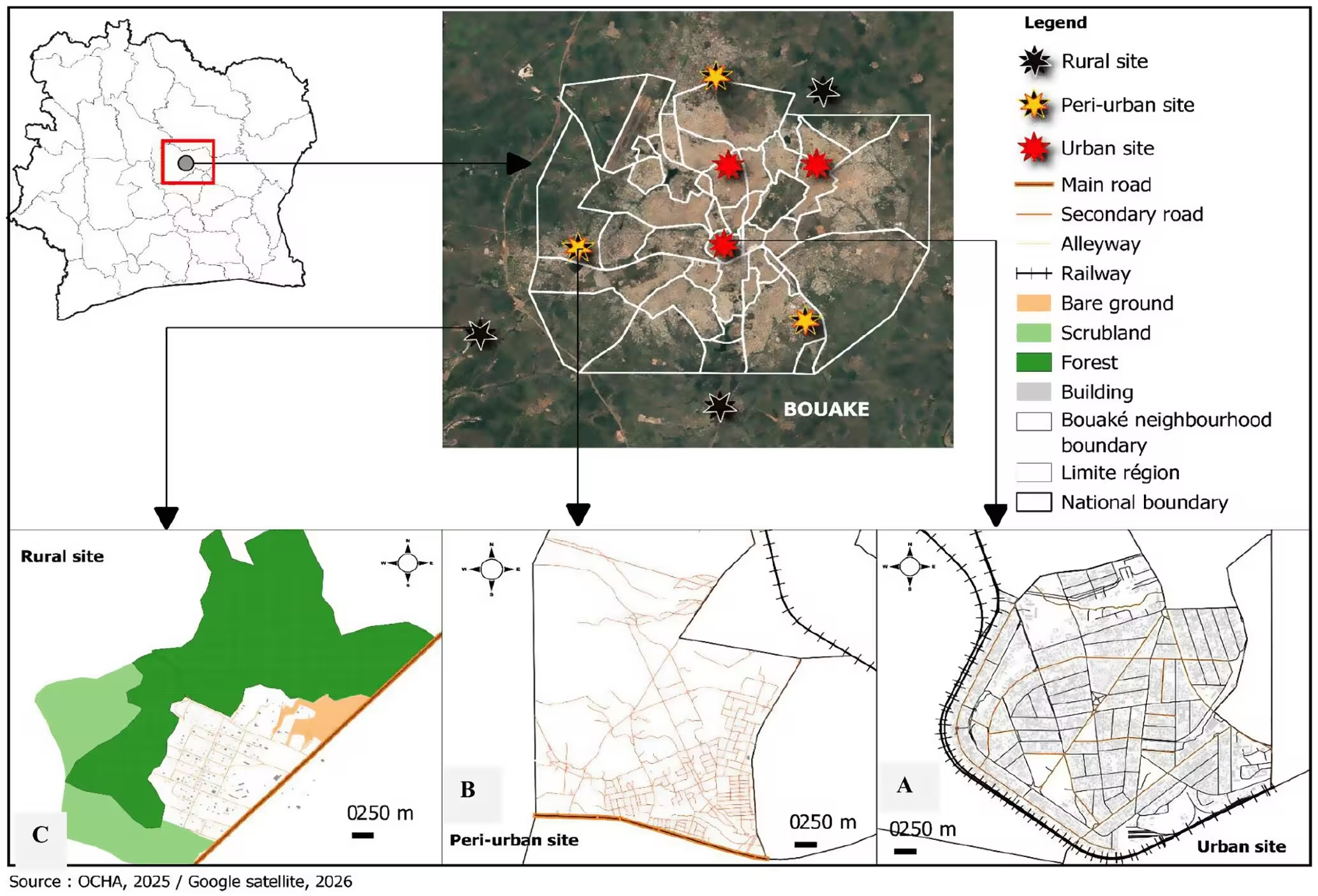
In the rapidly expanding urban landscapes of Bouaké, central Côte d’Ivoire, over half of inspected household water containers harbour disease-carrying mosquitoes, with the highest densities concentrated in the city centre. Researchers surveyed 3,600 households across urban, peri-urban, and rural areas from September 2023 to August 2024 to understand how local climate conditions and daily water storage habits drive the spread of the yellow fever and dengue mosquito vector, Aedes aegypti.
The study, published in PLOS Neglected Tropical Diseases, reveals that mosquito breeding is sustained year-round through a complex interplay between seasonal rainfall and household water storage. Lead author Jean D. K. Dibo and colleagues found that discarded car tyres and medium-sized water storage barrels serve as the primary nurseries for mosquito larvae across the semi-arid transition zone.
How Do Water Shortages and Seasonal Rains Drive Mosquito Swarms?
Urban households in Bouaké frequently experience irregular running water supplies, forcing residents to store water in large drums and buckets for weeks at a time. During the long rainy season from March to July, discarded solid waste containers such as tin cans and plastic tarpaulins fill with rainwater and become heavily infested. Conversely, during the long dry season from November to February, residents rely on indoor and courtyard water storage containers to meet daily needs, providing stable breeding habitats that allow mosquito populations to survive dry weather.
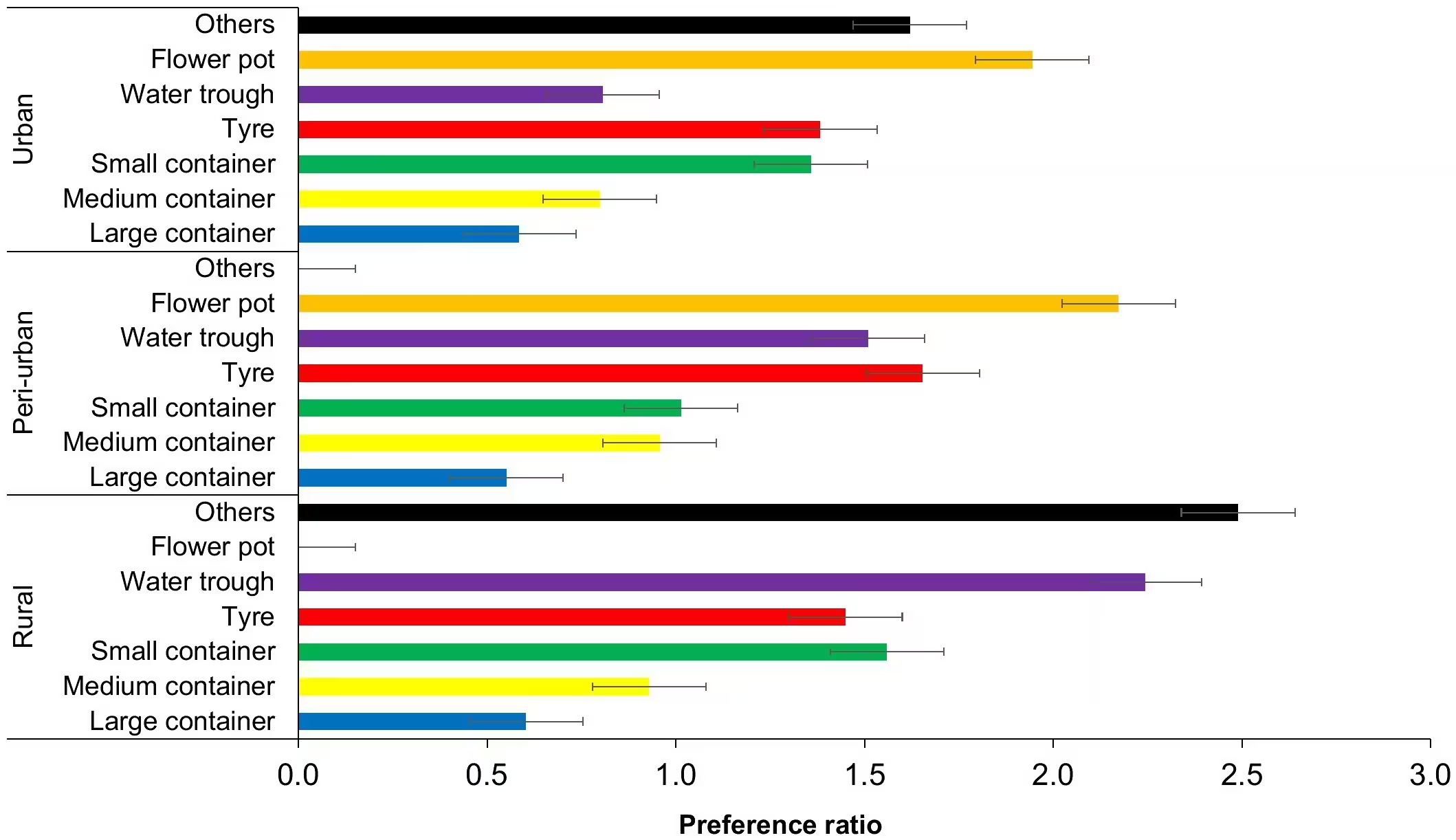
Discarded vehicle tyres emerged as the most productive breeding sites in urban and peri-urban neighborhoods, accounting for nearly 60 percent of all pupae collected in the city. Tyres absorb heat, resist heavy downpours, and possess dark inner surfaces that strongly attract egg-laying female mosquitoes. In rural farming villages, animal drinking troughs played an equally critical role, showing the highest container efficiency for producing adult mosquitoes.
Why Do Epidemic Risk Indices Exceed International Safety Thresholds?
The researchers evaluated disease transmission potential using standard entomological indicators, including the House Index, which measures the percentage of homes with positive mosquito containers. In urban neighborhoods, the House Index averaged nearly 37 percent, while the Breteau Index, measuring positive containers per 100 houses, reached a staggering high of 416. These figures far exceed the safety thresholds established by the World Health Organization for both dengue and yellow fever epidemics.
While public awareness of yellow fever was high due to national vaccination programs, knowledge of dengue transmission remained low outside the city centre. Only about 25 percent of peri-urban residents and five percent of rural residents associated dengue with mosquito bites, leaving many communities unaware of how everyday water storage practices elevate their health risks.
What Are the Limitations of This Entomological Survey?
The authors note that the investigation relied on morphological identification of reared adults and visual inspection of containers, without directly testing collected mosquitoes for circulating dengue or yellow fever viruses. Furthermore, microclimatic variations within individual courtyards, such as local shade and specific water chemistry parameters, were not exhaustively measured across every microhabitat.
What Steps Can Cities Take to Prevent Future Arboviral Outbreaks?
The findings indicate that sustainable vector control in West African secondary cities requires addressing infrastructural deficits alongside community behaviour. Regular container cleaning and tightly sealing water storage barrels significantly reduced larval presence in statistical models. Municipal strategies that improve piped water reliability and clear away abandoned solid waste, particularly used tyres, could effectively lower local mosquito densities and protect urban populations from future arboviral outbreaks.
The research was published in PLOS Neglected Tropical Diseases on November 25, 2026.
This article has been fact checked for accuracy, with information verified against reputable sources. Learn more about us and our editorial process.
Last reviewed on .
Article history
- Latest version
Reference(s)
- Dibo, Jean D. K.., et al. “Aedes aegypti breeding patterns and arboviral risks influenced by complex social-climate dynamics in the semi-arid areas of Bouaké, central Côte d’Ivoire (West Africa).” PLOS Neglected Tropical Diseases, vol. 20, no. 11, November 25, 2026, pp. e0014190 Public Library of Science (PLoS), doi: 10.1371/journal.pntd.0014190. <https://doi.org/10.1371/journal.pntd.0014190>.
- Posted by Ali Farooqui