Scientists Just Developed a Revolutionary New Hemp Plant With Zero THC
New Type V crop technology eliminates the risk of total harvest loss, offering farmers unprecedented security and crop stability for the future.
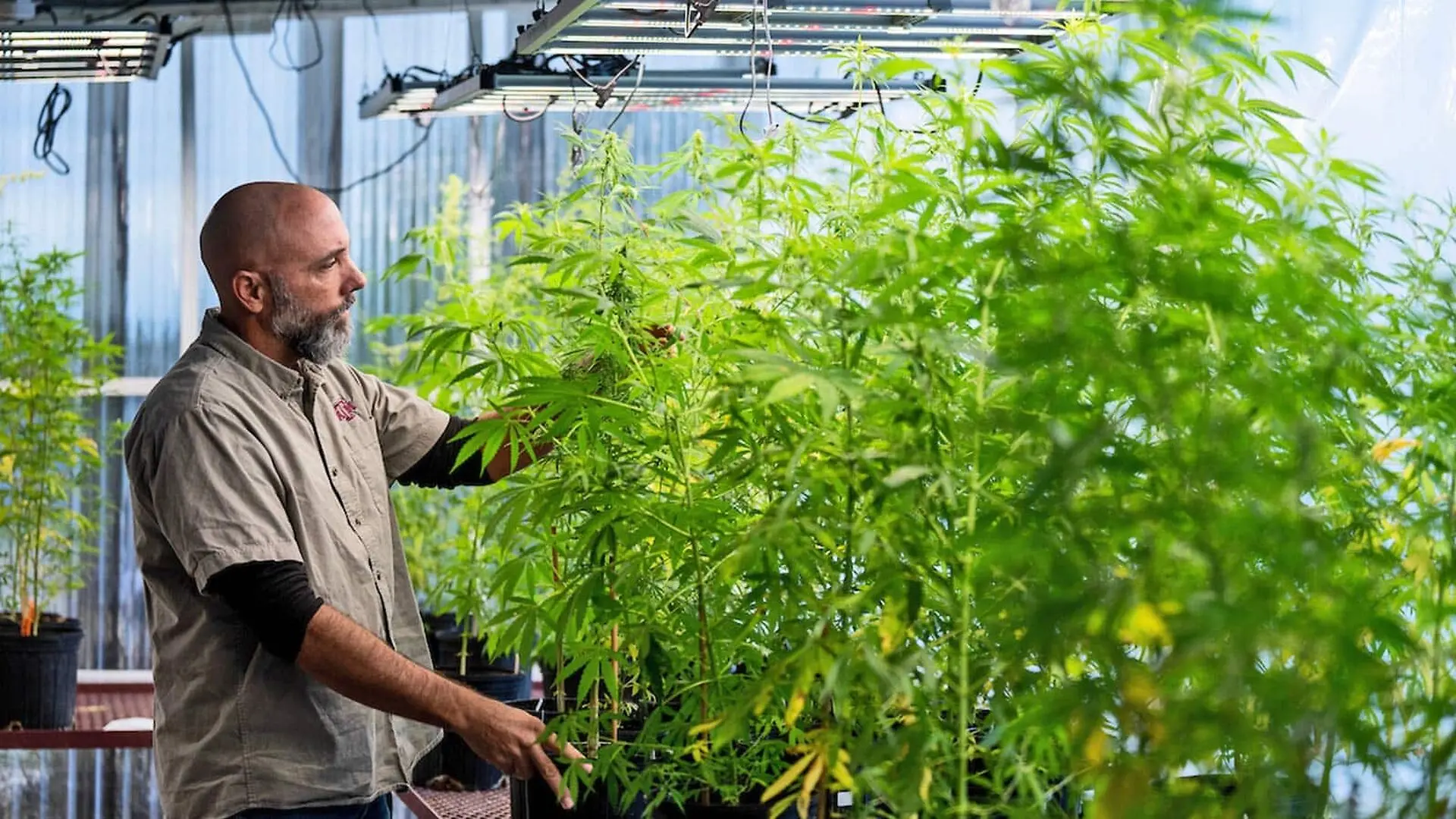
New Hemp Variety Eliminates THC Risk, Offering Security for Growers
A major breakthrough in agricultural biotechnology has yielded a variety of hemp that produces no detectable cannabinoids, including the psychoactive compound THC. This development marks the emergence of a new “Type V” class of hemp, potentially removing the most significant regulatory and financial hurdle facing the industry today: the mandatory destruction of crops that exceed legal THC thresholds.
Under federal and state regulations, industrial hemp is defined by a delta-9-tetrahydrocannabinol concentration of 0.3 percent or less. In Texas, any harvest testing above this limit must be destroyed, a policy that has stifled the commercial adoption of hemp for fiber and grain production. In 2023, nearly all fiber-grade hemp varieties imported from Asia for cultivation in Texas failed these tests, a trend that threatened the long-term viability of the state’s nascent hemp sector.
Russ Jessup, a hemp breeder at the Texas A&M College of Agriculture and Life Sciences and director of the Texas A&M AgriLife Research and Extension Center at San Angelo, believes this innovation is a turning point. “Producers always had to worry about whether they’re going to have to destroy their crop; with Type V, they never have to worry about that again,” Jessup said. By decoupling the plant from cannabinoid production, the research team aims to stabilize the market for industrial hemp commodities.
Targeting the Trichome
While previous attempts to manipulate cannabinoid levels have relied on gene editing to disable specific chemical pathways—efforts that often failed to achieve zero-percent concentrations—the AgriLife Research team took a different structural approach. Instead of editing internal genes, they targeted the physical machinery the plant uses to manufacture cannabinoids: the trichomes.
Trichomes are microscopic, hairlike structures that typically feature a gland at their tip. Researchers identified that by eliminating these glands, the plant becomes physically incapable of producing cannabinoids. Leading the effort, scientist Teja Sri Vengala utilized ethyl methanesulfonate (EMS) to induce genetic variation in hemp seeds. Through rigorous screening of thousands of plants, the team identified specimens that lacked the glandular structures entirely.
This process, detailed in the journal Crops, is characterized by the researchers as a traditional plant breeding approach rather than genetic modification. Following self-pollination, the team verified the absence of 18 different cannabinoids using high-performance liquid chromatography. They also conducted whole genome sequencing to identify candidate genes associated with this glandless trait, facilitating the development of molecular markers for future breeding programs.
Scaling for Global Markets
The implications of this discovery extend far beyond Texas. Many nations enforce even stricter THC limits than the United States, creating a global demand for genetics that can guarantee complete cannabinoid neutrality. Because the Type V trait can be cross-bred into existing fiber or grain cultivars, it offers a platform for agricultural industries worldwide to stabilize their yields.
For Texas farmers, the immediate goal is to develop dual-purpose cultivars specifically suited to the state’s climate. The AgriLife team anticipates that these new varieties will integrate seamlessly with existing small-grain farming equipment. Furthermore, the high omega-3 and omega-6 fatty acid profiles of hemp grain present an opportunity to enhance the nutritional quality of livestock and poultry feed.
This article has been fact checked for accuracy, with information verified against reputable sources. Learn more about us and our editorial process.
Last reviewed on .
Article history
- Latest version
Reference(s)
- Vengala, Teja., et al. “Determination of the EMS Lethal Dose (LD50) and Characterization of Induced Mutations in Industrial Hemp (Cannabis sativa L.).” Crops, vol. 6, no. 4, August 12, 2026, pp. 78 MDPI AG, doi: 10.3390/crops6040078. <https://doi.org/10.3390/crops6040078>.
Cite this page:
- Posted by Rohan Kumar