Massive 3-Meter Deep-Sea Shark Discovered in the Caribbean for the First Time
Interviews with a local fisherman suggest a resident population of the rare false catshark lurks 800 meters deep off Martinique.
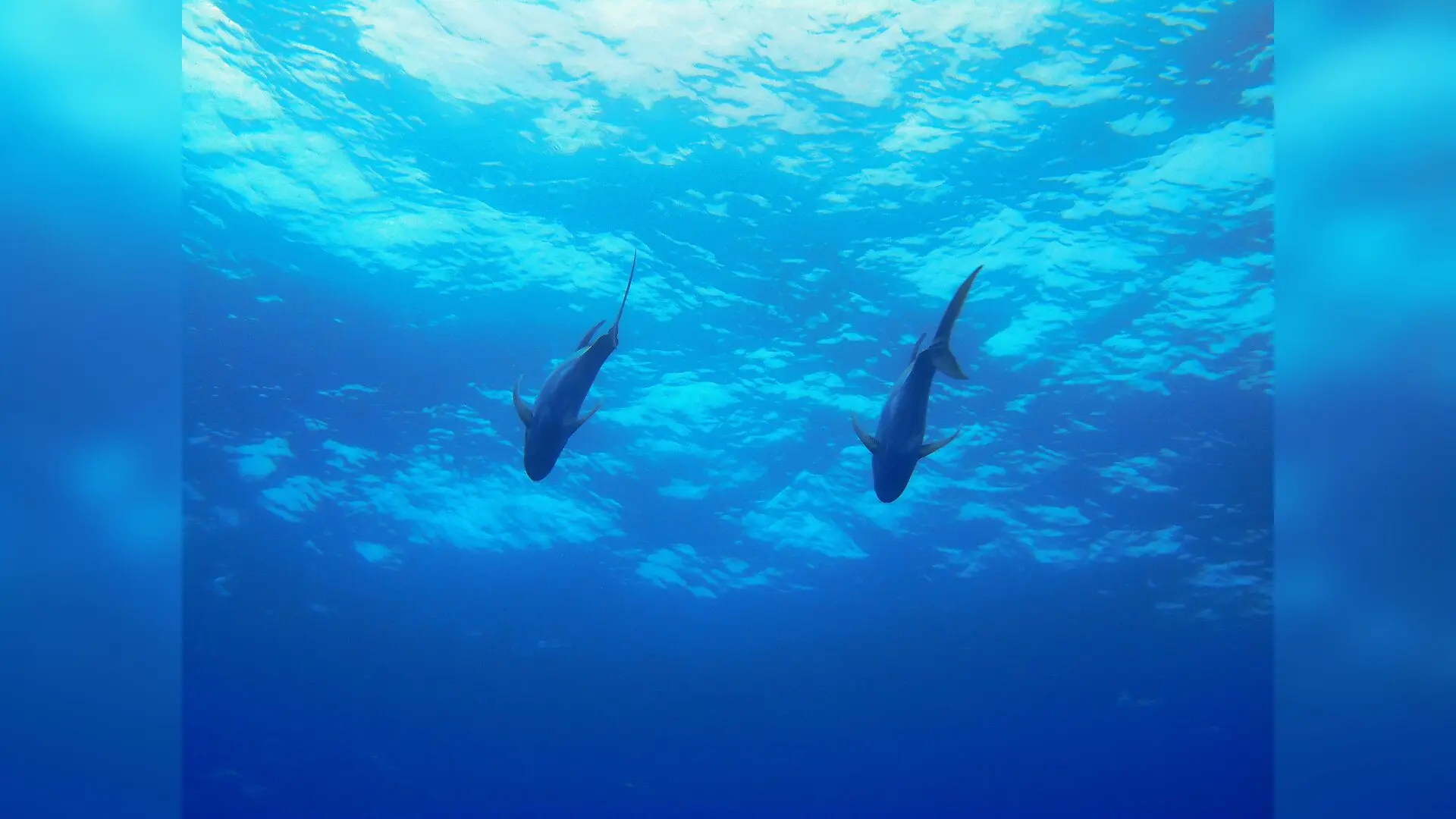
A colossal 310-centimeter deep-sea shark has turned up in the Caribbean, marking the first time this elusive giant has been officially documented in the Lesser Antilles. The massive female false catshark, scientifically known as Pseudotriakis microdon, was hauled up from an abyss 800 meters beneath the surface off the coast of Martinique by an artisanal fisherman using a bottom longline.
Marine biologists detailed the rare encounter, published in Ecology and Evolution, noting that the specimen was captured on June 10, 2025, after a 12-hour soak time at a depth of 800 meters. The species belongs to a poorly understood family of deep-water sharks comprising just five recognized species worldwide. Reaching lengths of up to 3 meters, P. microdon is the largest representative of the family and features distinctive cat-like eyes adapted for pitch-black waters, alongside a broad mouth packed with small, non-cutting teeth.
What Revealed the Hidden Presence of This Rare Shark in Martinique?
While the physical specimen provided undeniable proof of the shark in the Lesser Antilles, interviews with the local fisherman unlocked decades of hidden ecological insights. The fishers reported encountering more than 10 similar individuals over a span of 20 years of deep-sea fishing activity in the region. This verbal history suggests that the false catshark is not merely a stray wanderer, but rather might maintain a steady, resident population in the deep slopes surrounding Martinique.
The scarcity of records for P. microdon across the Caribbean Sea stems from a lack of deep-water exploration rather than true biological rarity. Most knowledge regarding large deep-sea predators in these waters relies entirely on opportunistic catches by small-scale fisheries. Because volcanic island slopes and continental drop-offs in the region remain largely uninvestigated by formal scientific surveys, fishers often serve as the primary source of discovery for deep-sea biodiversity.
Why Vulnerable Deep-Sea Predators Face Rising Pressures
Like many deep-water chondrichthyans, which are jawed fish with cartilaginous skeletons like sharks and rays, the false catshark possesses a slow life-history strategy. These animals typically exhibit delayed maturity, low fecundity, and reduced population productivity, making them exceptionally fragile when faced with external stressors. Even though artisanal fishers do not specifically target P. microdon, expanding deep-water fishing operations could pose an unmonitored conservation threat to the species.
The research team emphasizes that combining traditional ecological knowledge from local fishers with modern scientific surveys is vital for mapping out regional distributions. Future efforts will need to integrate fishery-dependent observations with molecular approaches to determine the actual abundance and conservation status of these deep-dwelling giants across the Caribbean.
The research was published in Ecology and evolution on November 17, 2026.
This article has been fact checked for accuracy, with information verified against reputable sources. Learn more about us and our editorial process.
Last reviewed on .
Article history
- Latest version
Reference(s)
- Sanchez, Théo., et al. “First Record of the False Catshark ( Pseudotriakis microdon ) From Lesser Antilles.” Ecology and Evolution, vol. 16, no. 11, November 17, 2026 Wiley, doi: 10.1002/ece3.74469. <https://doi.org/10.1002/ece3.74469>.
Cite this page:
- Posted by Divya Iyer