New AI Algorithm Accurately Predicts Pharmacokinetics and Toxicity of Complex Peptide Drugs
A multimodal neural network successfully combines chemical topology and biological sequences to evaluate modified therapeutic peptides.
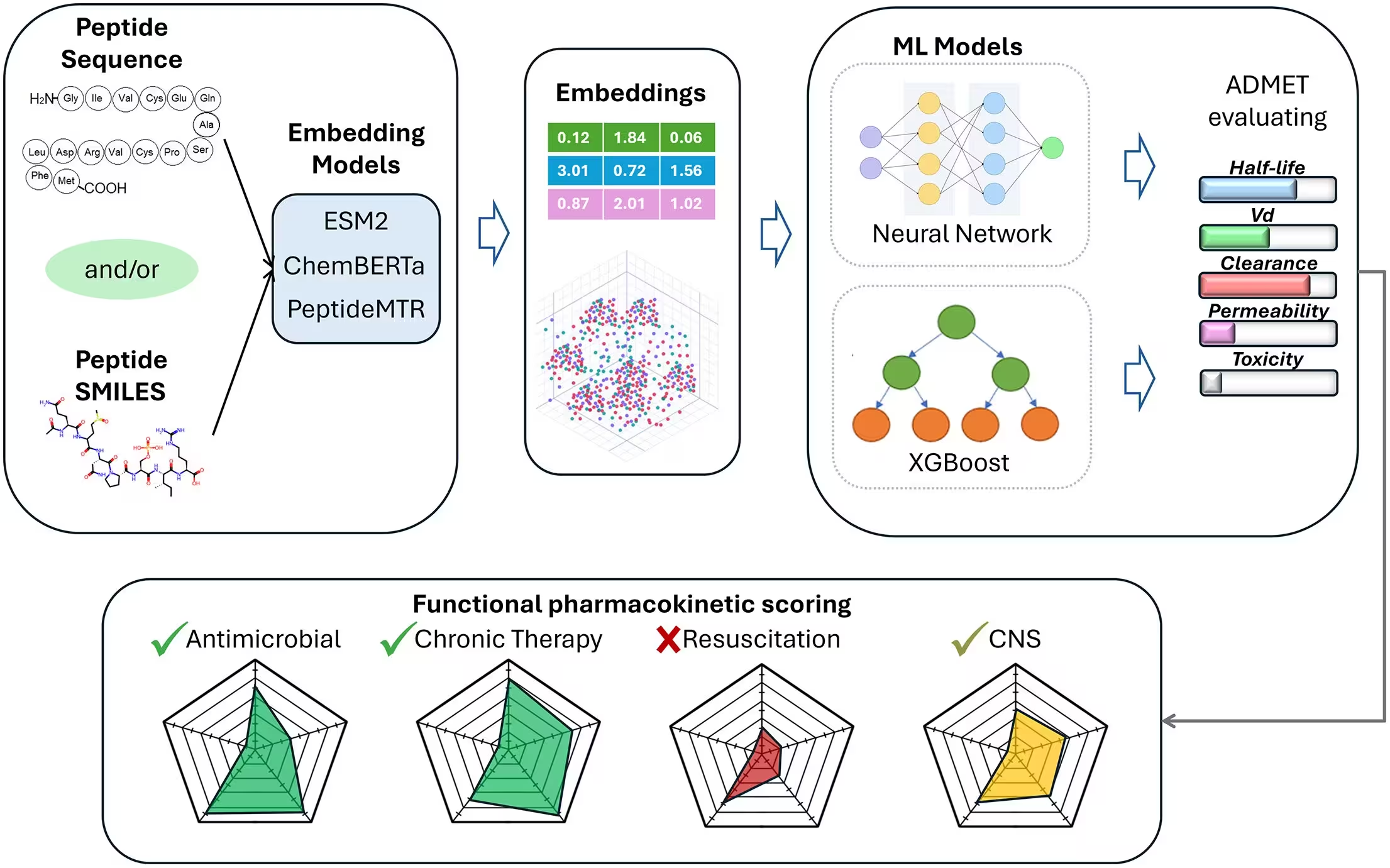
Peptide therapeutics hold immense promise for treating stubborn diseases because they can target complex protein networks that traditional small molecules cannot reach, but their poor stability in the body has long stalled their clinical development. To solve this bottleneck, researchers engineered a new multimodal artificial intelligence system called Pepti-DrugPhAI that simultaneously processes chemical atomic structures and biological amino acid sequences. The study is published in PLOS Computational Biology, detailing how this tool predicts the pharmacokinetics and toxicity of both natural and heavily modified peptide drugs.
How Artificial Intelligence Overcomes Peptide Instability
Developing peptide drugs requires chemical modifications like macrocyclization, non-canonical amino acids, and lipid additions to prevent them from degrading too quickly. Traditional computational models fail because they either focus strictly on small-molecule chemistry or are limited to the standard 20-amino-acid alphabet used in proteins. The authors designed Pepti-DrugPhAI to combine the ESM-2 protein language model with the ChemBERTa chemical model and PeptMTR architecture, creating a hybrid pipeline capable of analyzing complex modifications.
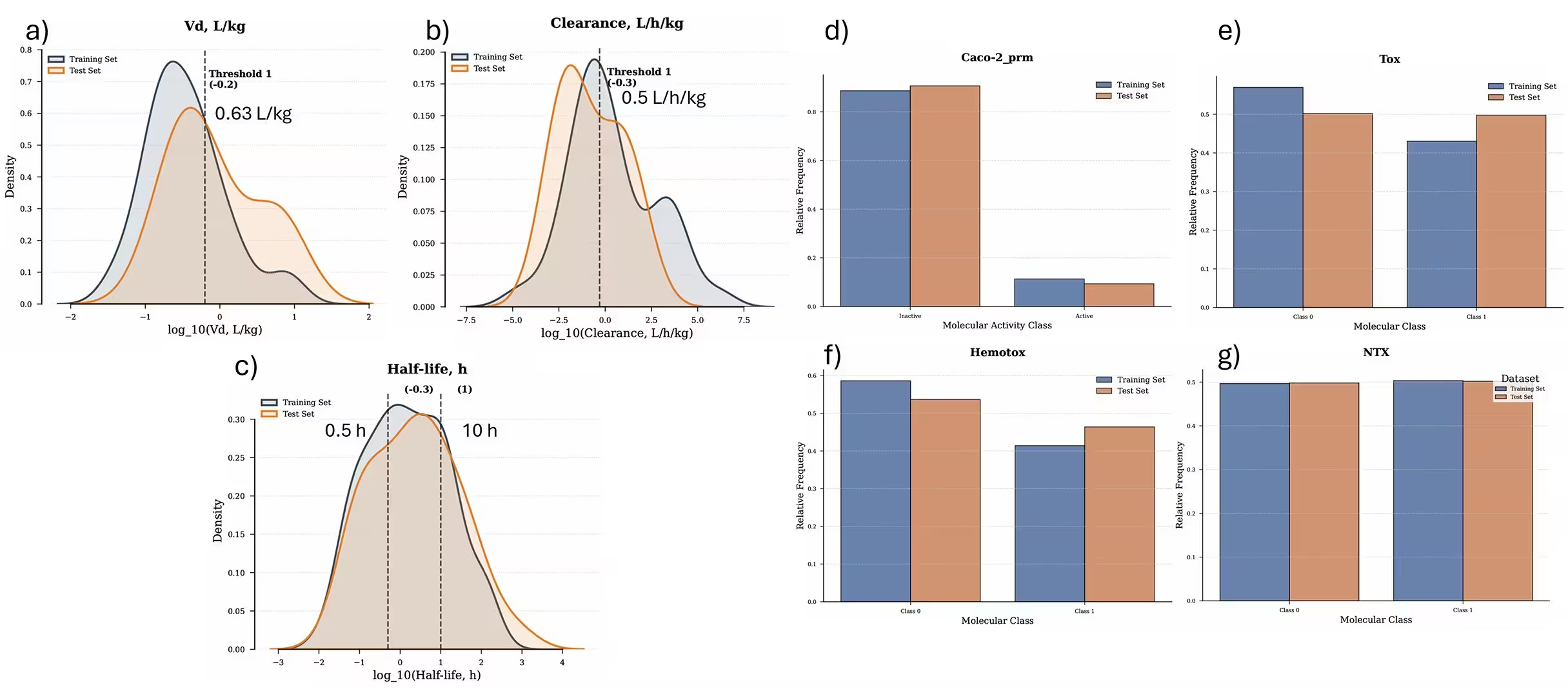
By merging these information streams through a specialized Robust Peptide Fusion layer, the algorithm captures both atomic topology and deep macromolecular context. The team also compiled a consolidated cross-species dataset that bridges literature values with model organism metadata. This approach prevents the model from relying on isolated physicochemical constants and instead evaluates how well a molecule fits its target therapeutic activity.
What the Validation Metrics Reveal About Half-Life Prediction
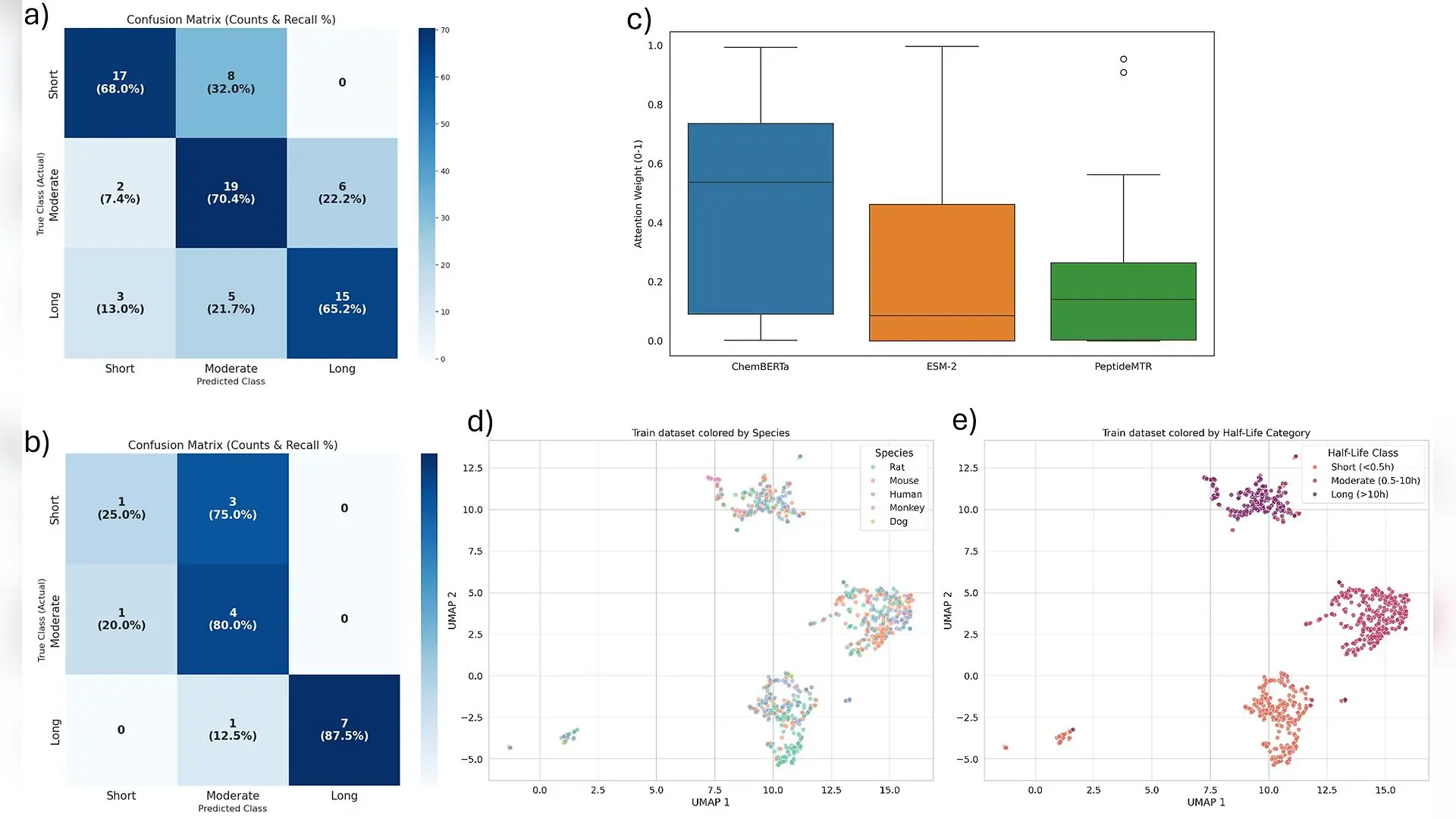
Evaluating the half-life of peptide drugs across internal and independent test sets showed that the multimodal neural network significantly outperformed existing platforms. While tools like ADMETlab 3.0 and PeptiVerse yielded low F1-scores between 0.15 and 0.34, the multimodal network achieved an F1-score of 0.68 when trained on both human and animal data. The authors noted that augmenting the training set with in vivo animal data did not introduce destructive experimental noise, but instead acted as a powerful structural regularization tool.
Analysis of attention weights within the integration layer revealed that the neural network prioritizes the ChemBERTa chemical flow graph when assessing metabolic stability. This highlights the importance of accounting for non-classical modifications encoded in SMILES notation that standard protein language models miss. Furthermore, incorporating small molecules into the training data for clearance and volume of distribution boosted the F1-scores to 0.86 and 0.91, respectively.
Potential Roadblocks and Future Screening Applications
Despite its high accuracy, the algorithm faces certain limitations due to data scarcity and structural edge cases. For instance, the model struggled to differentiate between linear and cyclic peptide isomers when the biological language model dominated the chemical flow. Bulky lipidated structures like Cagrilintide also posed challenges because they fell outside the typical training domain of shorter acyl chains.
To make these predictions practically useful for drug developers, the researchers established an adaptive 100-point scoring function tailored to specific therapeutic profiles. Whether evaluating antimicrobial agents, chronic hormone regulators, or acute vasoactive drugs, the scoring system dynamically adjusts its parameters based on clinical need. This workflow is expected to accelerate early-stage screening and help prioritize safe, effective peptide candidates for clinical translation.
The research was published in PLOS Computational Biology on November 11, 2026.
This article has been fact checked for accuracy, with information verified against reputable sources. Learn more about us and our editorial process.
Last reviewed on .
Article history
- Latest version
Reference(s)
- Bogdanova, Elizaveta A.., et al. “Pepti-DrugPhAI: Multimodal AI-evaluator for functional pharmacokinetics and toxicity of peptides.” PLOS Computational Biology, vol. 22, no. 11, November 11, 2026, pp. e1014956 Public Library of Science (PLoS), doi: 10.1371/journal.pcbi.1014956. <https://doi.org/10.1371/journal.pcbi.1014956>.
Cite this page:
- Posted by Robert Brown