New Smartphone Hydrogel Biosensor Detects Early Kidney Disease Biomarkers
A novel paper-based fluorescent sensor measures target microRNA fragments using pixel ratios to enable portable diagnostics in resource-limited settings.
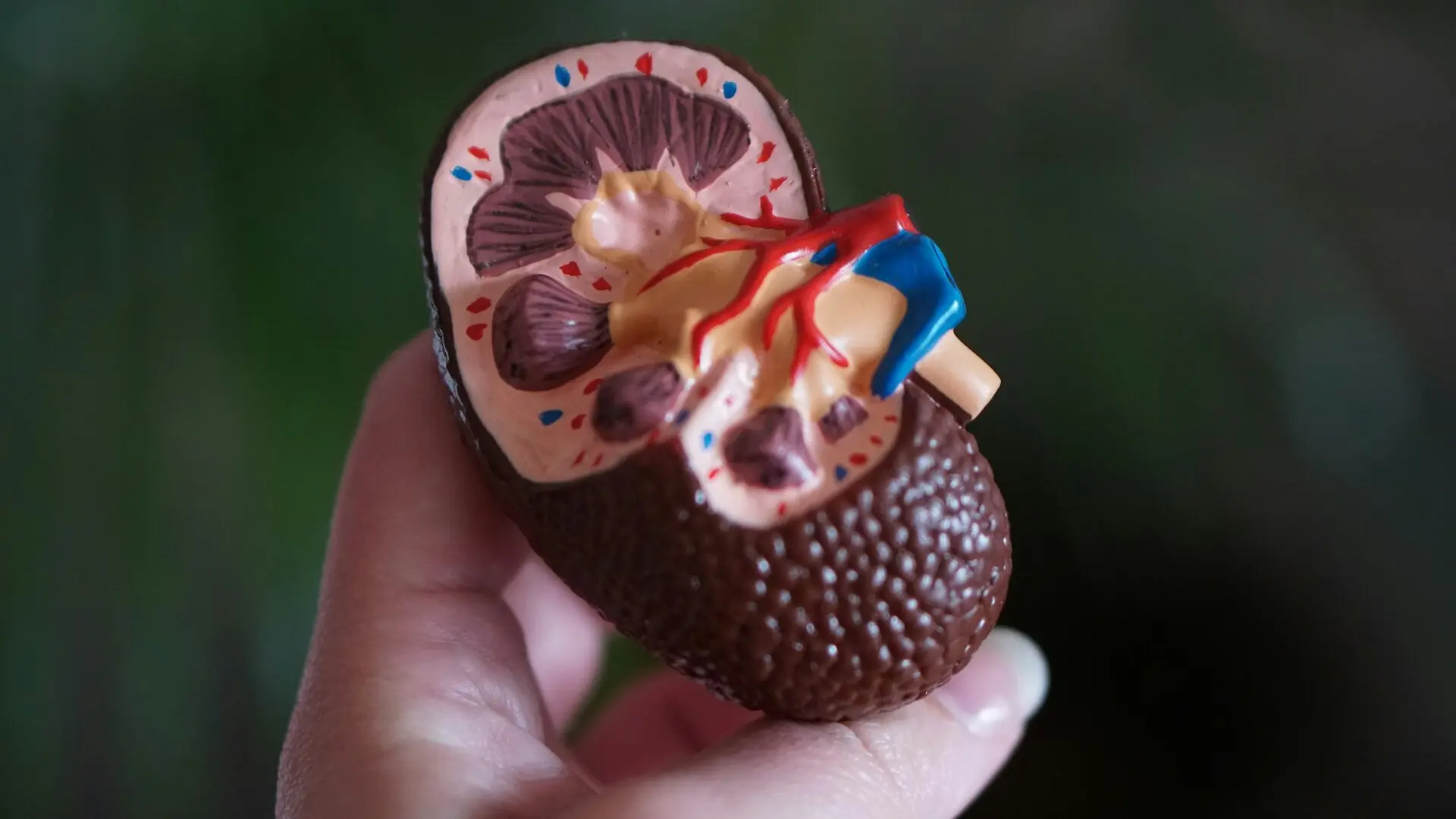
A new paper-based biosensor can detect early signs of diabetic kidney disease using just a smartphone and a portable ultraviolet light box. Diabetic kidney disease is a severe, widespread complication of diabetes mellitus that damages renal function over time, but current tests usually spot the injury only after irreversible harm has already occurred. Patients and clinicians urgently need sensitive, low-cost screening tools that can catch the condition at a reversible stage without relying on complex laboratory machinery.
To solve this challenge, researchers engineered a smart hydrogel embedded with tiny carbon-based fluorescent markers and specific DNA strands. The study describing this device was published in RSC Advances by lead author Xiaoqing Chen and colleagues at their research institution. The team focused on microRNA-21, a tiny ribonucleic acid molecule that circulates in bodily fluids and acts as a key pathogenic regulator during early kidney inflammation and fibrosis.
How Does the Smartphone Hydrogel Biosensor Detect Kidney Disease?
The newly developed diagnostic platform relies on a clever biochemical trigger and a visual spatial readout. Inside the hydrogel network, capture DNA strands are cross-linked with sodium hyaluronate to trap carbon quantum dots, which are zero-dimensional carbon nanomaterials measuring less than ten nanometers across. When target microRNA-21 is present in a sample, it binds to the capture DNA, forming a hybrid duplex structure. An enzyme known as duplex-specific nuclease then selectively cleaves the DNA inside this duplex.
This enzymatic cleavage breaks down the hydrogel network and releases the fluorescent carbon dots. The degraded mixture is dropped onto a microporous nitrocellulose filter paper with a diameter of fifty millimeters. Under ultraviolet illumination in a dark box, the liquid diffuses outward to create a glowing fluorescent spot with sharp boundaries. A standard smartphone camera photographs the paper, and specialized software calculates the exact pixel ratio between the glowing region and the total paper area to determine the final measurement.
What Are the Performance Limits and Sensitivity of the Test?
Laboratory evaluations demonstrated that the biosensor achieves a wide linear detection range spanning from one picomolar to ten nanomolar concentrations of the target biomarker. The detection limit was calculated to be about one hundred and thirty-one femtomoles, showing high sensitivity that matches many traditional laboratory instruments. Specificity tests using interfering molecules such as mismatched RNA sequences and other microRNAs confirmed that the sensor responds almost exclusively to the target microRNA-21.
When tested on human male serum samples spiked with the biomarker, recovery rates ranged from about ninety-five percent to one hundred and ten percent, with relative standard deviations staying below seven percent. Furthermore, the hydrogel maintained stable performance after being stored at four degrees Celsius for four weeks, pointing toward reliable shelf life for future point-of-care applications.
Why Does Pixel Ratio Measurement Matter for Field Testing?
Field diagnostics often suffer from inconsistent lighting or variable camera angles when operators take pictures in remote settings. By calculating a pixel ratio rather than relying on absolute physical dimensions, the research team successfully eliminated errors caused by different shooting distances or lighting conditions. The method requires no physical separation steps between the hydrogel fragments and the supernatant, which drastically reduces potential human operator error during testing.
The authors note that while sophisticated techniques like surface-enhanced Raman scattering offer extreme sensitivity, they require expensive equipment and skilled technicians. The new hydrogel approach bypasses those barriers by combining low material costs with smartphone image analysis. This portable strategy holds strong promise for expanding early kidney disease screening and home-based health monitoring in resource-limited regions.
The research was published in RSC advances on November 23, 2026.
This article has been fact checked for accuracy, with information verified against reputable sources. Learn more about us and our editorial process.
Last reviewed on .
Article history
- Latest version
Reference(s)
- Chen, Xiaoqing., et al. “Paper-based hydrogel biosensor integrated with carbon dots for portable detection of microRNA-21 using a fluorescent diffusion area as the readout.” RSC Advances, January 1, 2026 Royal Society of Chemistry (RSC), doi: 10.1039/d6ra07875c. <https://doi.org/10.1039/d6ra07875c>.
Cite this page:
- Posted by Rohan Kumar