AI Medical Scribes May Shift Rather Than Reduce Doctor Paperwork Burden
Online clinician discussions reveal that automated documentation tools introduce new bottlenecks across consent, software integration, and note verification.

Artificial intelligence tools designed to listen to doctor-patient conversations and automatically write medical notes may not simply erase paperwork, but instead shift the administrative burden to new steps in the visit. As clinics increasingly adopt these systems to combat burnout, understanding how they change daily tasks is a pressing challenge for healthcare providers.
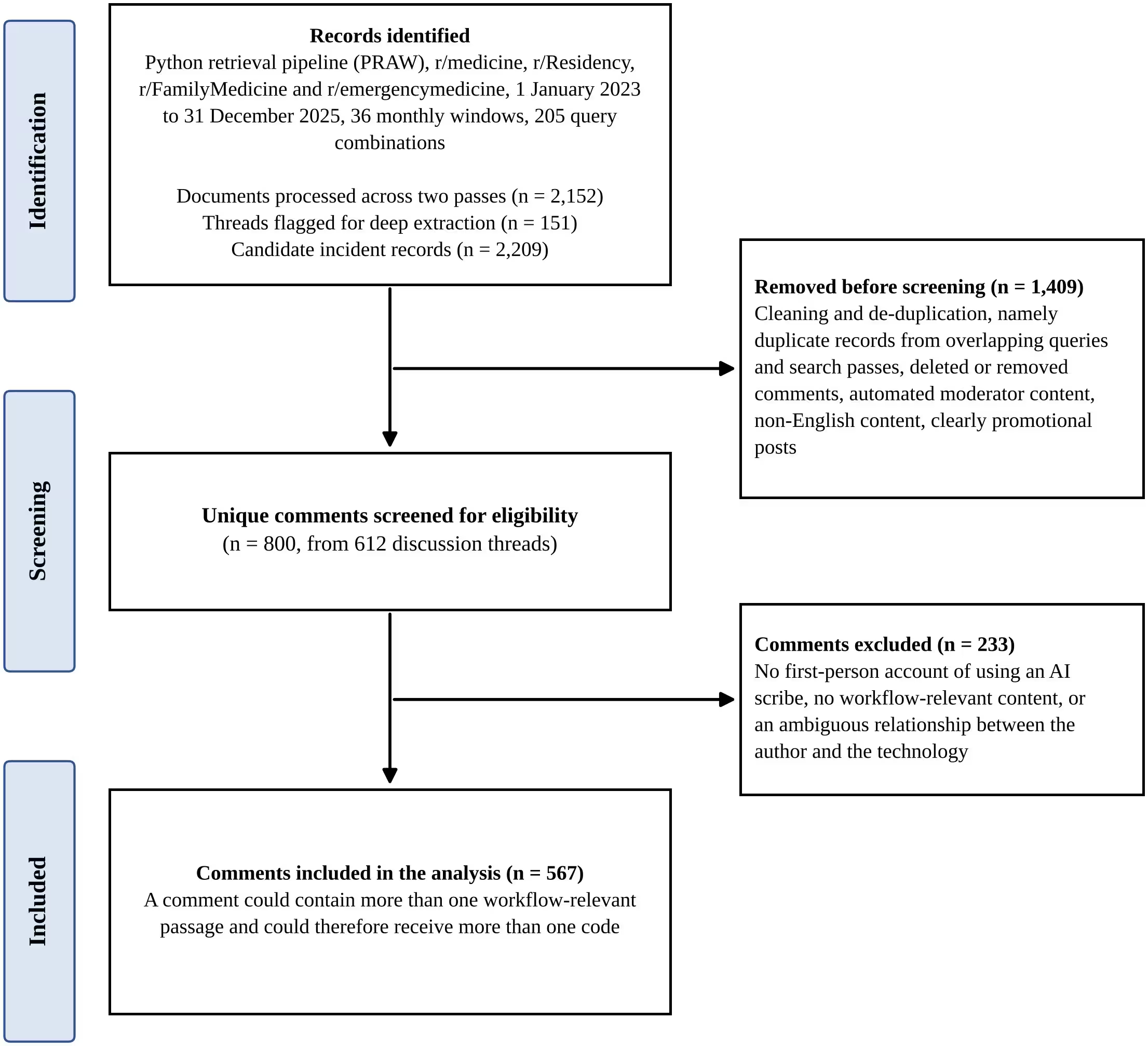
Researchers Samuel Oluwatobi Atiku, Kehinde Owolanke, and Olufisayo Olakotan examined this technological shift by analyzing online professional discussions. The study, published in PLOS Digital Health, analyzed 567 comments posted on social media platform Reddit between January 2023 and December 2025.
How Do These Audio Tools Disrupt Face-to-Face Consultations?
While software developers pitch ambient medical scribes as silent, invisible helpers, doctors reported that setting them up requires active intervention. Clinicians described needing to launch smartphone apps, position hardware around the consultation room, and manage verbal consent routines with every single patient. Rather than disappearing into the background, these preliminary steps introduce fresh interruptions to the clinical rhythm.
Consent emerged as a recurring source of friction during already tight appointments. Doctors noted that explaining recording permissions and answering patient questions about cloud data storage can eat into precious face-to-face time. Furthermore, bringing personal devices into examination rooms created privacy concerns and hardware management hassles for many practitioners.
What Happens When Processing Delays Block Patient Transitions?
Once an encounter concludes, physicians often face waiting periods before drafts materialize. Some participants in the online discussions reported processing delays lasting up to twenty minutes during peak hours. This lag creates a bottleneck when a practitioner is trying to wrap up one visit and move on to the next waiting patient.
Accessing the generated text also proved frustrating when software programs failed to connect smoothly with hospital record systems. When doctors had to jump between separate browser windows or external portals, the promised time savings shrank considerably. Navigating multiple logins disrupted the natural flow of patient care and added unnecessary digital friction.
Can These Automated Drafts Reach Signature Readiness Without Extra Clicks?
The final hurdle in clinical documentation is signing the record to make it legally and financially complete. The study highlights that AI tools succeed when they write directly into electronic health record systems with minimal intervention. In these cases, doctors can quickly scan the text, insert a billing shortcut, and sign off within seconds.
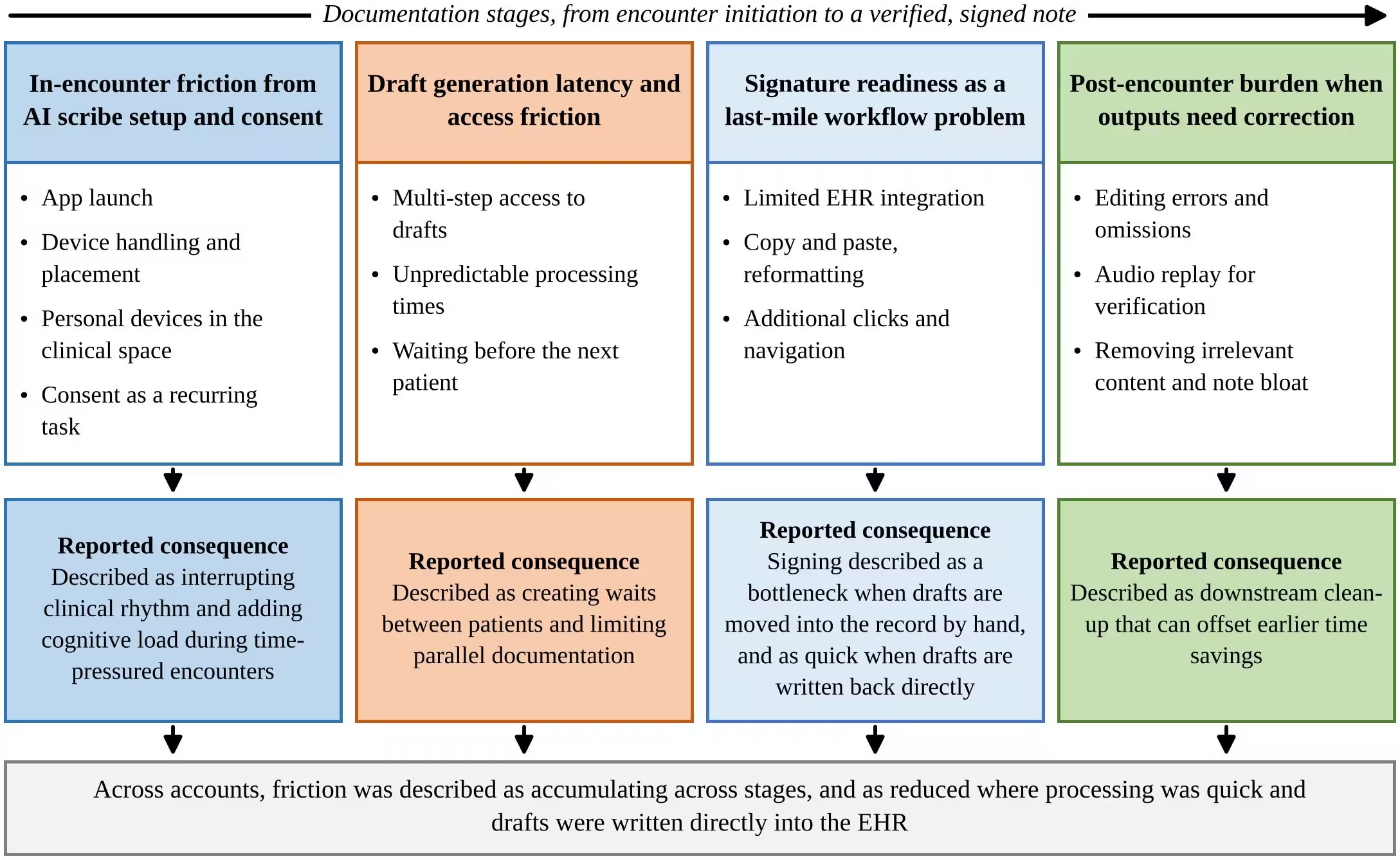
However, when systems lack direct integration, clinicians are forced into manual copy-and-paste routines. Moving text from an external web page into a hospital chart frequently breaks paragraph formatting and requires tedious clean-up work. Without native system integration, the administrative effort is merely relocated rather than eliminated.
Why Does Post-Encounter Editing Consume Valuable Time?
Even after transferring a draft into the patient file, review and correction remain mandatory tasks. Doctors frequently found themselves editing out irrelevant conversational filler, fixing misheard medical terminology, or playing back audio files to check for accuracy. In complicated cases, re-verifying the AI output can take as long as writing the note from scratch.
The authors acknowledge important limitations in their work, noting that the findings rely on anonymous online accounts rather than direct observation or systematic surveys. Because the self-reported discussions cannot verify clinician identities or specific software brands, the conclusions reflect qualitative experiences rather than universal measurements. Nonetheless, these insights suggest that evaluating medical artificial intelligence requires looking beyond simple time-saving metrics and focusing on how software fits into the complete clinical workflow.
The research was published in PLOS Digital Health on November 25, 2026.
This article has been fact checked for accuracy, with information verified against reputable sources. Learn more about us and our editorial process.
Last reviewed on .
Article history
- Latest version
Reference(s)
- Atiku, Samuel Oluwatobi., et al. “Integrating AI scribes into clinical documentation workflows: Netnographic qualitative analysis of workflow challenges.” PLOS Digital Health, vol. 5, no. 11, November 25, 2026, pp. e0001857 Public Library of Science (PLoS), doi: 10.1371/journal.pdig.0001857. <https://doi.org/10.1371/journal.pdig.0001857>.
Cite this page:
- Posted by Robert Brown