Human Landscape Alteration Can Act as an Invasion Highway for Disease Vectors
Mathematical simulations show that habitat fragmentation alters wildlife migration and insect vector spread in unexpected ways.
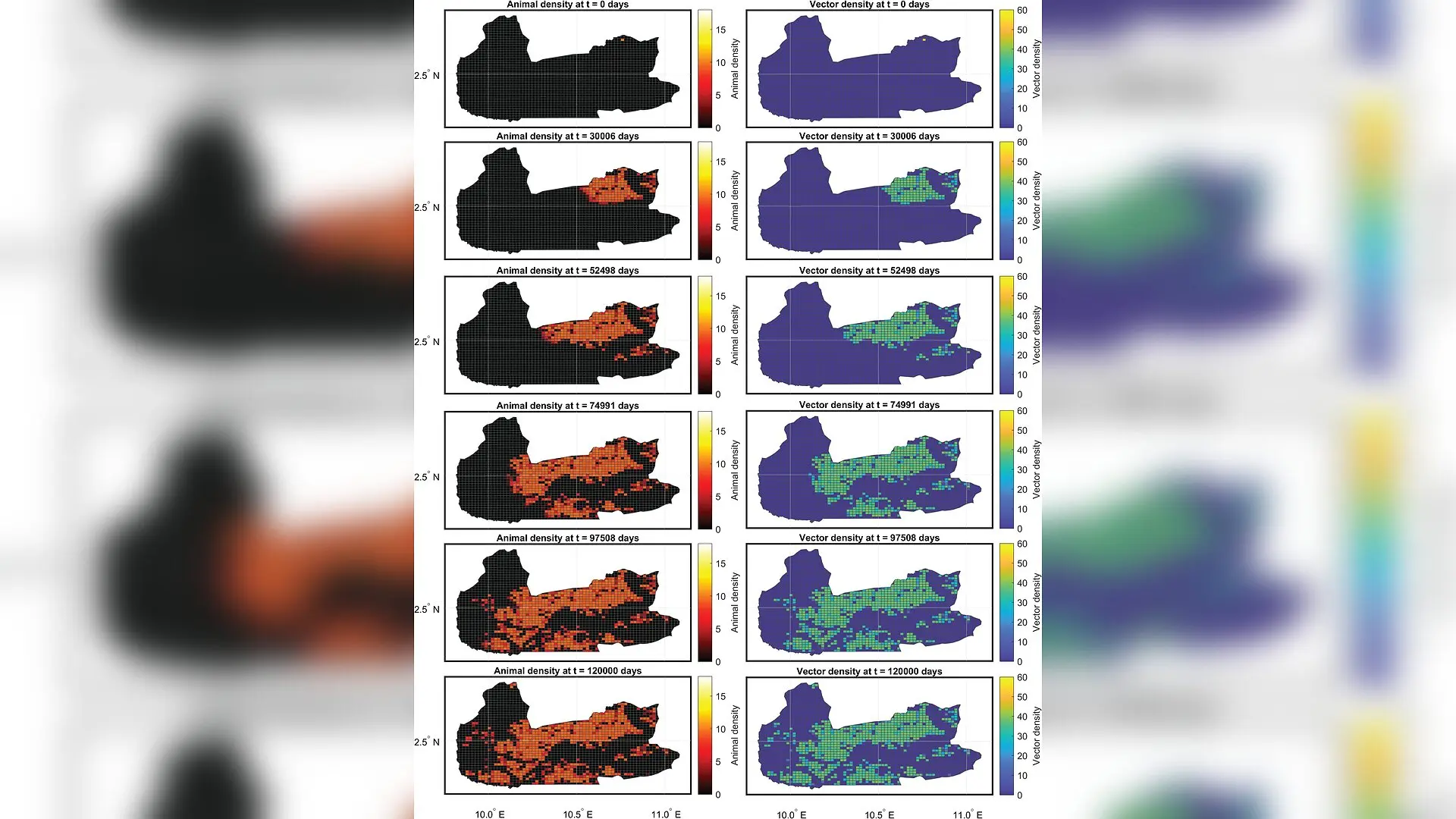
Tsetse flies and their wild animal hosts change their movement patterns when human activities alter forest landscapes, creating unexpected highways and barriers for disease vectors. A mathematical model simulating landscape changes in the Ocean division of southern Cameroon reveals how habitat fragmentation reshapes the population dynamics of disease-carrying insects.
The study, available on the arXiv preprint server and led by researchers from the University of Yaoundé I, investigates how human transformation of natural habitats alters the movement and survival of both wildlife hosts and blood-feeding insects. Tsetse flies serve as the primary vectors for Trypanosoma parasites, which cause sleeping sickness in humans and nagana in livestock across sub-Saharan Africa. Understanding how these populations migrate across patchy environments is crucial for predicting disease emergence.
How Do Fragmented Landscapes Alter Animal and Vector Migration?
Human pressures such as agriculture and logging reduce the density of woody vegetation, which the authors quantify using a normalized anthropization index ranging from zero for untouched forest to nearly one for heavily altered land. When natural habitats shrink, wild animal carrying capacities drop, prompting both animals and insects to leave crowded or degraded patches. The researchers modeled this movement across a grid of two-kilometer patches, testing three distinct dispersal behaviors to see how populations settle into stable equilibria.
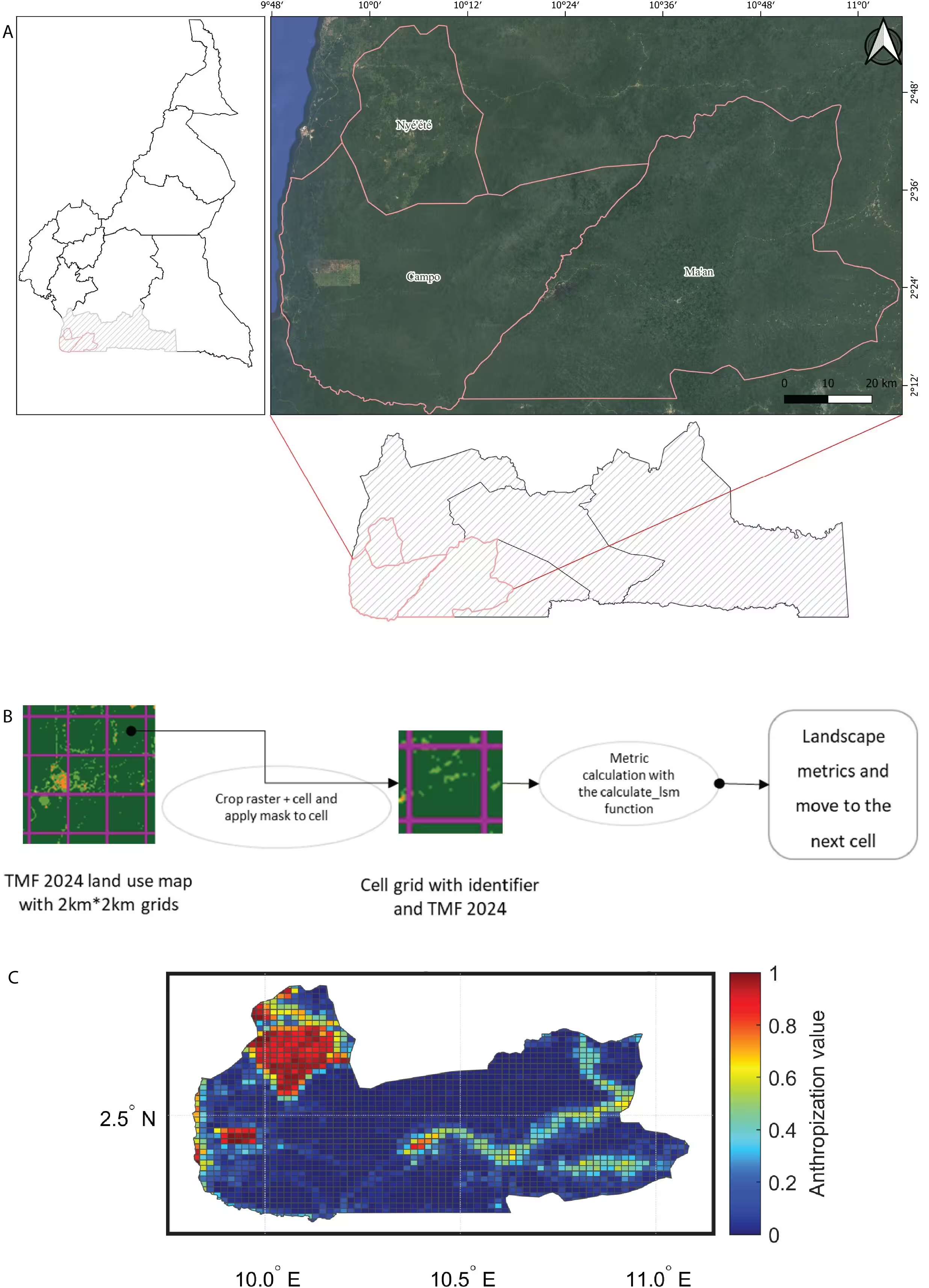
Under unconstrained global dispersal, individuals could theoretically move to any patch in the domain. However, the team also tested more realistic neighbor-based dispersal rules where animals either moved to adjacent patches randomly or preferentially selected patches with lower human alteration. Because tsetse flies rely entirely on wild animals for blood meals, their movement was tied directly to host availability, with insects tending to abandon areas where hosts became scarce.
Why Do Altered Regions Act as Invasion Highways or Barriers?
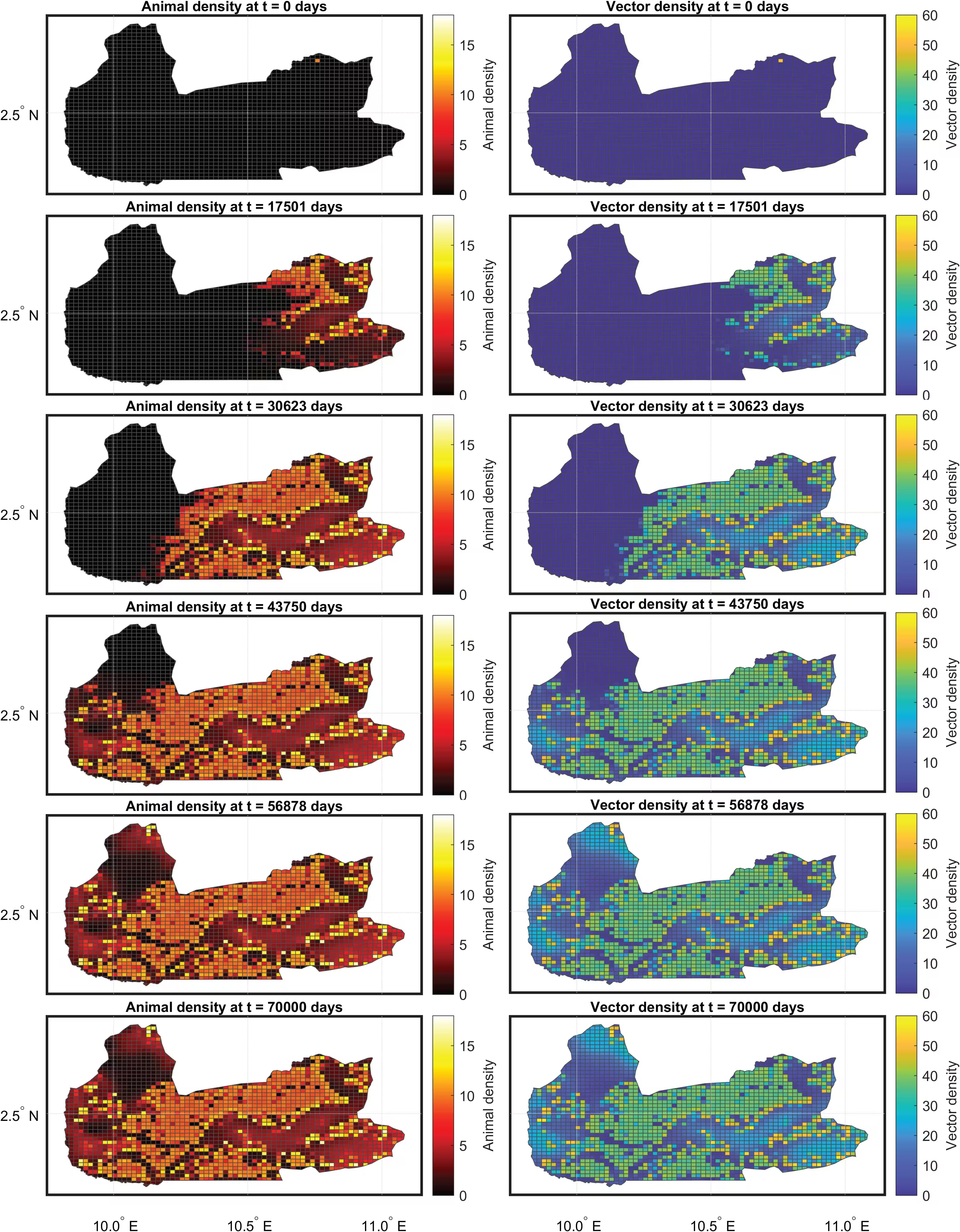
When simulating the introduction of heavily modified zones into the landscape, the authors discovered contrasting effects depending on how animals chose their destinations. Under random neighbor dispersal, highly altered regions paradoxically shortened invasion times to distant patches. Because animals were driven to emigrate from these depleted zones at higher rates, the altered patches acted as population sinks that inadvertently sped up the spread of both hosts and vectors across the region, functioning like an invasion highway.
Conversely, when animals preferentially avoided heavily altered areas through constrained neighbor dispersal, the rate of population expansion slowed significantly, and many patches maintained extremely sparse population levels. In this scenario, animal movement tended to trace the boundaries between high and low anthropization zones where individuals could actively favor less altered environments. As a result, optimal pathways skirted around heavily altered regions, delaying overall invasion times whenever crossing human-dominated zones became unavoidable.
What Limits Apply to These Mathematical Predictions?
The authors note that their findings rely on a multi-patch framework that simplifies complex ecological interactions into mathematically tractable terms. While the model was parameterized using specific geographic and demographic data for Glossina populations in Cameroon, real-world ecosystems involve diverse behavioral variables that are difficult to capture fully in differential equations. Furthermore, the current model focuses exclusively on wild animal hosts and insect vectors without incorporating human population movements or direct pathogen transmission cycles.
The research team emphasizes that more empirical data on actual animal dispersal patterns are necessary to refine these predictive models. Future extensions of this work aim to integrate human demographics and disease spillover dynamics to better evaluate how landscape alterations ultimately influence public health and disease risk in vulnerable regions.
The study was posted to the arXiv preprint server on November 25, 2026.
This article has been fact checked for accuracy, with information verified against reputable sources. Learn more about us and our editorial process.
Last reviewed on .
Article history
- Latest version
Reference(s)
- Yatat-Djeumen, Ivric. “A multi-patch model for sylvatic hematophagous vector dynamics: the impact of landscape anthropization.” arXiv.org <http://arxiv.org/abs/2611.34735v1>.
Cite this page:
- Posted by Priya Sharma