New Simulation Framework Teaches Robotic Hands Complex Tasks Without Human Demos
Researchers combine sparse interaction templates with residual reinforcement learning to scale robot dexterity across single-hand, bimanual, and dynamic tasks.
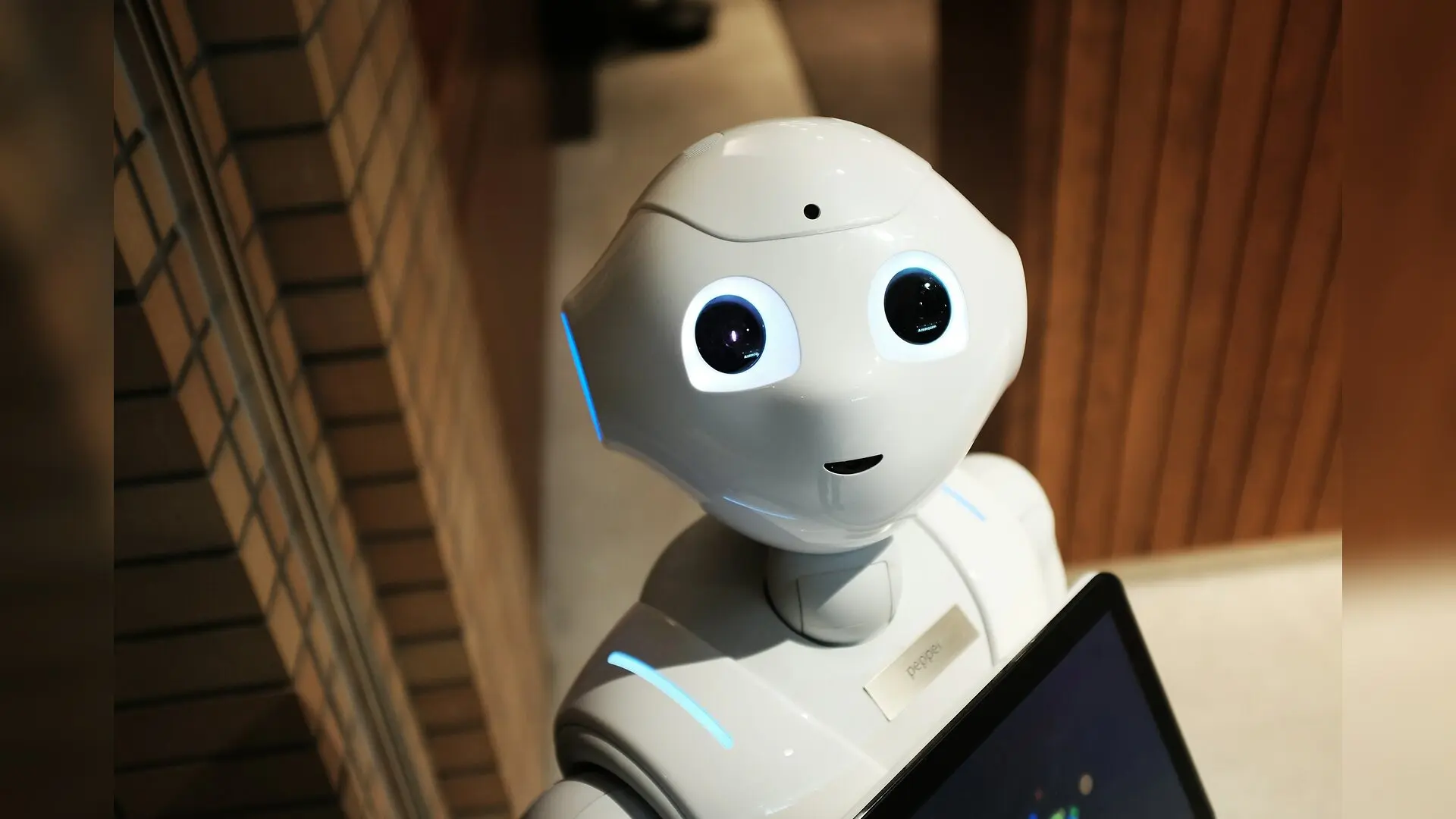
Robotic hands can now learn complex physical tasks without requiring expensive human demonstrations or tedious custom reward programming, thanks to a new software approach. The technique allows robotic hands to manipulate objects across single-hand, bimanual, articulated, and dynamic tasks by chaining sparse interaction snapshots together.
Programming dexterous robotic hands usually demands either vast datasets of human teleoperation or manual reward engineering for every single action. These traditional requirements create major scaling bottlenecks in robotics research. To solve this issue, computer scientists developed a new framework designed to generate versatile manipulation skills from minimal reference templates. The study is available on the arXiv preprint server.
How Does Chained Hand-Object Pose Synthesis Work?
The system, created by a research team led by Meenal Parakh at Princeton University, relies on a modular concept called object-aware retargeting. Instead of tracking full human demonstrations frame by frame, the framework takes sparse object-state waypoints combined with reusable hand-object interaction templates. These templates specify local spatial relationships between a robotic hand and an object, such as a grasp type or approach angle, which can be easily chained together along a task sequence.

To turn these static snapshots into smooth motion, the framework decomposes the trajectory generation into two distinct phases. First, an optimization algorithm adapts each interaction template to the geometry of the target object, forming an approximate reference path. Second, the system employs residual reinforcement learning in simulation to refine this rough path into a fully dynamic, contact-aware closed-loop policy. This workflow allows robotic hands to account for physical constraints like friction and collision avoidance.
Can Reusable Templates Transfer Across Different Object Sizes?
To test the flexibility of the approach, the authors evaluated hundreds of hand-object interactions spanning thirty-three object categories. The experiments showed that interaction templates could be reused across object scales, instances, and categories without needing custom grasp generation for every new item. When tested on a lift task across four different scales, the framework achieved perfect success on thirteen out of twenty scale conditions.

The team also demonstrated fine-grained control over four distinct behavior axes, including goal pose, interaction type, task timing, and high-level execution strategy. For instance, altering the timing in a hammer-swing task successfully changed the impact force from about four newtons during slow motion up to about seven and a half newtons during fast motion. Furthermore, point-cloud policies trained entirely in simulation were successfully deployed in the real world on physical hardware, achieving successful grasps and lifts across both familiar and completely unseen objects.
What Are the Current Limitations of the Framework?
Despite its broad versatility, the technique has a few notable constraints that require further research. First, the framework currently requires an explicit task specification, which is less readily available than raw video inputs, though modern agentic systems could help automate this authoring process in the future. Second, real-world physical evaluations in the study were restricted strictly to basic grasp-and-lift tasks. Finally, the current implementation targets only rigid objects, leaving the manipulation of deformable items as an open challenge for subsequent development.
The study was posted to the arXiv preprint server on November 25, 2026.
This article has been fact checked for accuracy, with information verified against reputable sources. Learn more about us and our editorial process.
Last reviewed on .
Article history
- Latest version
Reference(s)
- Parakh, Meenal. “DexLink: Synthesizing Dexterous Behaviors from Chained Hand-object Poses.” arXiv.org <http://arxiv.org/abs/2611.34936v1>.
Cite this page:
- Posted by Asif Iqbal