AI Detection Tool Uncovers Coordinated Election Propaganda Bursts Hidden in Millions of Social Media Posts
Researchers reveal how aggregating temporal and user patterns exposes automated social media micro-campaigns that evade single-message detection.
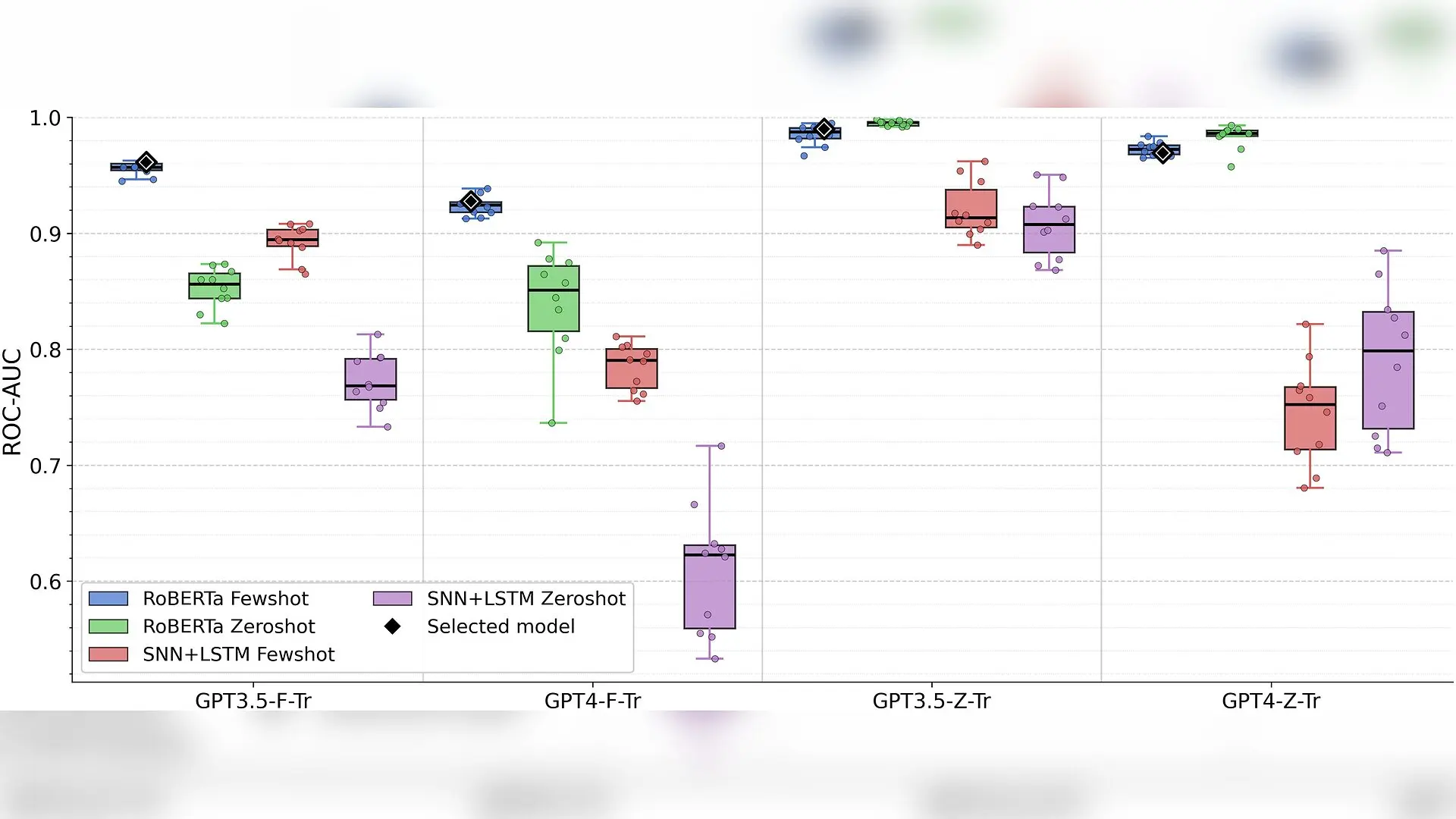
A fine-tuned language model successfully uncovers coordinated bursts of artificial text hidden within millions of social media posts during an election cycle, pointing to a new way to spot automated manipulation. As artificial intelligence models become increasingly capable of generating human-sounding text, researchers face a mounting challenge in identifying automated propaganda campaigns that mimic organic online debates. A new study demonstrates that by aggregating imperfect message-level classifications across time, user behavior, and topics, automated micro-campaigns can be reliably detected even when single posts evade scrutiny. The research team developed controlled benchmark datasets and applied them to real-world data streams, revealing patterns of coordinated activity that ordinary detection tools typically miss.
How Can AI-Generated Propaganda Be Spotted in Massive Data Streams?
To tackle the difficulty of finding a needle in a digital haystack, the researchers focused on detecting short-lived, coordinated bursts of activity they define as micro-campaigns. These operations do not necessarily target individual human users directly; instead, they target the underlying recommender systems of social media platforms by artificially inflating the apparent importance of specific topics. Because false positives can easily drown out genuine signals in a stream of one hundred thousand posts, maintaining an extremely low false positive rate is essential. The authors evaluated several detection architectures, published in PLOS One, demonstrating that fine-tuned transformer models provide superior stability compared to zero-shot detectors when analyzing short social media snippets.
What Do Single-User and Multi-User Micro-Campaigns Look Like in Practice?
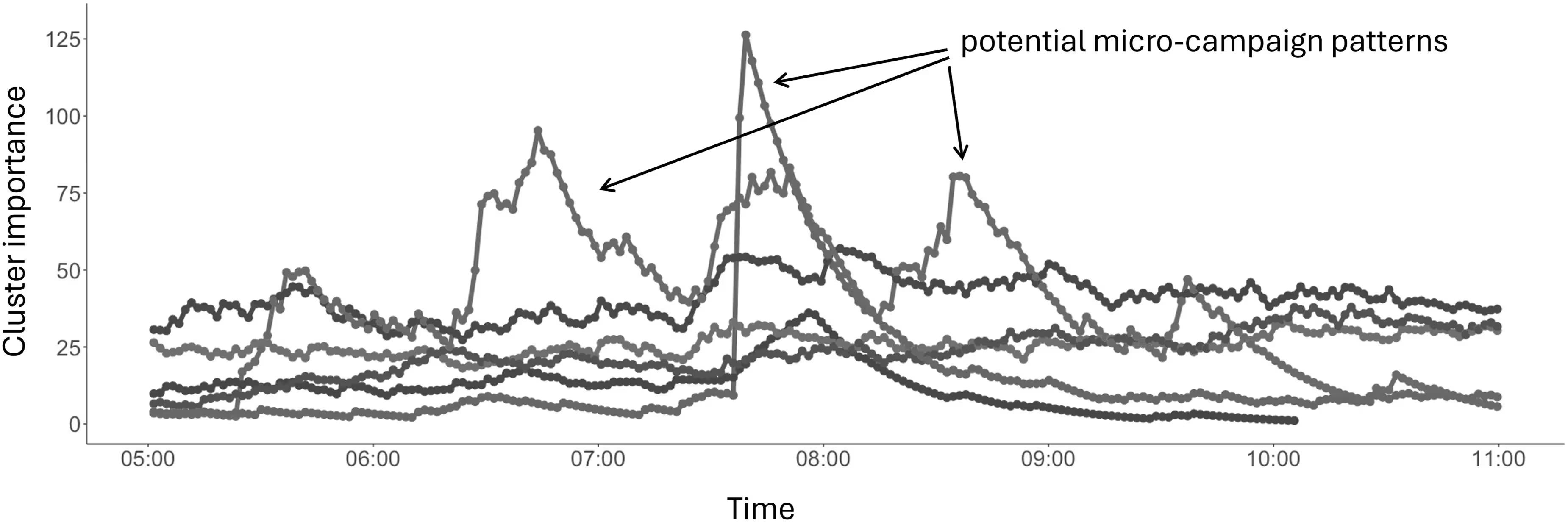
When the detection framework was applied to platform data collected during the 2024 United States presidential election, the analysis uncovered distinct structural signatures of automated interference. Single-user micro-campaigns appeared as high-frequency bursts from a single account within narrow time windows, such as an account posting dozens of politically charged messages during early morning hours. Multi-user campaigns emerged when several accounts coordinated their posting schedules to create synchronized peaks in the data stream. These automated actors frequently utilized repetitive patriotic themes, political merchandise promotions, and geotargeted hashtags designed to stimulate engagement.
Why Do Advanced Language Models Resist Simple Detection Methods?
The investigation also highlighted important limitations regarding how different artificial intelligence generations are identified. Models trained on output from older systems struggled slightly more when evaluating content produced by newer, more stylistically natural language models. Furthermore, stylistic improvements in generated text often altered the positional distribution of hashtags and mentions, making surface-level detection less reliable. However, because the methodology aggregates signals across temporal and thematic dimensions, minor classification errors at the individual message level do not disrupt the broader identification of coordinated campaigns.
What Lies Ahead for Monitoring Online Disinformation?
While the current findings focus primarily on text generated by OpenAI systems, the authors emphasize the need to expand future frameworks to include open-source language models that malicious actors might deploy without commercial safety guardrails. Extending detection techniques to incorporate multimodal content, such as synthetic images and videos, will also be crucial as automated campaigns become more sophisticated. By demonstrating that temporal coordination and clustering make artificial interference traceable, this research provides a scalable foundation for safeguarding online communication ecosystems against large-scale manipulation.
The research was published in PLOS One on November 25, 2026.
This article has been fact checked for accuracy, with information verified against reputable sources. Learn more about us and our editorial process.
Last reviewed on .
Article history
- Latest version
Reference(s)
- Grimme, Britta., et al. “Tracing artificial campaigns in social media streams: From controlled experiments to real-world detection.” PLOS One, vol. 21, no. 11, November 25, 2026, pp. e0355942 Public Library of Science (PLoS), doi: 10.1371/journal.pone.0355942. <https://doi.org/10.1371/journal.pone.0355942>.
- Posted by Asif Iqbal