Millions of Eels Are Gathering at One Mysterious Underwater Mountain and Scientists Are Baffled
Researchers have discovered a massive gathering of 2.8 million deep-sea eels near a Tasmanian seamount, shedding new light on their mysterious life cycles.
Deep beneath the surface of the Southern Ocean, an underwater volcanic peak known as Patience Seamount serves as the stage for a massive, mysterious biological event. New research led by marine scientist Ben Scoulding of Australia’s CSIRO has provided the first quantitative look at a staggering congregation of basketwork eels (Diastobranchus capensis), revealing that millions of these predators gather at the site for months at a time.
Located roughly 60 nautical miles southwest of Hobart within the Huon Marine Park, the seamount rises from the seafloor at 1,250 meters, with its summit reaching 857 meters below the waves. While commercial fishing vessels first reported strange, high densities of these eels in the late 20th century, the sheer scale of the population remained largely speculative until recently.
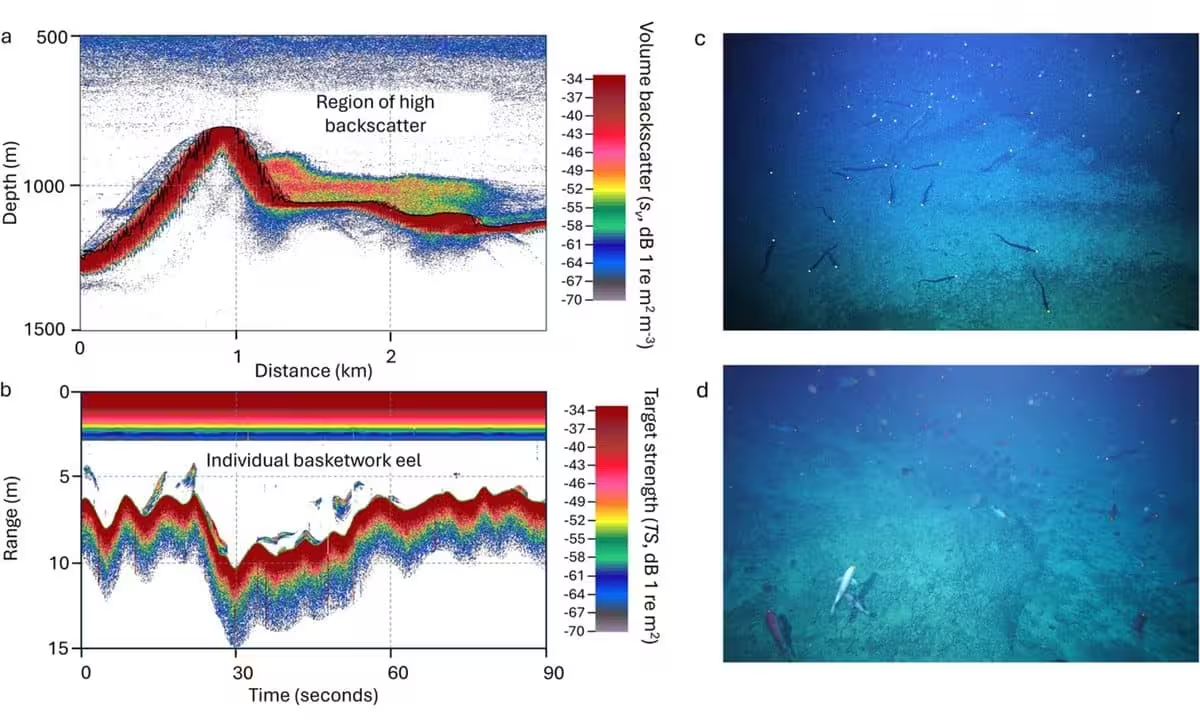
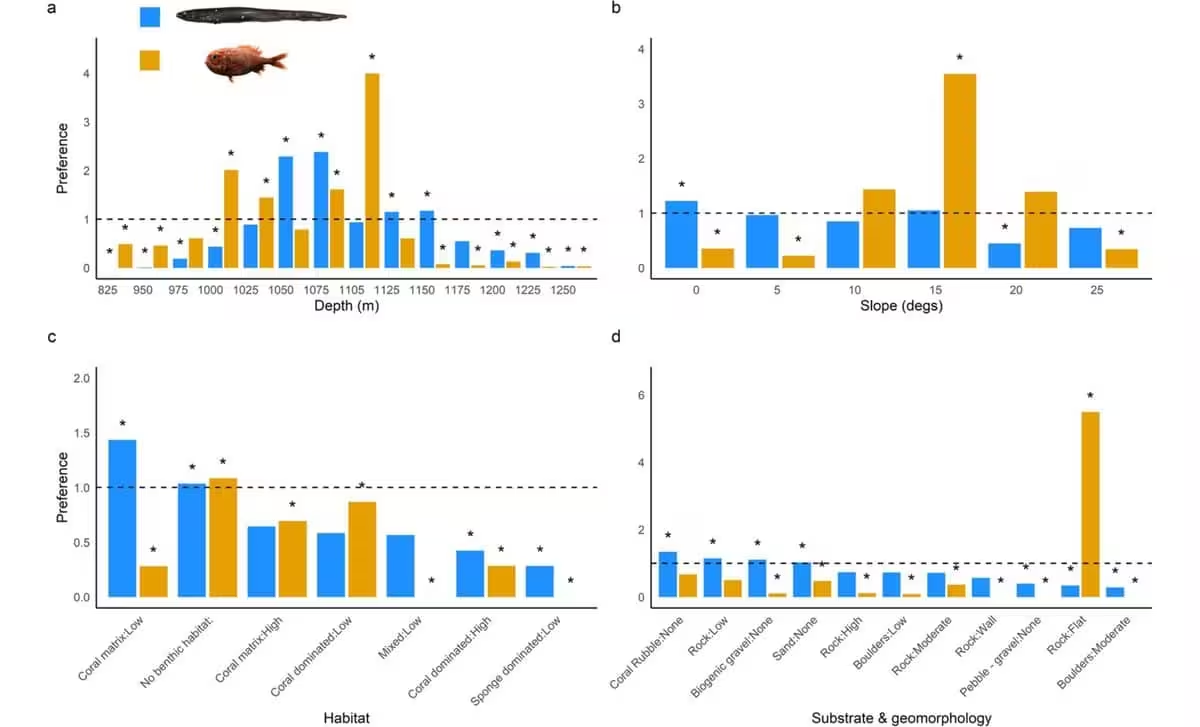
Between 2023 and 2025, researchers utilized a combination of sonar, underwater camera arrays, and targeted physical sampling to map the phenomenon. Their findings, published in Royal Society Open Science, detail an immense biological presence. At the peak of one survey in May 2023, the team estimated that roughly 2.8 million individual eels were swarming the area, representing a biomass of more than 3,500 metric tons. The aggregation, which stretches over several kilometers, occupies a distinct depth niche between 1,050 and 1,150 meters, often sharing the seamount with orange roughy (Hoplostethus atlanticus).
Biological Clues Point Toward Spawning
The primary motivation for this massive gathering appears to be reproductive. According to reporting by ABC News Australia, specimens captured by the research team showed distinct physiological indicators of breeding. All seven collected eels were female, ranging from 5 to 22 years of age, and most carried developing eggs. One individual had already completed the spawning process.
Further supporting this theory is the observation that the eels’ appetites appear to wane during their stay at the seamount. Researchers noted that the captured specimens had empty stomachs, suggesting that feeding is not the priority during these months. Despite the high concentration of biomass, the team found it difficult to entice the eels with bait, reinforcing the idea that they are focused on the business of reproduction rather than hunting.
An Enduring Ecological Mystery
Perhaps the most perplexing question for marine biologists is why the eels select Patience Seamount out of the roughly 120 similar underwater peaks in the region. While neighboring seamounts feature comparable depths and environmental conditions, they do not host similar, large-scale eel gatherings. Whether the choice is dictated by specific ocean currents, proximity to the continental shelf, or other localized environmental factors remains unknown.
The discovery is particularly significant for conservation efforts. Basketwork eels are considered a globally vulnerable species, with populations elsewhere showing steep declines. Once scarred by destructive bottom trawling, the area around Patience Seamount is now showing signs of environmental recovery, with corals and fish populations rebounding under protective management. With the site now off-limits to industrial fishing, scientists hope that continued monitoring will eventually solve the riddle of why this specific, remote mountain has become such a critical hub for the species.
This article has been fact checked for accuracy, with information verified against reputable sources. Learn more about us and our editorial process.
Last reviewed on .
Article history
- Latest version
Reference(s)
- <https://royalsocietypublishing.org/rsos/article/13/10/260397/483940/A-unique-ecological-phenomenon-quantified-by>.
- Kruijff, Peter. “Australia's giant spawning eel ball estimated to contain 2.8 million eels.”, October 28, 2026 ABC News <https://www.abc.net.au/news/science/2026-10-28/australia-biggest-eel-ball-2-8-million-off-tasmania/107309716>.
Cite this page:
- Posted by Hassan Raza