New AI Architecture Predicts Synergistic Cancer Drug Combinations
Combining three parallel graph neural network branches with an adaptive attention router, a new computational model prioritizes effective multi-drug cancer treatments.
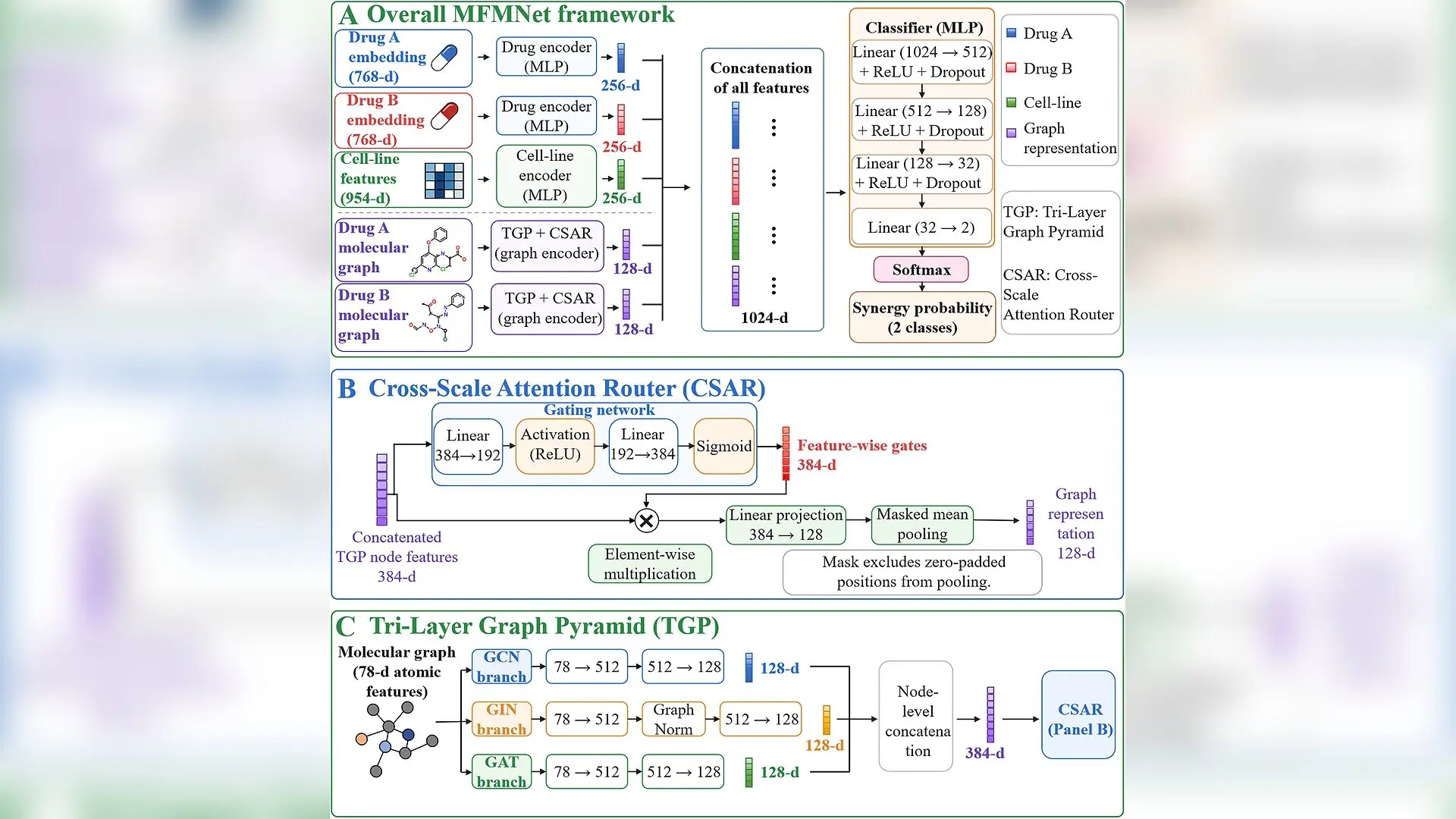
A new artificial intelligence architecture known as MFMNet predicts synergistic anticancer drug combinations by analyzing molecular graphs and cell-line gene expression profiles. By combining three parallel graph neural network branches with an adaptive attention router, the system prioritizes dual-agent treatments that may overcome the resistance mechanisms often seen in single-agent cancer therapies.
Single-agent therapies frequently fail because cancer cells activate redundant signaling pathways, allowing tumors to evade treatment and relapse. While combination therapies can target multiple pathways simultaneously and reduce adverse effects by permitting lower doses, testing thousands of potential drug pairs experimentally is impractical. To address this computational challenge, researchers designed multimodal deep learning approaches to screen candidate drug pairs rapidly.
How the Tri-Layer Graph Pyramid and Attention Router Work
The model, detailed in a study published in PLOS One, processes molecular structures using a Tri-Layer Graph Pyramid. This pyramid integrates three distinct graph neural network branches: a graph convolutional network, a graph isomorphism network, and a graph attention network. Each branch extracts complementary structural features from the chemical bonds and atomic properties of the candidate drugs.
Rather than relying on a single graph encoder, the framework utilizes a Cross-Scale Attention Router to adaptively reweight and fuse the extracted graph features. These unified molecular representations are then combined with auxiliary drug embeddings and 954-dimensional transcriptomic profiles of cancer cell lines to predict whether a specific drug pair will exhibit synergy.
Evaluating Predictive Accuracy and Validation Performance
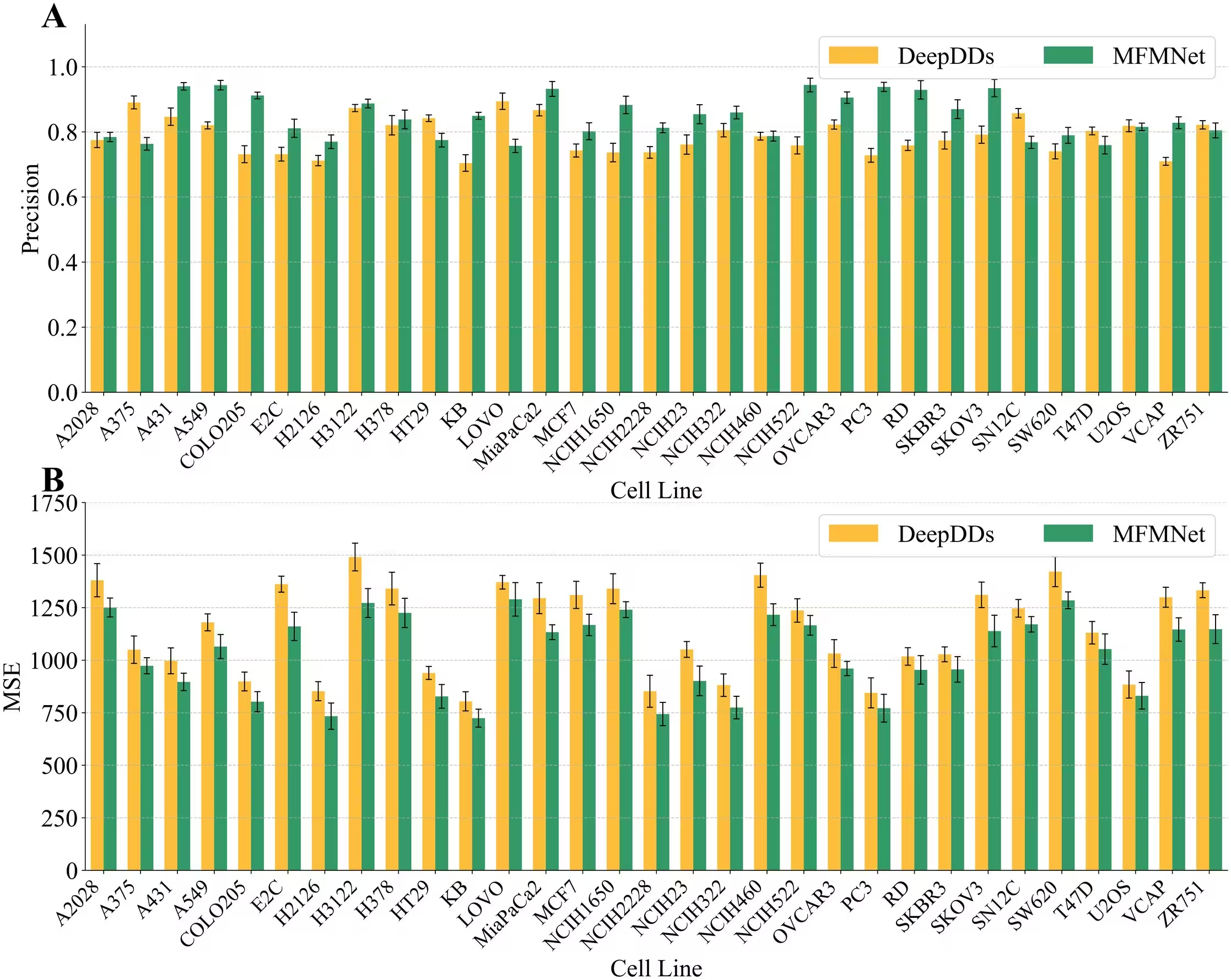
The research team evaluated the model using a curated dataset containing 13,243 drug-pair and cell-line records involving 38 unique drugs and 31 cancer cell lines. Under a strict five-fold cross-validation protocol, the full MFMNet architecture achieved a mean area under the receiver operating characteristic curve of 0.9227 and a precision-recall area under the curve of 0.9127. Statistical comparisons demonstrated that these performance metrics significantly outperformed baseline models, including standard graph-based architectures and gradient-boosted decision trees.
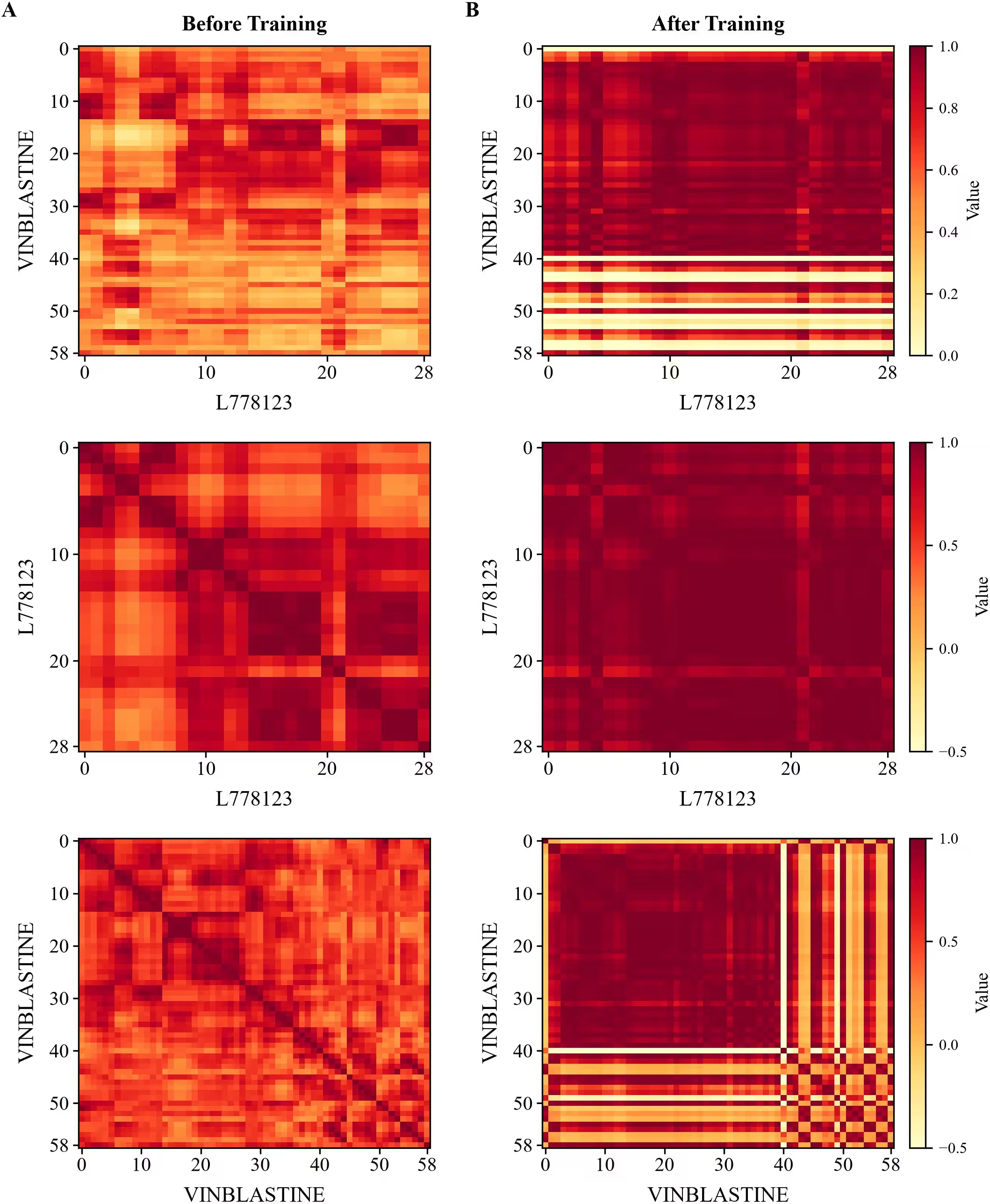
Controlled ablation experiments revealed that the individual graph branches captured non-redundant information with low representation similarities and distinct prediction error profiles. Furthermore, independent testing on the AstraZeneca dataset yielded an accuracy of 93.3 percent, indicating strong classification performance on external test records.
Limitations and Future Directions in Drug Discovery
Despite promising cross-validation results, additional cross-dataset evaluations revealed performance variations. When tested on external datasets such as FRIEDMAN, the embedding-independent configuration achieved an area under the receiver operating characteristic curve of 0.7704, but performance dropped notably on the NCI-ALMANAC dataset. These discrepancies highlight that predictive capability remains sensitive to differences in experimental sources, dataset compositions, and synergy-score definitions.
The authors note that the current dataset is limited to 38 unique drugs and 31 cell lines, and the record-level evaluation does not test generalization to entirely unseen drugs or cell lines. Future investigations will focus on expanding training collections to broader chemical and cellular libraries and performing wet-lab experiments to validate top-scoring predictions that currently lack direct literature support.
The research was published in PLOS One on November 10, 2026.
This article has been fact checked for accuracy, with information verified against reputable sources. Learn more about us and our editorial process.
Last reviewed on .
Article history
- Latest version
Reference(s)
- Wang, Lei., et al. “MFMNet: Adaptive tri-layer graph pyramid with cross-scale attention router for synergistic drug prediction.” PLOS One, vol. 21, no. 11, November 10, 2026, pp. e0362586 Public Library of Science (PLoS), doi: 10.1371/journal.pone.0362586. <https://doi.org/10.1371/journal.pone.0362586>.
Cite this page:
- Posted by Hassan Raza