Forgotten Human Fossils Reveal Homo Erectus Emerged 200,000 Years Earlier Than Thought
New fossil discoveries in a South African cave reveal the evolutionary split between early humans and their close relatives who shared the same landscape.
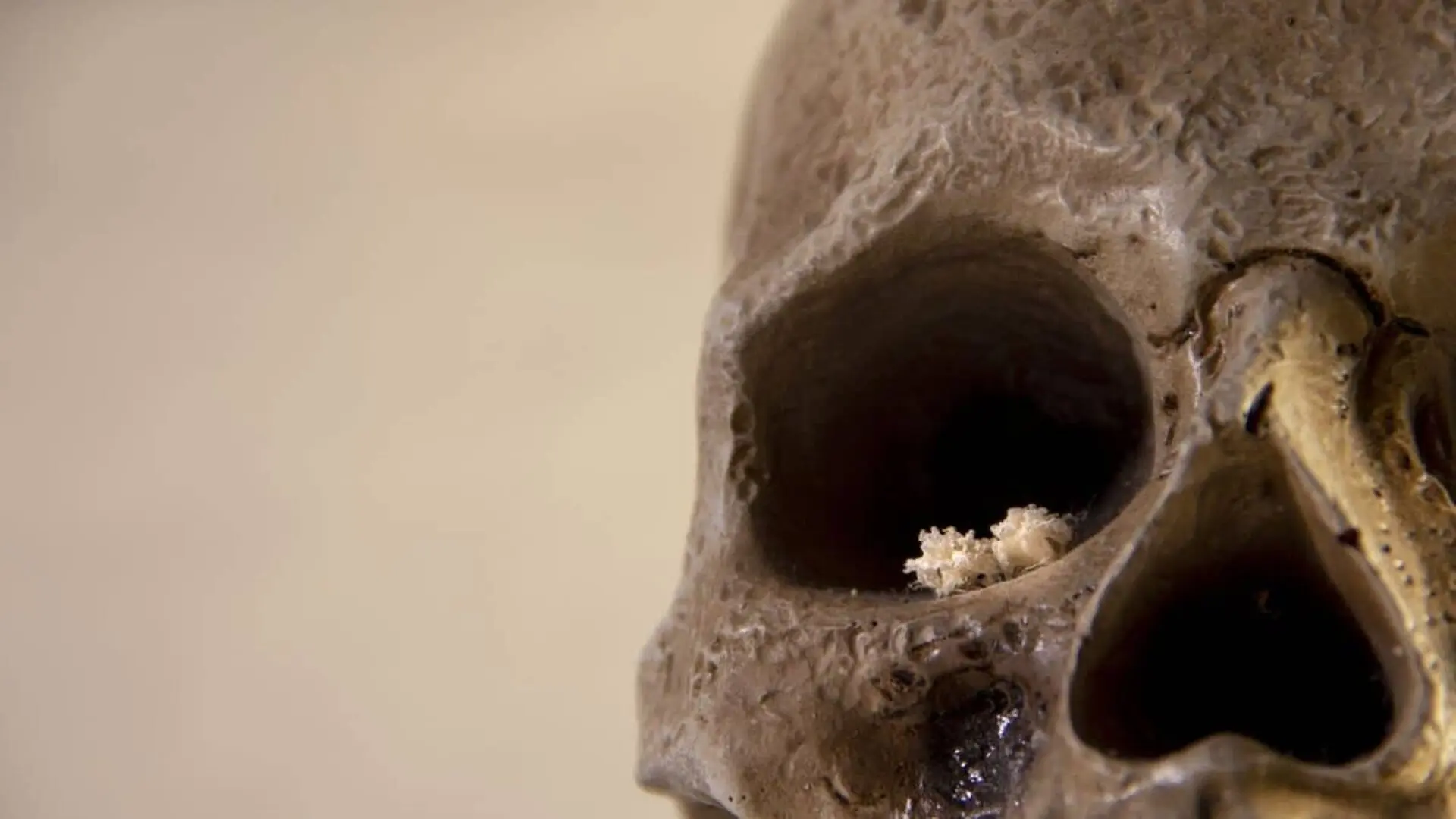
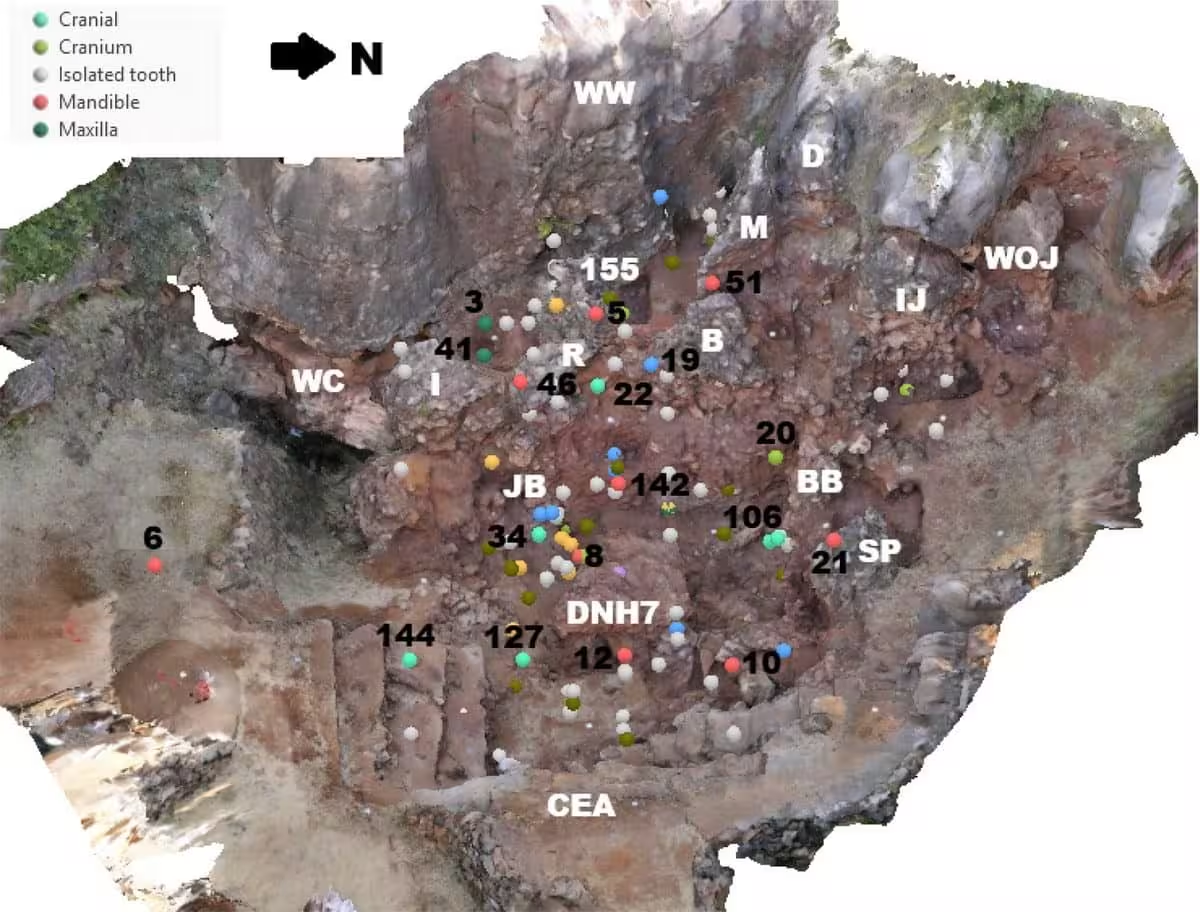
A significant cache of newly analyzed fossil remains from South Africa’s Drimolen Cave is forcing a rewrite of the timeline for human evolution. Researchers have officially described 18 hominin specimens from the site, revealing that Homo erectus—a direct ancestor of modern humans—was present in the region 200,000 years earlier than previously established.
The findings, detailed in the Annals of Human Biology, shed light on the complex interplay between our own genus and a contemporaneous, evolutionary rival, Paranthropus robustus. While the Drimolen Main Quarry was unearthed in 1992 and yielded treasures through 2019, many of its recovered fossils had remained uncatalogued and scientifically obscure until now.
Pushing Back the Origins of Homo erectus
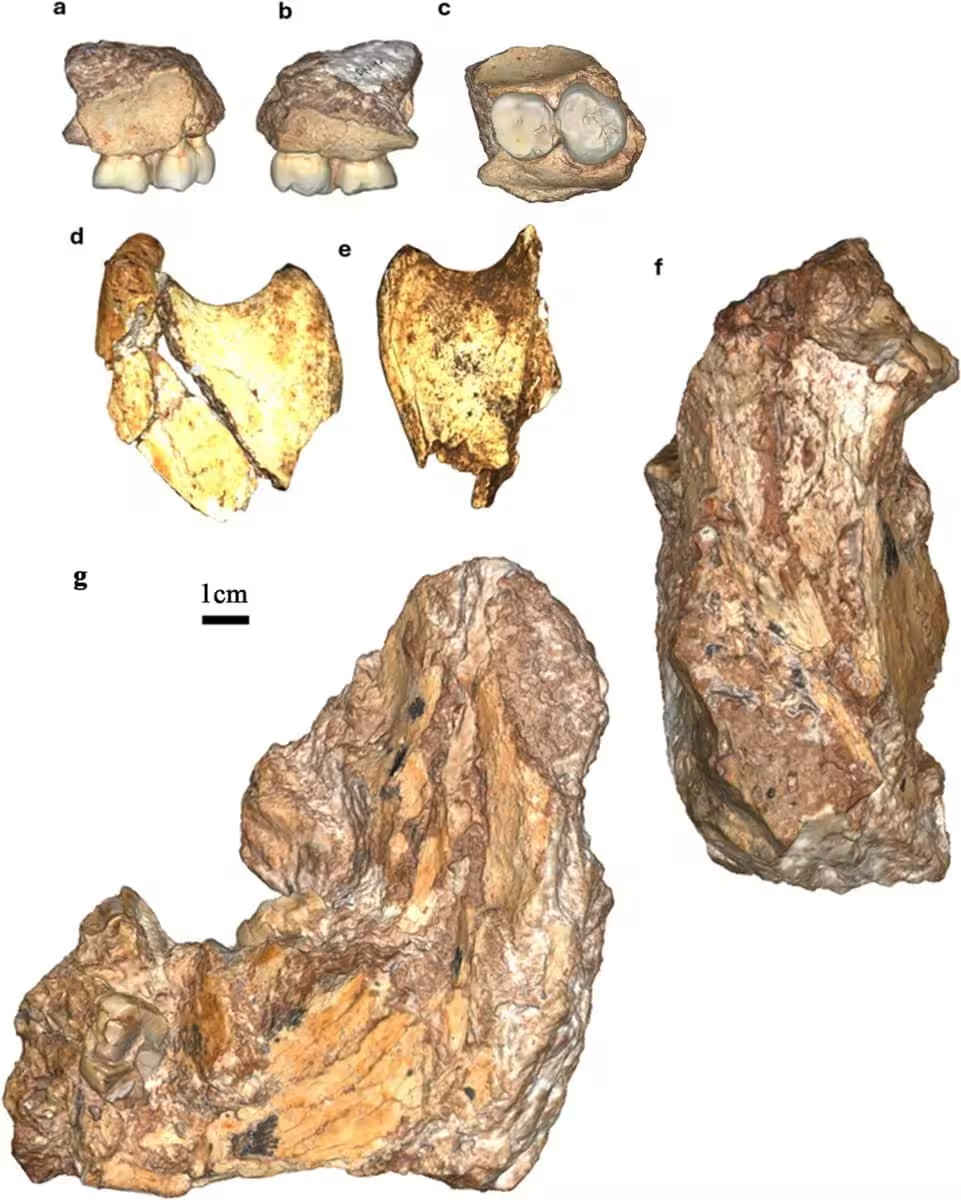
The most consequential discovery in the collection is DNH 127, an adult skull fragment representing the earliest known adult Homo erectus fossil ever documented at the site. Dating to approximately 2 million years ago, it predates other notable adult Homo erectus specimens, such as those found in Dmanisi, Georgia, by roughly two centuries.
Prior to this, researchers relied on a juvenile specimen known as DNH 134 to study the species at Drimolen, leaving significant questions about the anatomy of the adults. Dr. Jesse Martin of La Trobe University, who led the research team, noted that the identification of DNH 127 solidifies the presence of our direct ancestors in southern Africa much earlier than the scientific community had assumed.
Divergent Evolutionary Strategies
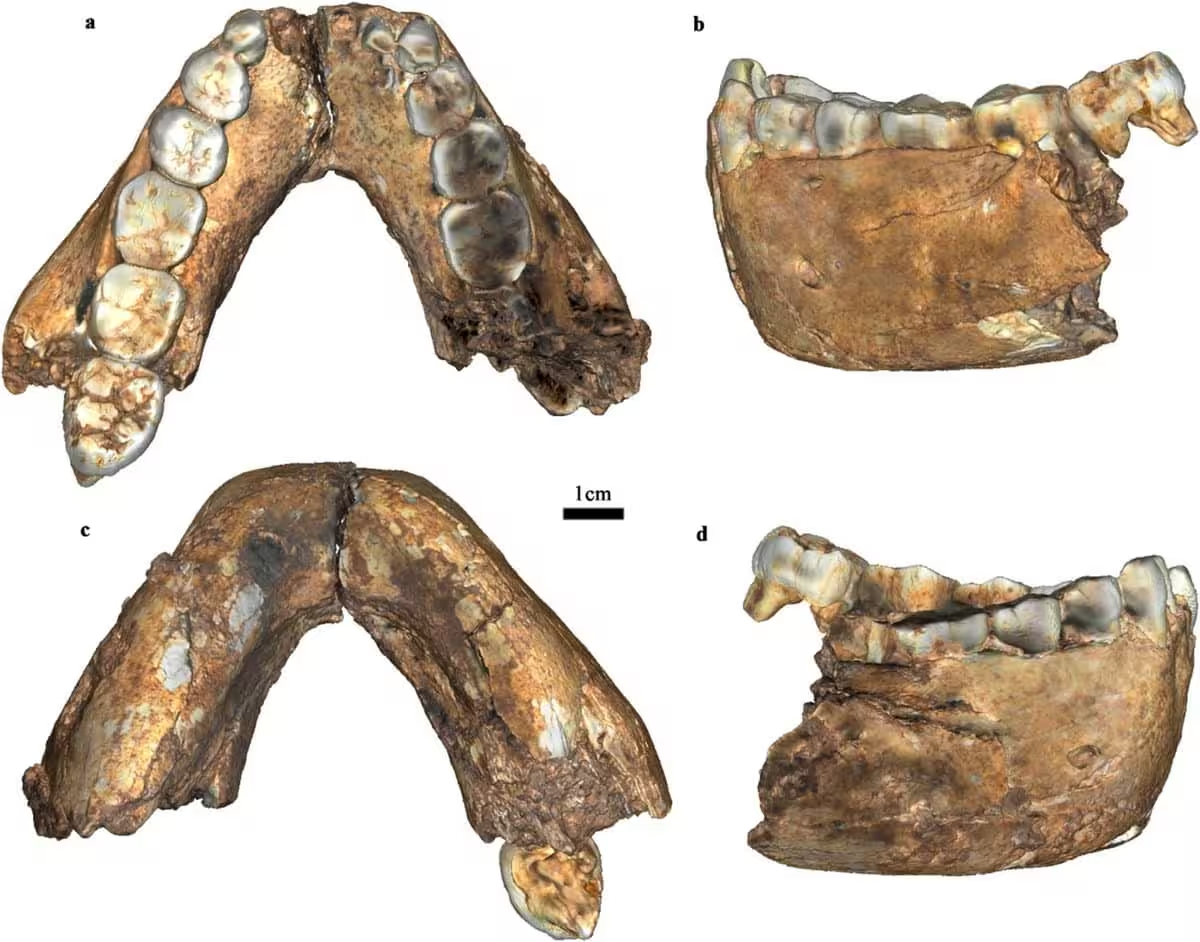
The fossil record paints a vivid picture of two distinct strategies for survival within the same prehistoric environment. Between 2 million and 1.8 million years ago, P. robustus underwent notable physical changes, developing increasingly robust jaws and larger teeth. This adaptation served as a specialized tool for grinding down tough, fibrous vegetation—much like a biological mortar and pestle—while their brain size remained relatively modest, comparable to that of modern chimpanzees.
Conversely, the Homo erectus lineage began shifting toward higher-quality caloric intake, likely through meat consumption, which supported the development of larger brains and smaller molar teeth. Comparing the Drimolen specimens with slightly younger fossils from the Swartkrans cave site highlights these micro-evolutionary shifts in real time.
Rare Insights into Ancient Adaptations
The sheer density of the Drimolen fossil collection provides a rare opportunity to bypass the typical guesswork inherent in paleoanthropology. Because hominin remains are notoriously scarce, researchers often struggle to connect the dots across vast temporal gaps. However, the volume of data from this single location offers a window into the nuanced, granular changes that defined human ancestry.
The data also serves as a reminder of how precarious our lineage once was. Two million years ago, P. robustus thrived in the region, outnumbering Homo erectus by a factor of more than 10 to one. The unique nature of the Drimolen fossils has even provided evidence for the subspecies classification P. robustus ukusa, marking the site as a critical cornerstone for understanding how our ancestors navigated a world where they were, for a time, the clear underdogs.
This article has been fact checked for accuracy, with information verified against reputable sources. Learn more about us and our editorial process.
Last reviewed on .
Article history
- Latest version
Reference(s)
- Martin, Jesse M.., et al. “New hominin cranial and mandibular remains from Drimolen Main Quarry, South Africa.” Annals of Human Biology, vol. 53, no. 1, September 25, 2026 Informa UK Limited, doi: 10.1080/03014460.2026.2725046. <http://dx.doi.org/10.1080/03014460.2026.2725046>.
Cite this page:
- Posted by Hassan Raza