Mountain Bumble Bees Change Their Venom Chemistry Based On Altitude
Wild bees at high elevations carry fewer defensive toxins than lowland populations, but laboratory rearing erases the difference.
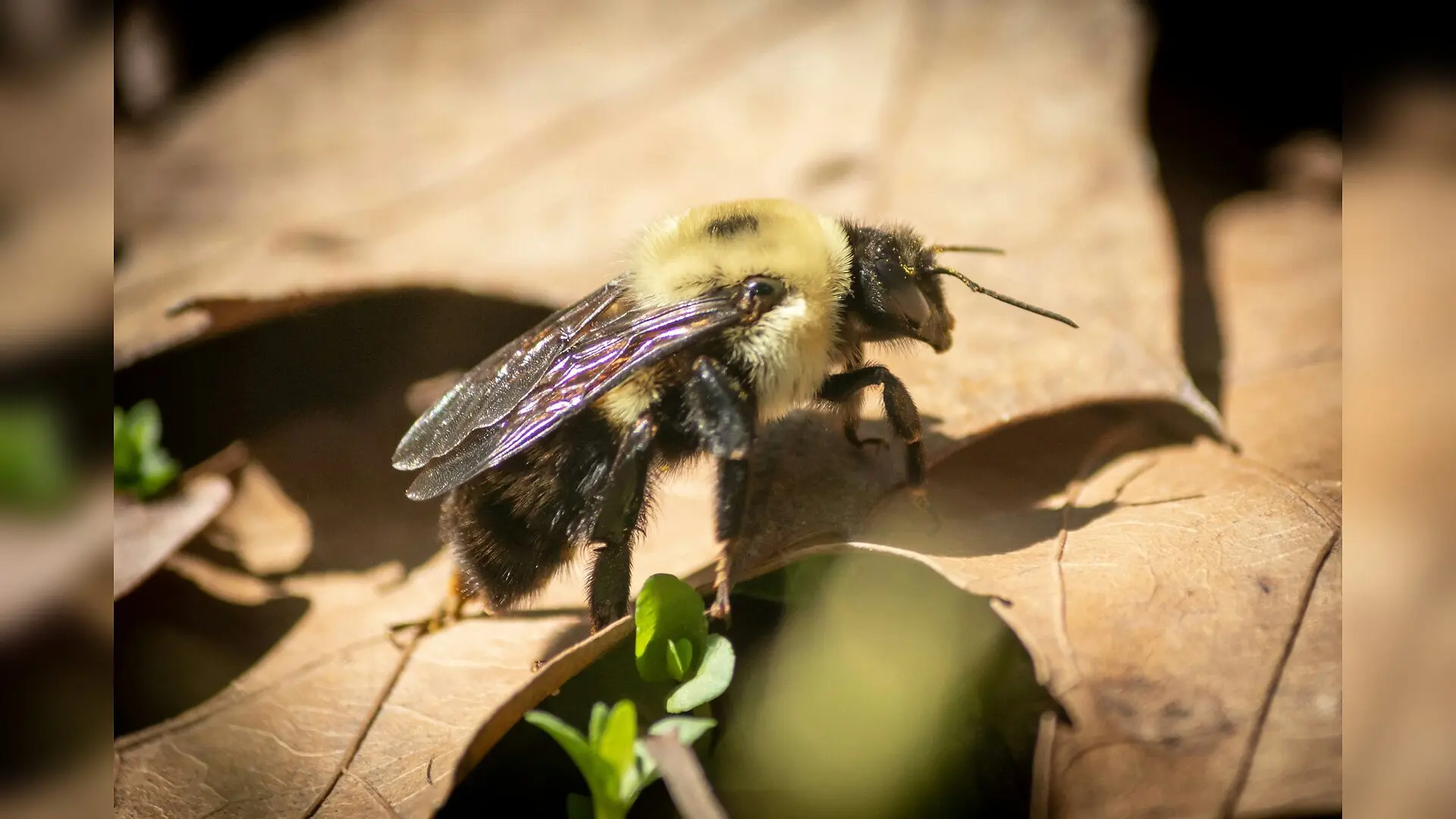
Wild yellow-faced bumble bees living at high altitudes carry significantly fewer defensive toxins in their venom than their low-altitude counterparts, but this difference vanishes completely when the insects are raised in a controlled laboratory environment. The findings reveal that defensive insect venom is far more environmentally flexible than previously assumed, shifting in response to local mountain conditions rather than being strictly hardwired into the bee’s genetics.
Mountain Elevational Gradients Alter Insect Defenses
Venom systems across the animal kingdom serve vital roles in predation and defense, with social insects such as bees utilizing their stings primarily as an external immune system and deterrent against predators. While scientists have extensively documented how diet, age, and geography shape the venom of snakes and scorpions, far less is known about what drives compositional changes in purely defensive venoms. Mountain ranges provide natural laboratories to study these pressures, featuring steep environmental gradients in temperature, humidity, and food availability over short geographic distances.
To investigate whether altitude alters defensive chemistry, the researchers analyzed the venom profiles of wild-collected worker bees and laboratory-reared colonies. The work is published in Proceedings. Biological sciences. The team sampled 240 foraging workers of the yellow-faced bumble bee (Bombus vosnesenskii) across eight sites in Oregon, divided evenly between low elevations ranging from 9 to 122 meters and high elevations spanning 1,311 to 1,633 meters. Each pooled sample of 30 worker venom reservoirs underwent quantitative and qualitative proteomic analysis using liquid chromatography-tandem mass spectrometry to catalog every protein and peptide present.
What the Proteomic Analysis Revealed About Wild and Captive Bees
The proteomic screening identified 909 total proteins and peptides in wild bees, of which 41 functioned as venom toxins. In wild populations, venom toxins accounted for 64.8% of the total protein abundance at low elevations, but this dropped significantly to 53.4% at high elevations. Seven specific venom toxins decreased markedly in abundance at high altitude, including major enzymes responsible for inflammation and allergic reactions, such as phospholipase A2 and hyaluronidase. The most dramatic drop occurred in a signature bumble bee peptide known as bombolitin-like, which exhibits potent antimicrobial, hemolytic, and cell-stimulating activities.
Statistical evaluations using principal component analysis and permutational multivariate analysis of variance confirmed that wild populations formed distinct clusters based on elevation. When toxin proteins were excluded from the analysis, this elevational separation weakened, demonstrating that the toxins themselves drive the compositional divergence between mountain and lowland bees. These wild variations point to significant ecological pressures shaping insect biochemistry across different elevations.
Laboratory Rearing Erases Elevational Differences
To test whether these distinct venom phenotypes were genetically fixed or environmentally induced, the investigators established a common-garden experiment. They collected 175 nest-searching gynes, or reproductive queens, from matching low and high elevations and reared their colonies in a laboratory under constant temperature, humidity, and diet. Once the colonies exceeded 100 workers, venom was extracted and pooled from 30 workers per colony across eight captive lineages.
In stark contrast to the wild bees, captive workers showed no statistically significant differences in venom toxin abundance between low- and high-elevation origins. Venom toxins comprised 63.9% of total protein abundance in low-elevation laboratory colonies and 66.3% in high-elevation ones. Furthermore, hierarchical clustering of the captive proteomes showed heterogeneous grouping with no separation by elevation. This convergence under standardized conditions indicates that the venom differences observed in nature represent phenotypic plasticity rather than fixed genetic divergence.
Limitations and Future Directions for Venom Research
The authors note several methodological limitations that warrant cautious interpretation. Because wild bees were sampled in 2022 and common-garden colonies were established in 2023, year-specific climate or seasonal variations cannot be entirely untangled from captivity effects. Additionally, the venom reservoir composition reflects a balance between synthesis, recent venom expenditure, and replenishment, meaning that differences in predator encounter rates in the wild could theoretically influence short-term storage levels.
Despite these caveats, the research underscores that venom is a highly labile ecological trait capable of tracking environmental shifts. The findings caution against assuming that venom profiles measured in captive laboratory animals fully capture the biochemical diversity present in natural populations, opening new avenues for understanding how insects adapt their chemical defenses to changing climates.
The research was published in Proceedings. Biological sciences on November 11, 2026.
This article has been fact checked for accuracy, with information verified against reputable sources. Learn more about us and our editorial process.
Last reviewed on .
Article history
- Latest version
Cite this page:
- Posted by Priya Sharma