Faint Star Explosion Triggers Massive Shift in Surrounding Disk
Data from the NICER space telescope reveals how a weak thermonuclear flash on a distant neutron star alters its surrounding matter.
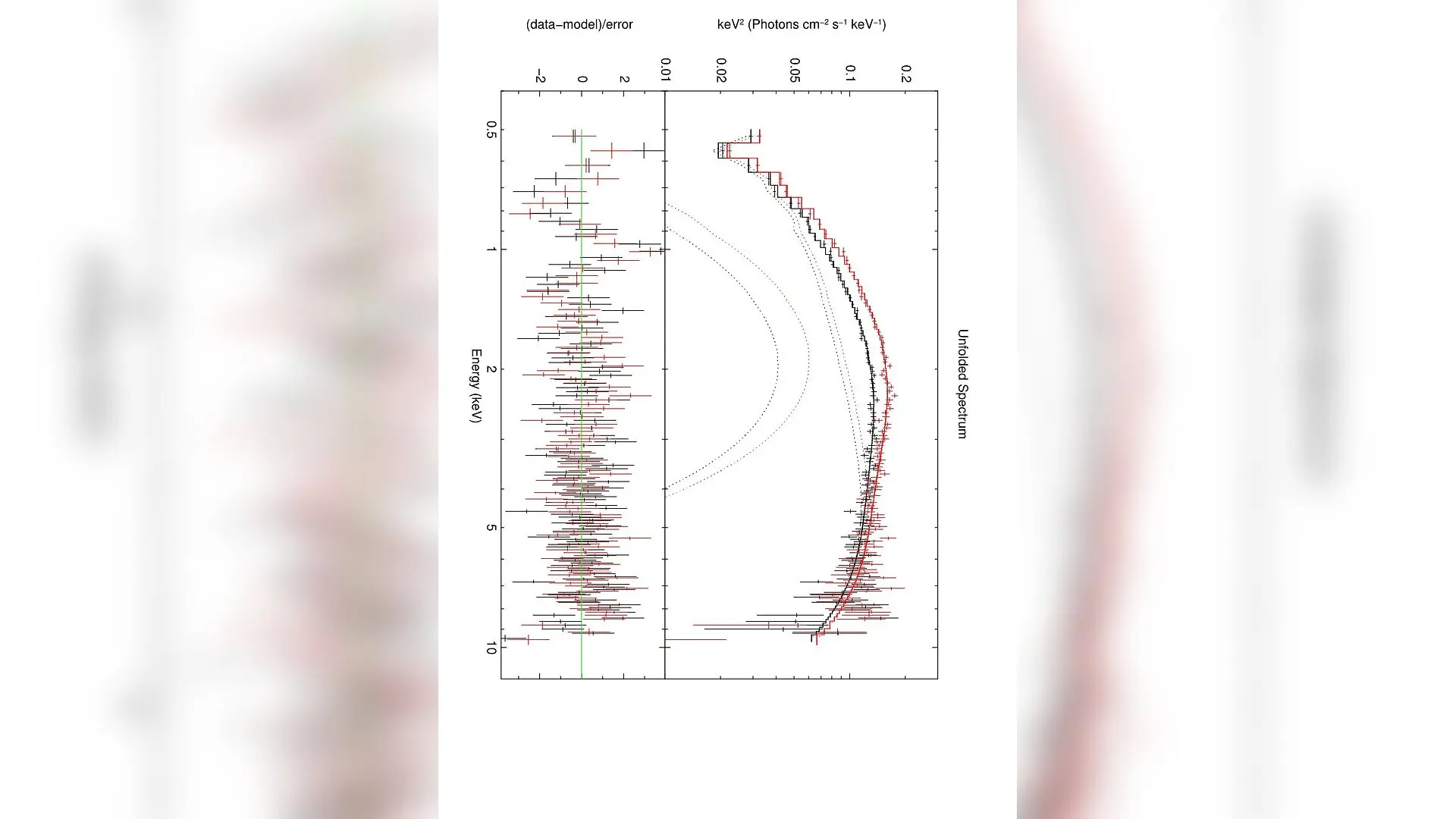
Astronomers tracking a faint thermonuclear explosion on a distant neutron star discovered that even weak stellar outbursts can dramatically rearrange their surrounding accretion disks. The event, observed by the Neutron Star Interior Composition Explorer (NICER) space telescope, took place on the X-ray binary system known as SAX J1808.4–3658, located approximately 3,500 light-years away from Earth.
While bright thermonuclear flashes are known to violently disrupt matter swirling around collapsed stars, researchers previously debated whether minor outbursts could cause similar disturbances. The new analysis, published in the arXiv preprint server, reveals that even a sub-Eddington explosion can trigger a temporary structural shift in the inner accretion flow.
A Faint Flash with Surprising Consequences
The system SAX J1808.4–3658 consists of a spinning neutron star and a brown dwarf companion star that loses material to the denser object. This gas forms a flattened whirlpool called an accretion disk around the neutron star, feeding matter onto its surface until pressure and temperature ignite an unstable thermonuclear flash.
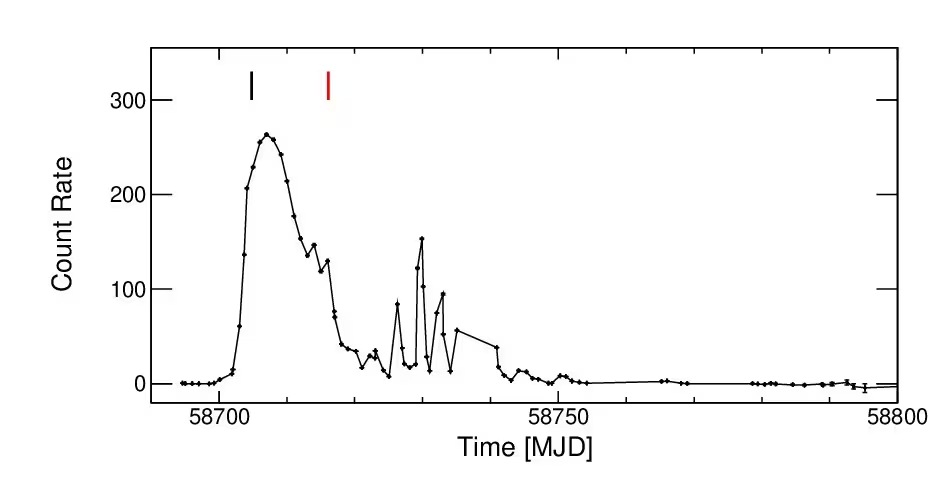
During the observed outburst, the explosion reached a peak luminosity equivalent to roughly five percent of the Eddington limit, which is the maximum brightness an object can achieve before radiation pressure pushes surrounding matter away. Despite this modest intensity, the research team found that the flash modified both the thermal radiation coming directly from the stellar surface and the soft X-ray components originating in the surrounding accretion disk.
Measuring the Shrinking Apparent Radius
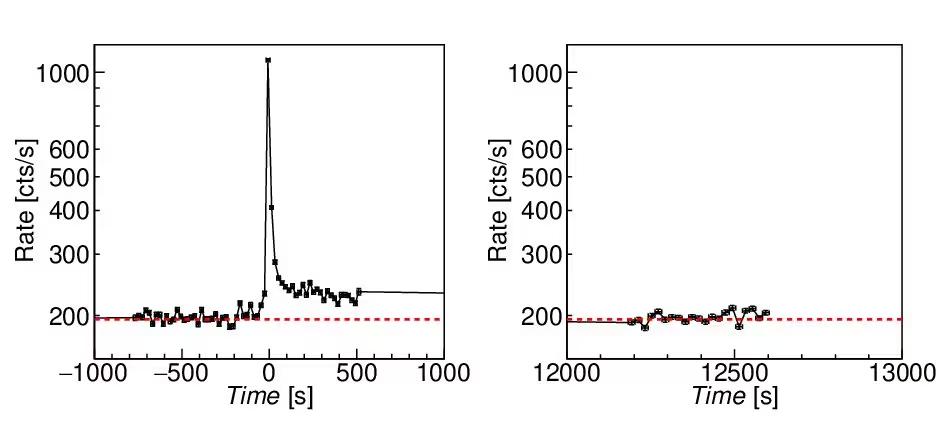
To understand how the explosion affected the system, the scientists performed time-resolved spectroscopy on the NICER data. They discovered that the apparent blackbody radius of the neutron star shifted significantly as the explosion evolved, expanding from roughly 5 kilometers before the burst to about 10 kilometers at the peak, before shrinking down to roughly 6.4 kilometers afterward.
Crucially, the apparent radius continued to contract during the cooling phase in a way that defied standard radiative cooling models. The team determined that this shrinking appearance was not a true physical contraction of the stellar surface, but rather the result of changing viewing geometry and partial obscuration as the inner disk shifted.
How the Accretion Disk Responds to Radiation
The analysis showed that the inner edge of the accretion disk retreated outward during the explosion, moving from a pre-burst distance of roughly 66 kilometers up to about 115 kilometers at the peak of the flash. As the burst faded, the disk gradually returned inward over several hours, matching the expected viscous refill timescale for disk material.
This dynamic interaction is driven by processes such as Poynting-Robertson drag, where intense radiation pressure steals angular momentum from the innermost disk gas, and direct heating by the flash. The findings confirm that even relatively faint thermonuclear explosions possess enough energetic punch to temporarily clear out and restructure the inner edges of their surrounding cosmic disks.
The study was posted to the arXiv preprint server on November 11, 2026.
This article has been fact checked for accuracy, with information verified against reputable sources. Learn more about us and our editorial process.
Last reviewed on .
Article history
- Latest version
Reference(s)
- Chen, Yu-Peng. “A faint thermonuclear X-ray burst from SAX~J1808.4--3658 observed with NICER: possible evidence for burst-driven changes in the inner disk structure.” arXiv.org <http://arxiv.org/abs/2611.14886v1>.
Cite this page:
- Posted by John Williams