Scientists Built A Giant Rolling Ball To Explore The Moon’s Darkest Craters
Engineers have developed RoboBall III, a specialized rover designed to navigate steep crater slopes where traditional wheeled vehicles risk getting trapped.
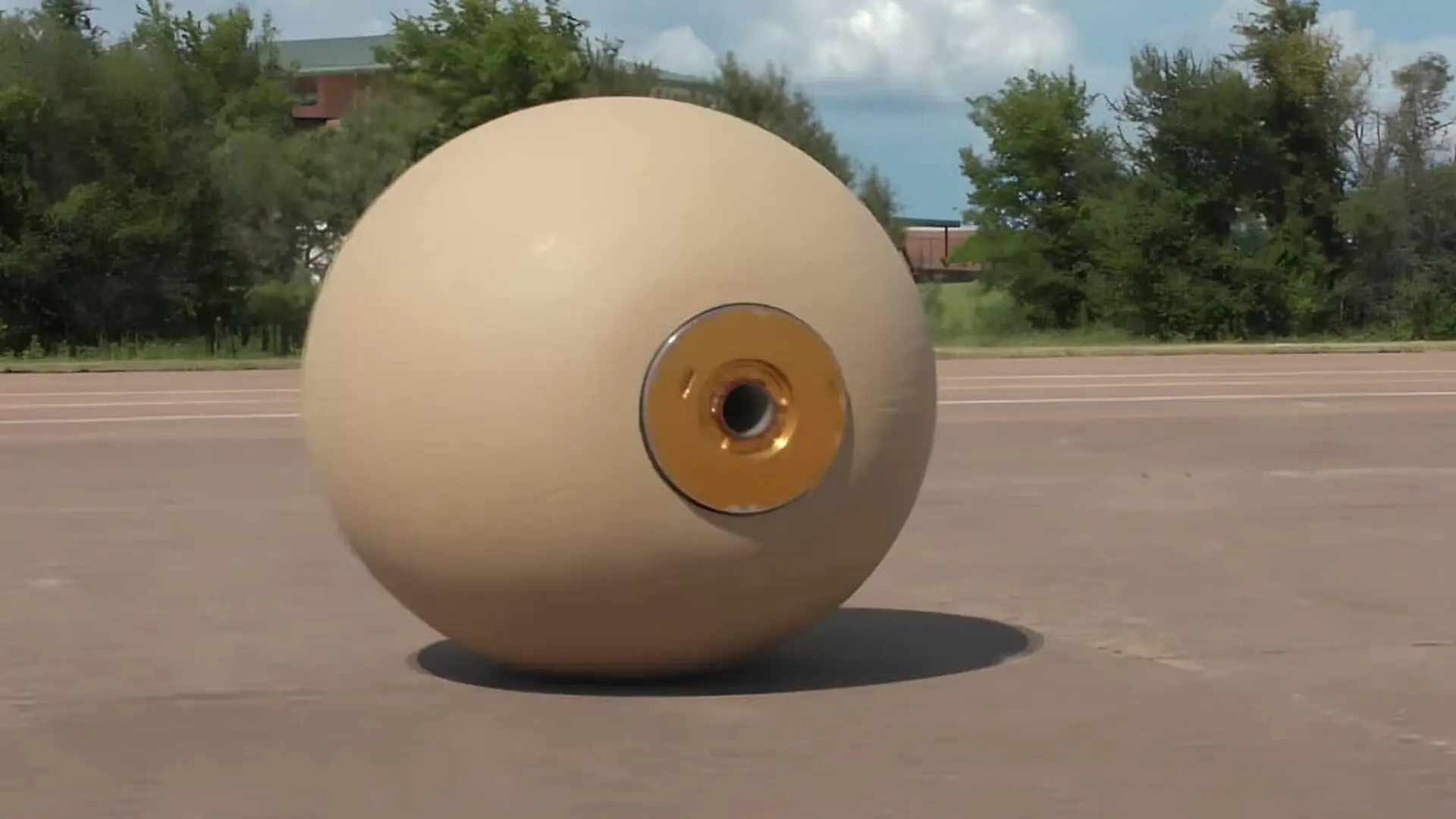
A prototype robot has successfully navigated rugged, uneven terrain at a Texas quarry, marking a milestone in the development of technology designed to explore the Moon’s most treacherous environments. Unlike traditional rovers that rely on wheels or legs, this machine features a spherical, inflatable design that allows it to roll over obstacles rather than attempting to drive around or climb over them.
Engineers at Texas A&M University developed the system, known as RoboBall III, to address the unique challenges of the Moon’s south pole. This region is home to permanently shadowed craters—such as the massive, 21-kilometer-wide Shackleton crater—where extreme cold and steep, unstable slopes render conventional planetary rovers prone to losing traction or tipping over. By adopting a ball-like geometry, the robot eliminates the risk of flipping onto an unusable side.
Engineering a Path Through Lunar Shadows
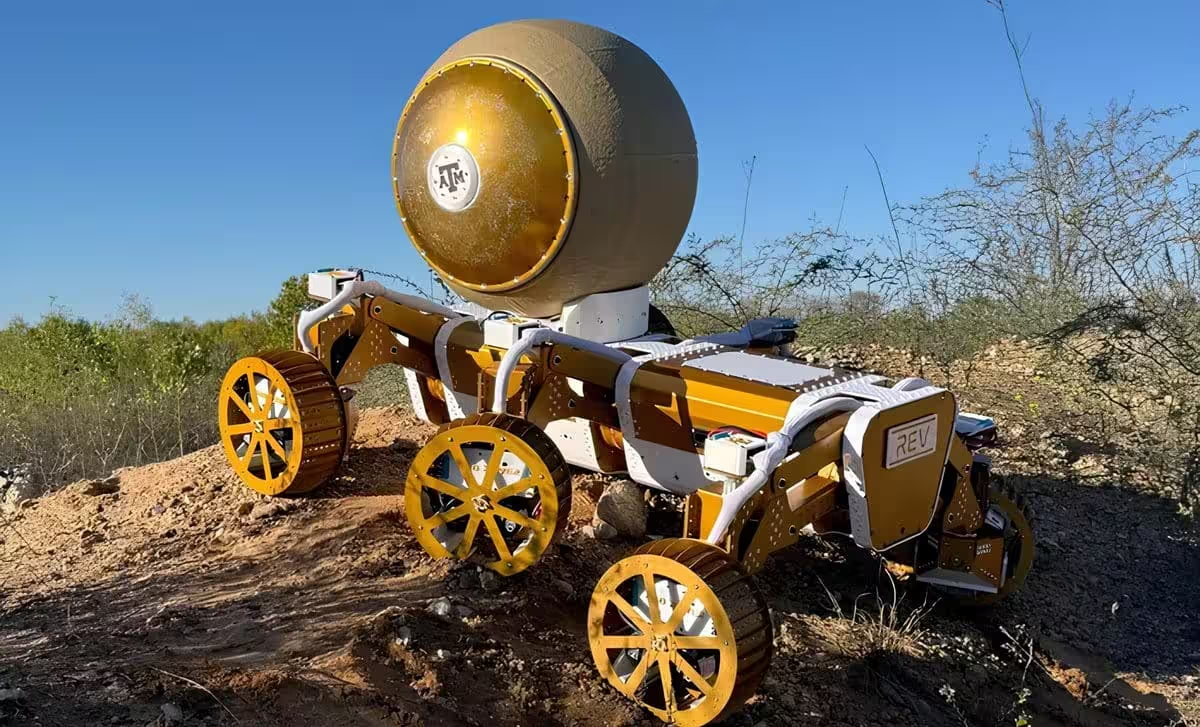
The operational concept envisions a symbiotic relationship between a conventional rover and the spherical explorer. A primary rover would transport the RoboBall to the rim of a crater before deploying it down the slope. Once inside the shadowed basin, the robot could conduct scientific analysis and collect material, which would then be launched back to the surface using small, rocket-powered capsules. As Ph.D. student Rishi Jangale noted, the robot is not the mission itself but rather a specialized instrument to facilitate scientific discovery.
The importance of these shadowed regions cannot be overstated. NASA researchers view these zones as critical targets, as they potentially contain frozen water and other volatile compounds that have remained undisturbed for billions of years, offering a window into the lunar past and providing vital resources for future long-term exploration.
Innovative Movement via Internal Momentum
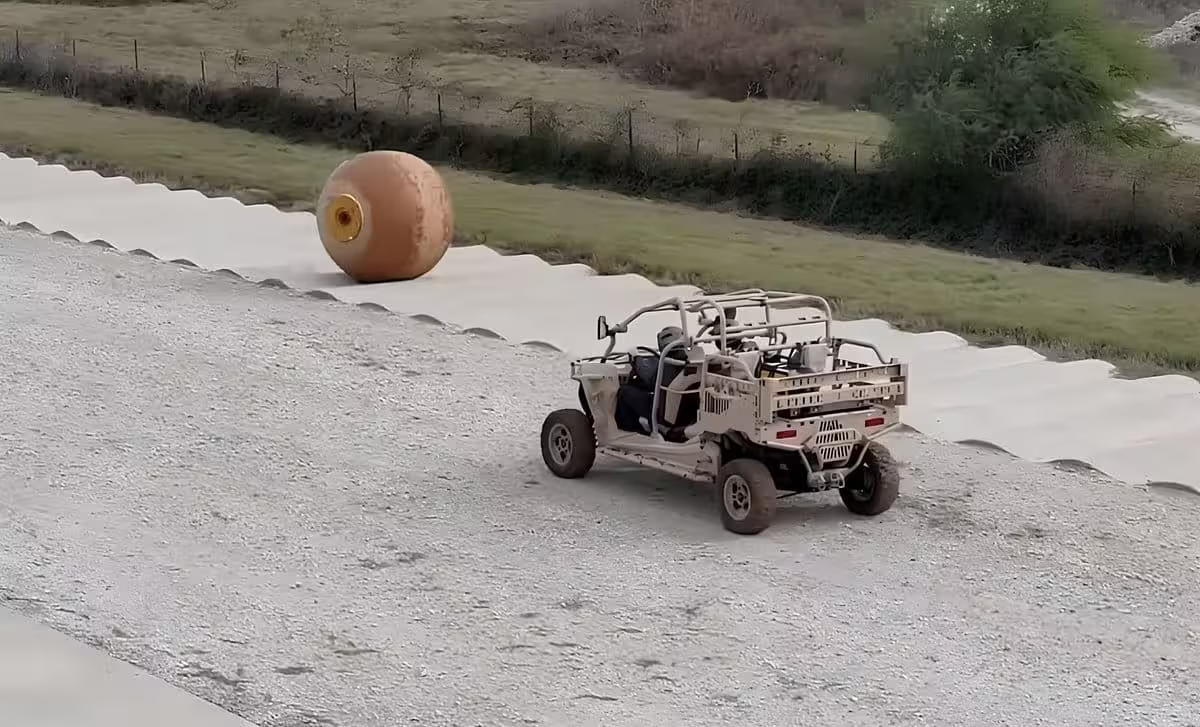
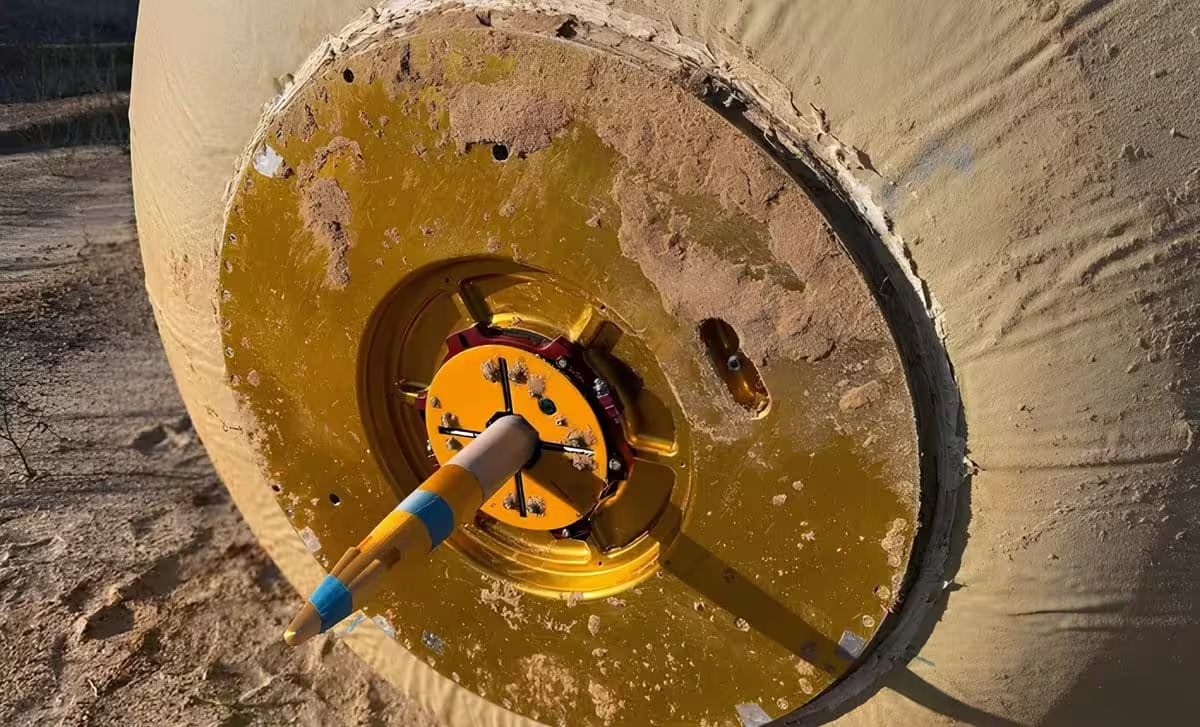
The locomotion of RoboBall III is driven by an internal pendulum mechanism. By shifting the center of mass through this pendulum, the device creates the torque necessary to roll forward, maneuver sideways, or modulate its speed during descents. All critical actuators are housed within a sealed, inflatable shell, providing a robust defense against the fine, abrasive lunar dust that frequently compromises exposed robotic joints.
The current iteration of the robot weighs 150 kilograms, spans approximately six feet in diameter, and possesses 2.5 times the torque of its predecessors. During 2025 field tests, the device demonstrated its ability to traverse soft, uneven ground and manage 20-degree inclines while carrying scientific instruments. “The beauty here is the simplicity,” observed Hiro Ono, an aerospace engineer with experience at NASA’s Jet Propulsion Laboratory.
The Road to Lunar Readiness
While the testing phase has yielded positive results, the jump from a Texas quarry to the lunar surface remains significant. Future developments must account for the harsh realities of the Moon, including extreme temperature fluctuations and the need for high-level autonomous navigation. The team also faces challenges regarding precision, as a spherical, rolling body is inherently more difficult to stop at exact locations compared to wheeled rovers.
Furthermore, the sealed architecture that protects the internal components presents a maintenance paradox. Graduate student Derek Pravecek noted that the inability to easily access internal systems means that even a minor failure could require a total rebuild of the robot. As development continues, the team remains focused on refining this unconventional approach to planetary exploration, betting that when traditional designs hit a wall, a simple, rolling sphere might be the key to unlocking the dark corners of our solar system.
This article has been fact checked for accuracy, with information verified against reputable sources. Learn more about us and our editorial process.
Last reviewed on .
Article history
- Latest version
Reference(s)
- <https://ieeexplore.ieee.org/document/11248963>.
- Wasser, Molly. “Moon Water and Ices - NASA Science.”, January 16, 2024 NASA <https://science.nasa.gov/moon/moon-water-and-ices/>.
Cite this page:
- Posted by Karan Das