The Mystery of the 60 Ton Space Rock That Crashed to Earth Without Leaving a Crater
A 60-ton ancient meteorite struck Earth without leaving a crater, leaving scientists with an extraordinary explanation for the cosmic mystery.
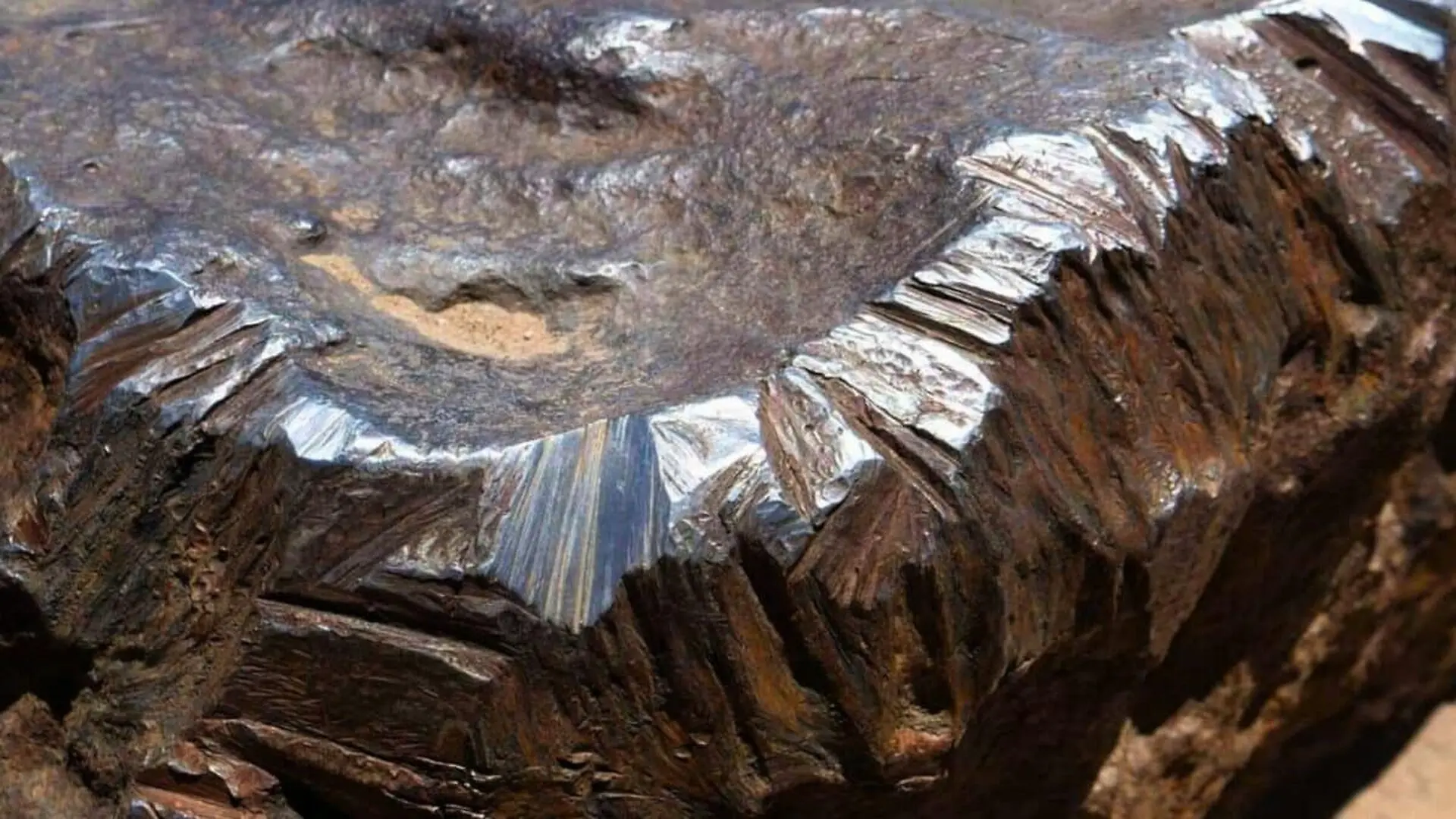
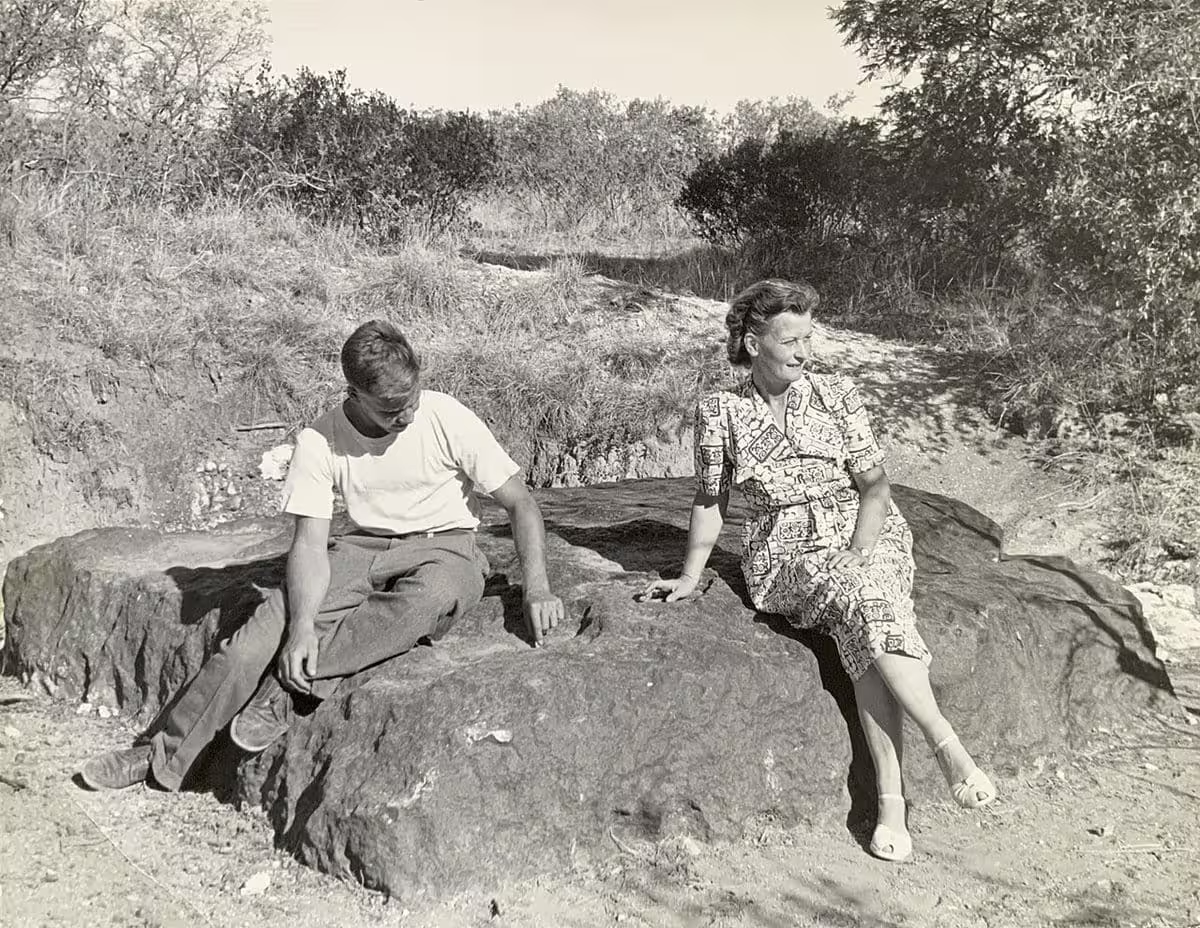
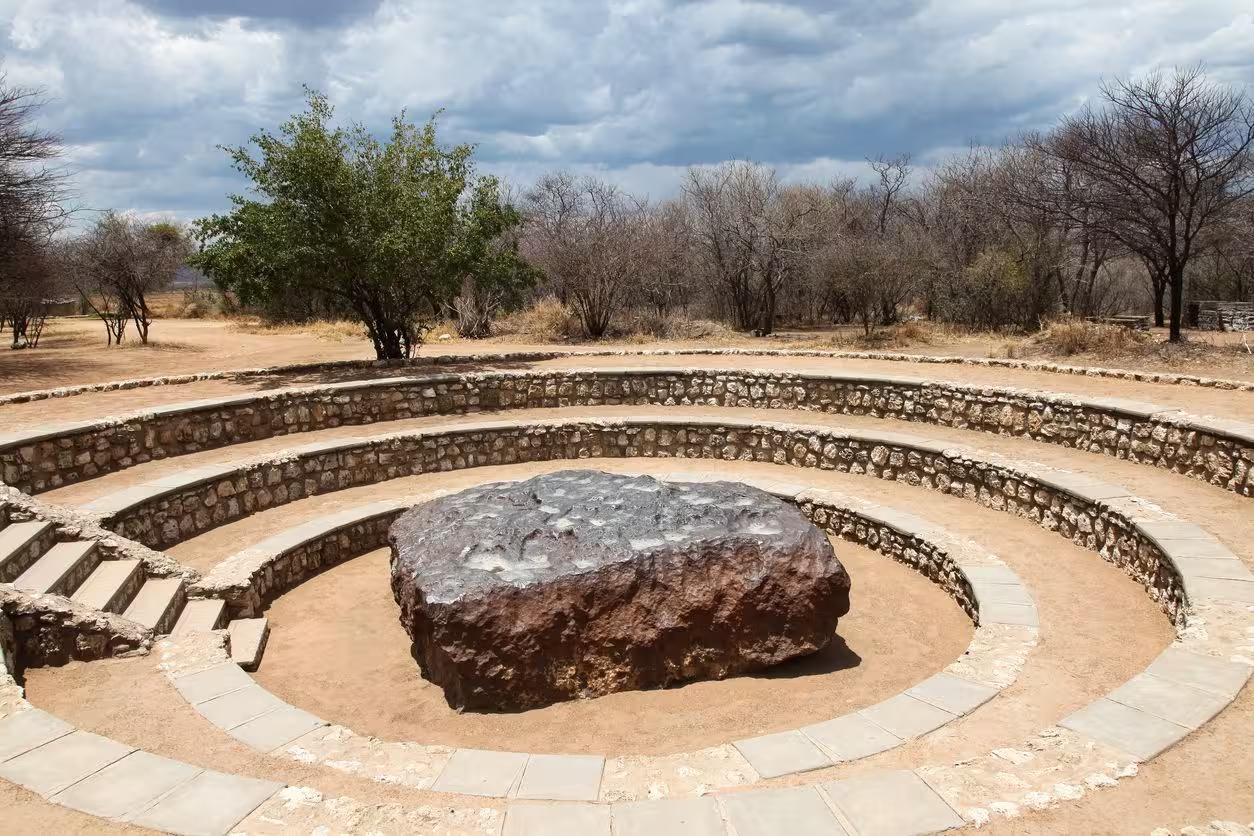
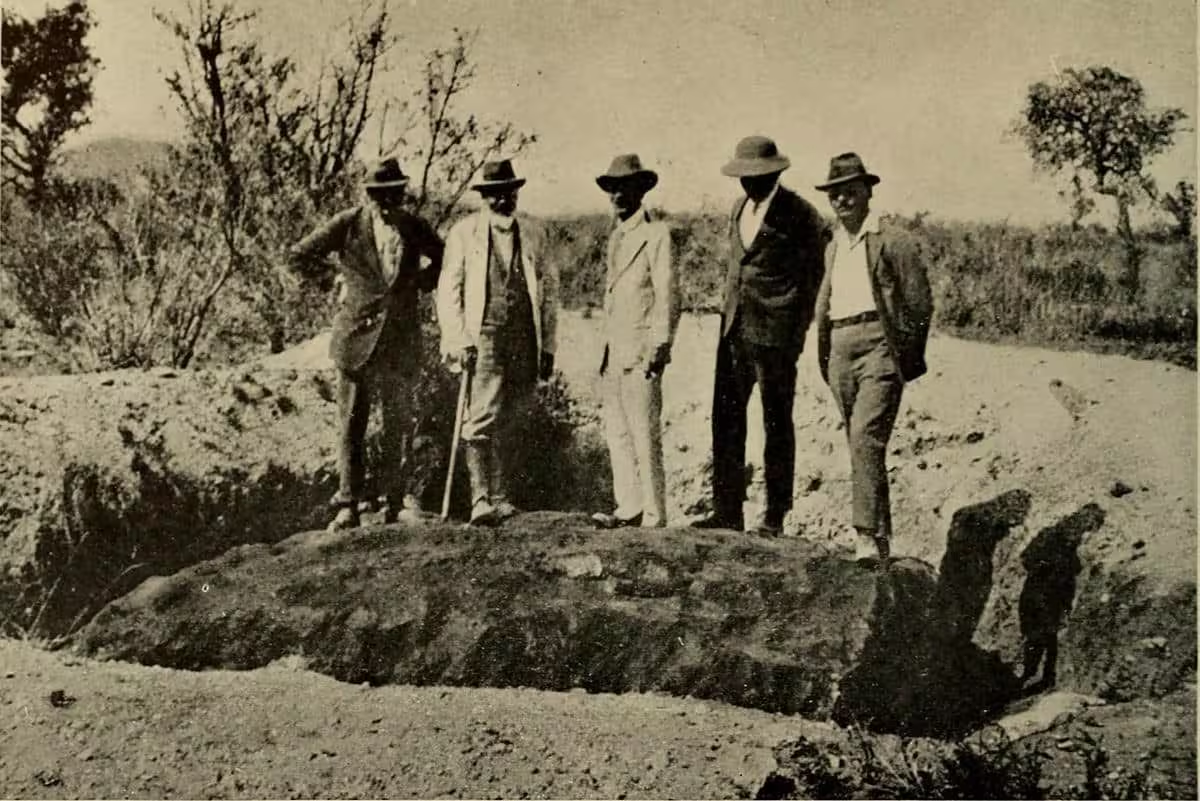
In 1920, farmer Jacobus Hermanus Brits was working his land in northern Namibia when his plow struck an immovable, metallic obstruction hidden just beneath the limestone surface. Near the town of Grootfontein, this chance encounter led to the identification of the Hoba meteorite, a celestial relic that remains the largest single piece of natural iron ever discovered on Earth. Measuring roughly 2.7 by 2.7 meters and nearly a meter thick, the 60-ton slab has never left the spot where it landed.
A Mystery from the Deep Past
Brits’ initial accounts of the discovery evolved over time. While early reports emphasized the accidental encounter with a plow, a later statement penned in 1954 suggests he first encountered the object while hunting during the winter. Struck by the stark contrast between the black, metallic rock and the surrounding pale limestone, he initially investigated the anomaly with a knife before returning with tools to secure a sample. The object’s unusual dimensions were so confounding that some early observers speculated it might be the remnants of an aircraft.
Composition and the Physics of an Impact
The Hoba meteorite is classified as a group IVB iron-nickel alloy, containing approximately 84 percent iron and 16 percent nickel. This composition is indicative of the molten cores of early planetary bodies formed roughly 4.5 billion years ago. Unlike many iron meteorites that display a distinct crystalline structure when cut, the high nickel content of the Hoba specimen results in an ataxite, or “structureless,” appearance.
Perhaps most perplexing is the lack of an impact crater. Scientists believe the object landed approximately 80,000 years ago. Its flat, slab-like geometry likely functioned as an aerodynamic brake, allowing it to shed significant velocity during its atmospheric descent. By the time it reached the surface, it had decelerated to its terminal velocity of roughly 2.75 kilometers per second, permitting it to settle into the ground without the catastrophic explosive release typically associated with such mass.
Preservation and Legacy
The meteorite’s resilience made it a target for souvenir seekers for decades, with many visitors attempting to carve off pieces with chisels and saws. These scars remain visible on the edges of the mass today. One such fragment, weighing just 2.8 kilograms, sold at auction in 2021 for more than $59,000.
To end the damage, the site was officially protected in 1955. In 1987, the property was formally donated to the state, and the area was developed with a visitor center and an amphitheater. Today, the Hoba meteorite—its name derived from a word meaning “gift”—remains a site of scientific interest and public wonder in Namibia, serving as a tangible connection to the early history of the solar system.
This article has been fact checked for accuracy, with information verified against reputable sources. Learn more about us and our editorial process.
Last reviewed on .
Article history
- Latest version
Cite this page:
- Posted by Zara Tariq