Scientists Reconstruct the Face of a Human Who Lived 315,000 Years Ago
Unearthed in Morocco 60 years ago, a reconstructed ancient skull is finally revealing new, groundbreaking insights into our complex human evolutionary history.
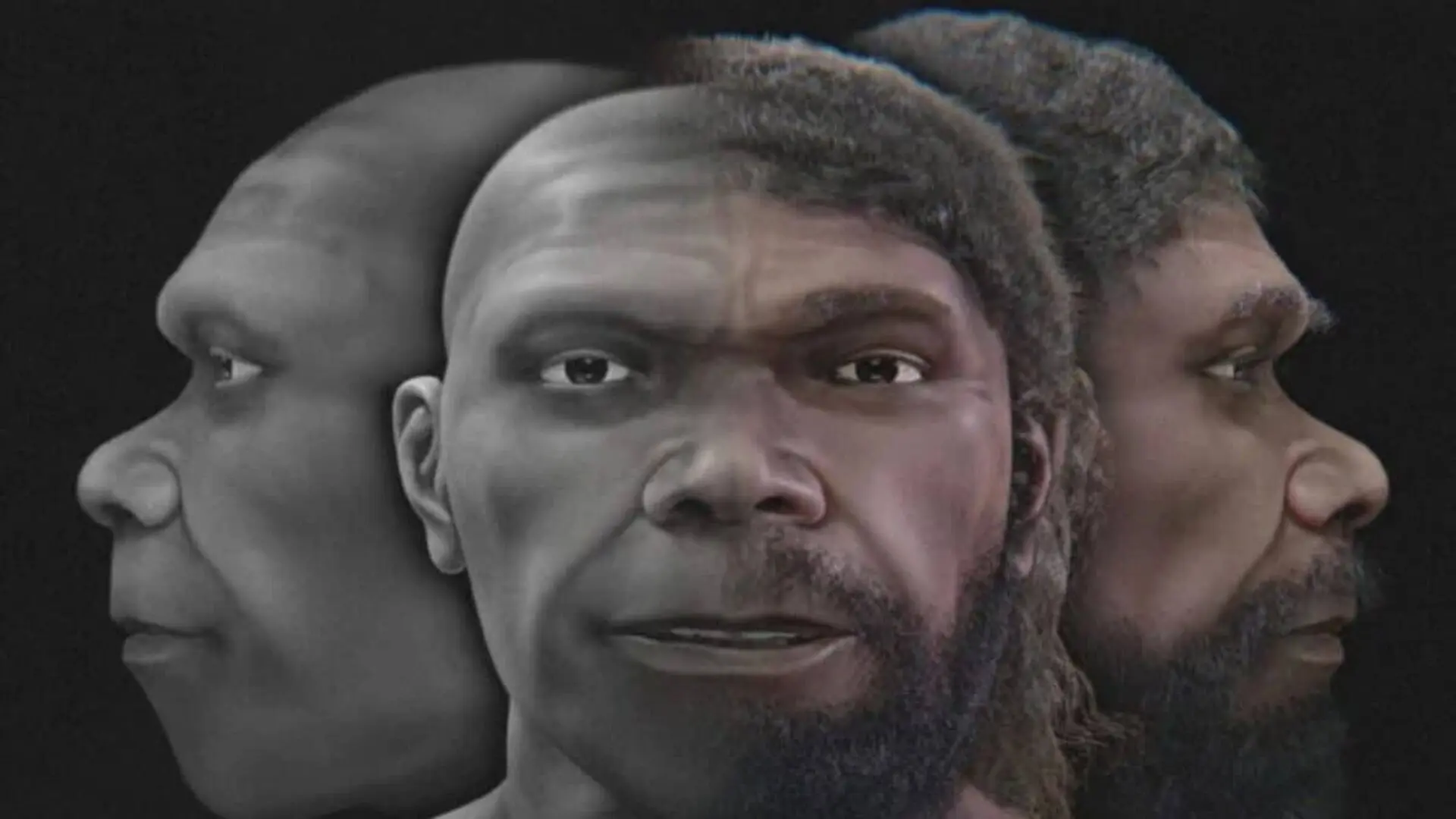
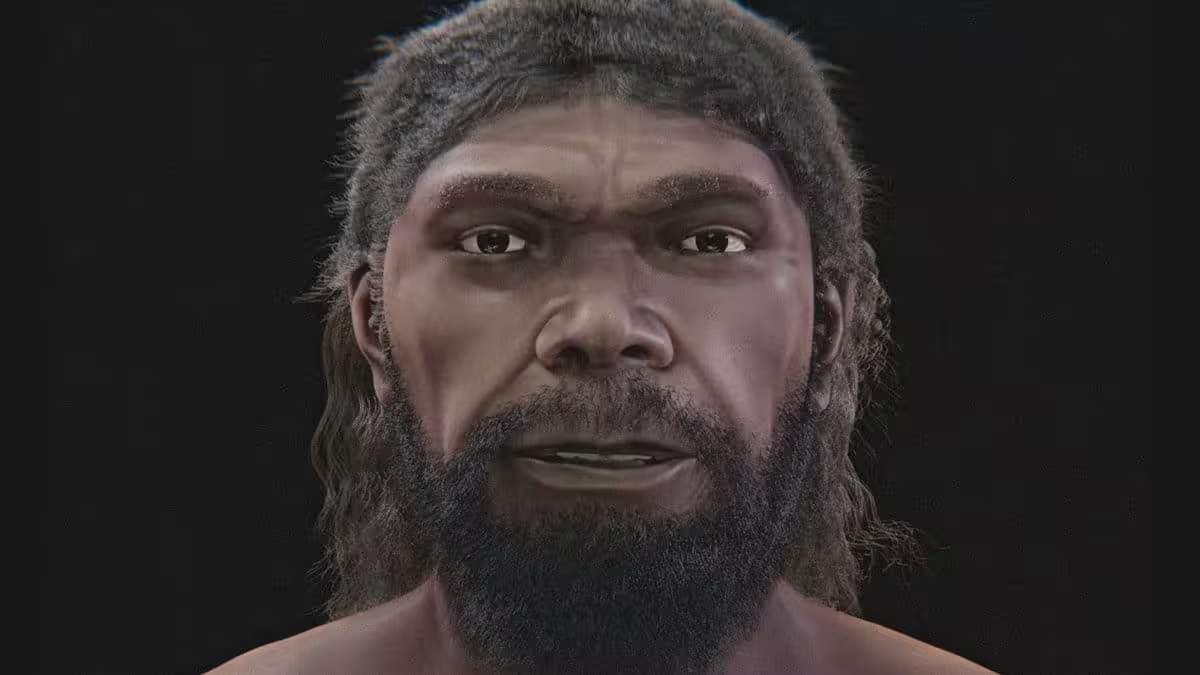
Digital forensic artistry has breathed new life into one of our most distant ancestors, offering a glimpse at a human who walked the Earth approximately 315,000 years ago. By utilizing fossil remains unearthed at the Jebel Irhoud site in Morocco, 3D designer Cícero Moraes has constructed a facial approximation that reveals a striking, albeit rugged, familiarity. Despite the immense chasm of time separating this individual from contemporary humanity, the reconstruction suggests that the foundational architecture of the Homo sapiens face was already largely in place hundreds of millennia ago.
Rewriting the Evolutionary Timeline
The Jebel Irhoud site has long served as a focal point for paleontological debate, fundamentally altering our understanding of human origins. When excavations began in the 1960s, workers stumbled upon a human skull that was initially misidentified as an African Neanderthal dating back roughly 40,000 years. It was not until 2017 that a landmark study, supported by extensive analysis of fossils and stone tools, established the remains as the oldest known examples of our species, pushing back the established history of Homo sapiens by approximately 100,000 years.
This discovery highlighted a fascinating evolutionary nuance: early members of our lineage possessed a mosaic of features. While their faces bore a resemblance to those of modern humans, their braincases retained a more archaic, elongated shape, suggesting that our defining physical characteristics emerged in a non-linear fashion.
Synthesizing Ancient Anatomy
The task of facial reconstruction was complicated by the fragmented nature of the fossil record. Because no single skull was complete, researchers at the Max Planck Institute for Evolutionary Anthropology previously developed a composite model using several specimens. The primary structure, known as Irhoud 1, provided the upper face and cranium, while the mandible and dentition were derived from other individuals found in the same geological strata. Cícero Moraes noted that these disparate elements aligned with surprising precision during the modeling process.
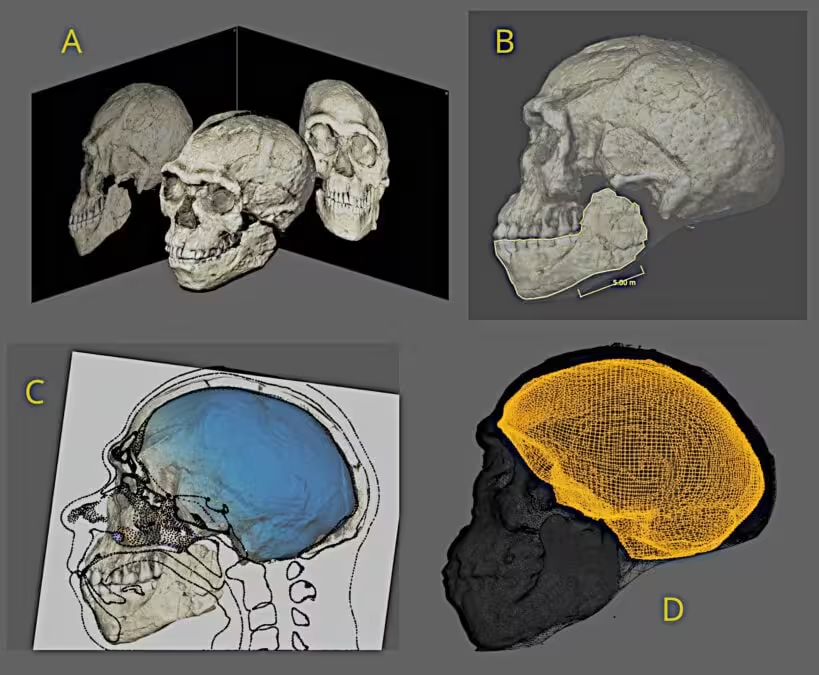
To flesh out the digital model, Moraes employed a combination of CT scans from modern subjects and specialized software, including Blender and OrtogOnBlender. By adjusting the soft tissue thickness to correspond with the fossilized bone, the team produced a cranial capacity of approximately 1,364 milliliters, a figure that aligns closely with previous scientific estimates of 1,375 milliliters.
The Human Behind the Fossil
The resulting portrait presents a figure that is at once alien and recognizable. According to Moraes, the individual would not necessarily stand out in a modern crowd, though a keen observer would notice the subtle differences in robust bone structure and a prominent, projecting jaw.
“As for the individual from Jebel Irhoud, he might go unnoticed in a crowd, but a closer look would reveal something that sets him apart from the rest – most notably his robust features and a projecting jaw,” Moraes said.
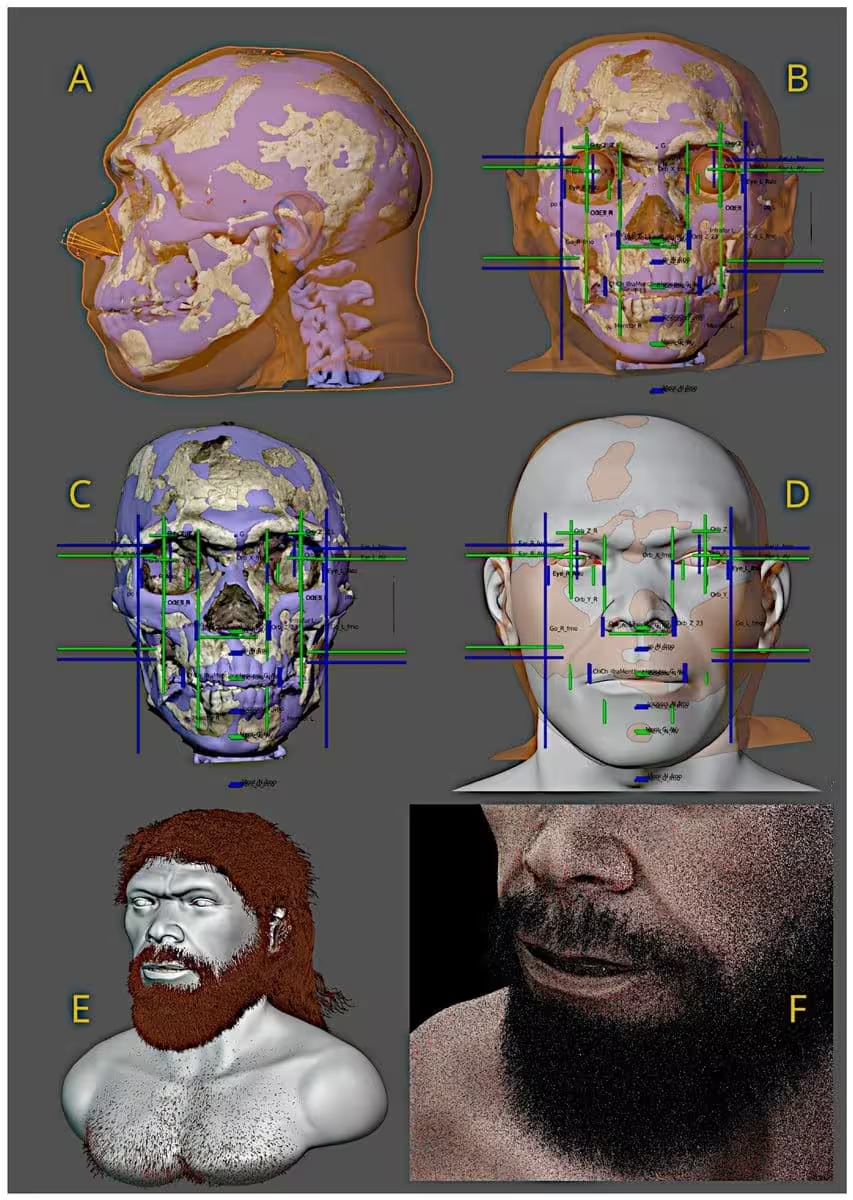
The findings, detailed in the journal Heritage, include both grayscale anatomical models and artistically interpreted versions featuring skin pigmentation and hair. While the latter additions provide a more vivid human element, the researchers emphasize that these cosmetic details are speculative, as there is no surviving biological material to confirm skin tone or hair texture. Ultimately, the project stands as an interpretive bridge between the rigid data of anthropology and the visual storytelling required to visualize our deep past.
This article has been fact checked for accuracy, with information verified against reputable sources. Learn more about us and our editorial process.
Last reviewed on .
Article history
- Latest version
Cite this page:
- Posted by Zara Tariq