NASA Astronauts Just Hit a Historic 100th Spacewalk Milestone With a Major Power Upgrade
NASA astronauts have completed the 100th U.S. spacewalk at the International Space Station, marking a major milestone in orbital engineering and power upgrades.
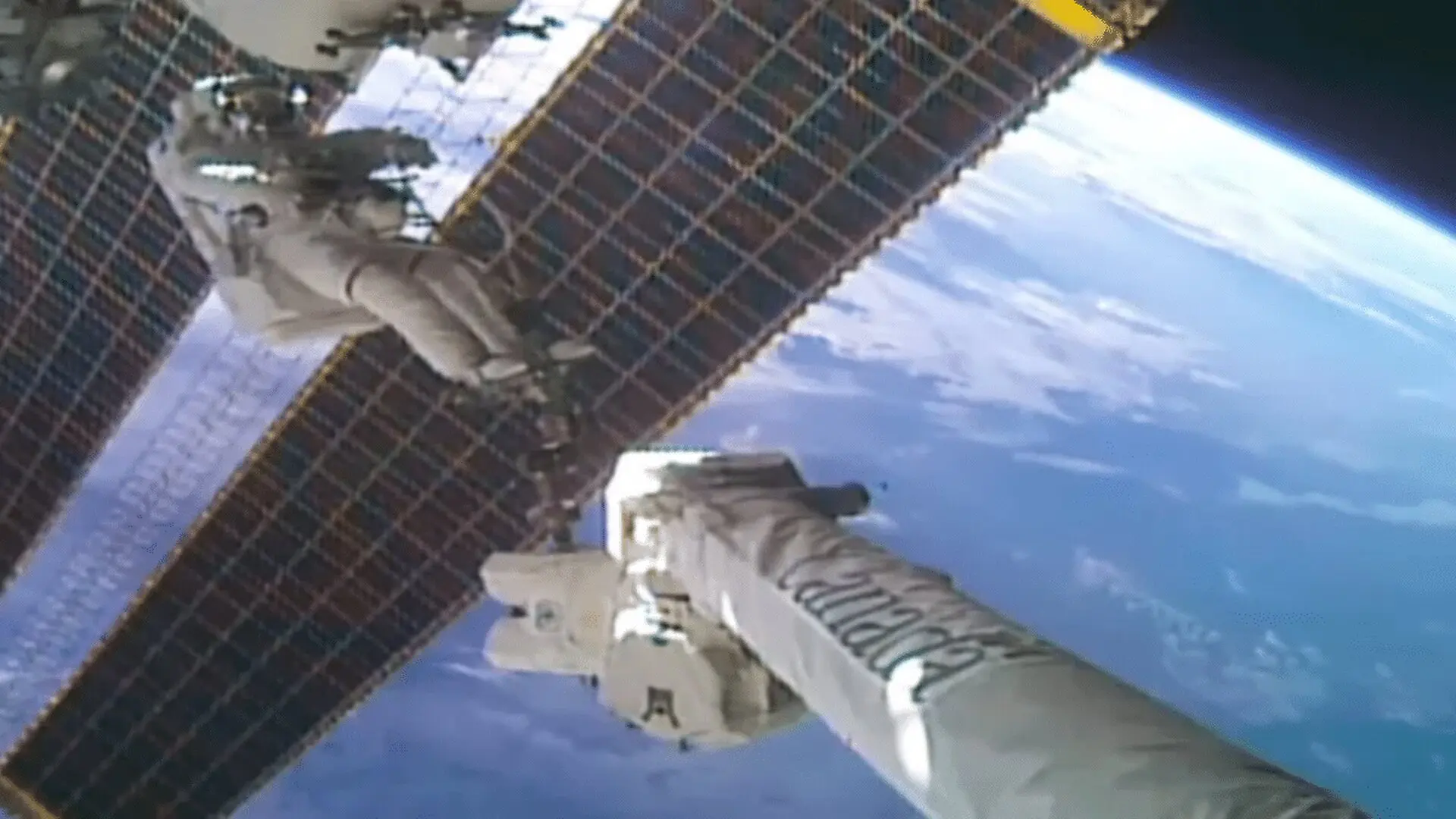
NASA has reached a significant operational milestone aboard the International Space Station (ISS), marking the 100th spacewalk conducted under the United States Operating Segment (USOS). This achievement, underscored by decades of continuous human presence in low Earth orbit, highlights the ongoing commitment to maintaining and upgrading the orbiting laboratory’s critical infrastructure.
A Legacy of Orbital Maintenance
The centennial spacewalk was dedicated to the installation of new solar array hardware, a move designed to bolster the station’s electrical grid. Extravehicular activities (EVAs) represent some of the most complex and physically demanding tasks performed in space. Each mission requires astronauts to navigate the station’s exterior while relying on pressurized suits to provide life support against the harsh vacuum and extreme thermal fluctuations of the orbital environment.
Unlike construction on Earth, building and repairing the ISS requires extreme precision in microgravity. Every component must be meticulously handled and secured while teams on the ground provide real-time guidance. This specific mission serves as a testament to the decades of expertise gathered since the first modules of the station were launched and joined together in space.
According to NASA, this milestone encapsulates a long history of assembly, equipment replacement, and technical modernization that has kept the station viable for international scientific research.
@csa_asc @Space_Station At just over two hours into today’s spacewalk, the solar array is out of its carrier and being delivered to its installation site. https://t.co/Fhom5mPYWf
— NASA (@NASA) October 29, 2026
Upgrading Power for Future Research
Reliable energy is the lifeblood of the space station, powering everything from life-support systems to complex laboratory instruments. As the ISS orbits the planet every 90 minutes, it is subject to constant transitions between direct sunlight and the darkness of Earth’s shadow. Photovoltaic arrays, paired with onboard battery systems, ensure that power remains constant throughout these cycles.
Because the original arrays have endured years of degradation from the space environment, NASA has turned to ISS Roll-Out Solar Arrays (iROSAs). This modern hardware is designed to be more compact and efficient than previous versions. The iROSA technology allows for a deployment mechanism that unfurls large sections of solar cells with minimal structural complexity, ensuring the station has the necessary power to continue its mission for years to come.
Reflecting on a Century of Spacewalks
For the astronauts on the front lines, the 100th USOS spacewalk was a moment to reflect on the immense coordination required to sustain human activity in space. Following the successful deployment, astronaut Menon spoke to the gravity of the work performed by generations of spacefarers.
“Being outside, I can say it is always sunny in space,” Menon noted after the EVA. “I find it incredible what we have been able to do to provide new solar arrays to the space station. In fact, we have been … doing complex operations like this for over 26 years.”
Menon emphasized that the milestone serves as a marker for how far the program has come. What began as a series of disparate modules launched over many years has evolved into a fully functional, permanently inhabited research facility. This progress is the result of thousands of hours of training and the combined efforts of robotics experts, engineers, and flight controllers.
This article has been fact checked for accuracy, with information verified against reputable sources. Learn more about us and our editorial process.
Last reviewed on .
Article history
- Latest version
Reference(s)
- “International Space Station - NASA.”, October 29, 2026 NASA <https://www.nasa.gov/blogs/spacestation/>.
Cite this page:
- Posted by Farah Siddiqui