Museum Antelope Teeth Reveal Surprising Century-Long Dietary Shift
Microscopic dental wear analyses across historical museum specimens show that yellow-backed duikers steadily consumed harder foods over the twentieth century.
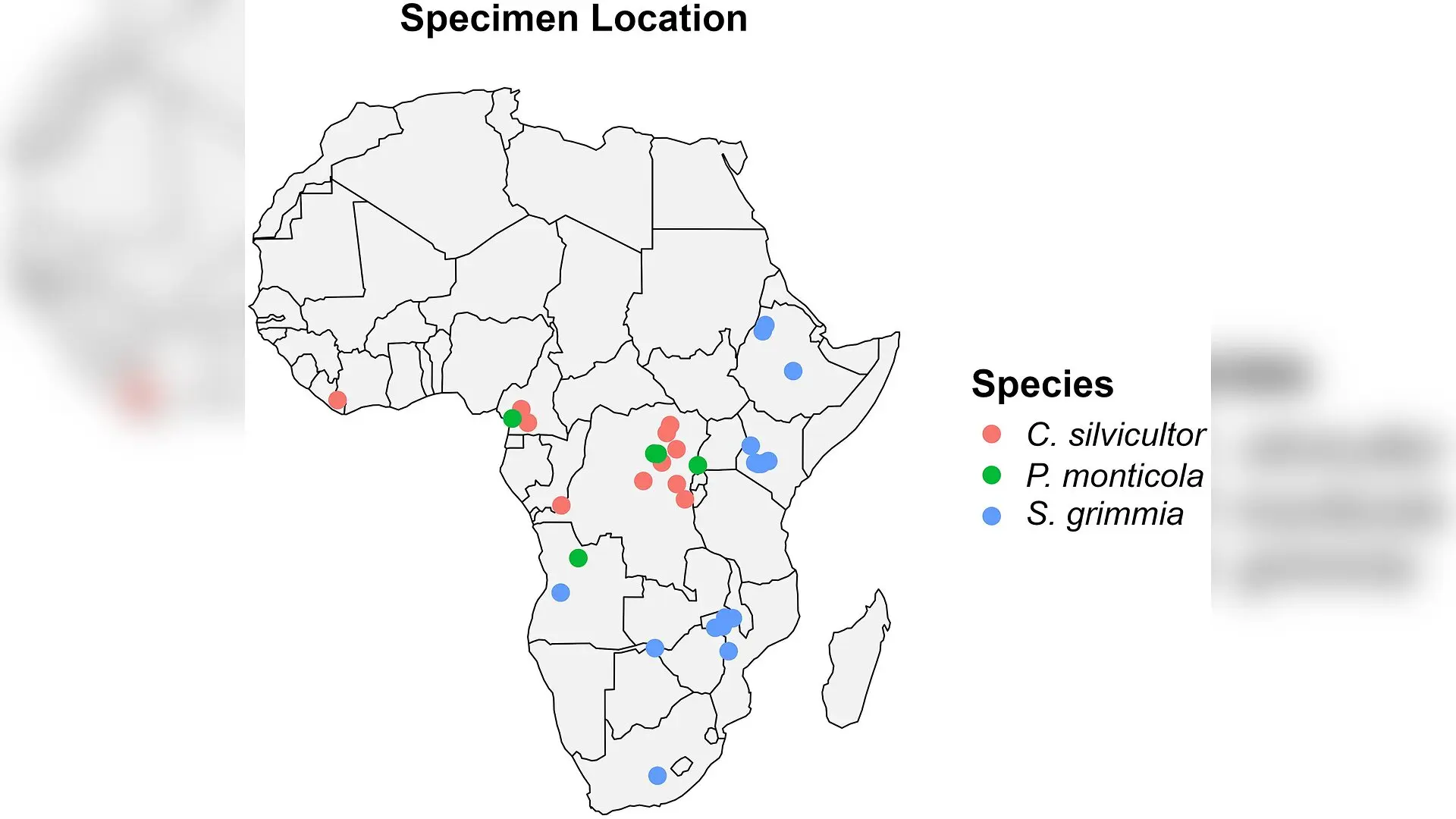
Teeth of the near-threatened yellow-backed duiker, a large forest-dwelling antelope species inhabiting sub-Saharan Africa, reveal a surprising dietary shift across the twentieth century that points to changing pressures in their native forest habitats. By analyzing microscopic wear patterns on museum specimens collected between 1913 and 1989, researchers uncovered a progressive increase in surface complexity alongside a decrease in directional scratches on the enamel. These microscopic dental textures indicate that the animals increasingly consumed harder or more brittle food items over the decades, such as specific types of seeds, nuts, or forest fruits.
Microscopic Tooth Wear Reveals Past Diets
To reconstruct historical eating habits without direct observation, researchers rely on dental microwear texture analysis, a high-resolution imaging technique that maps microscopic pits and scratches left on tooth enamel by food particles and grit. Because these microscopic marks are worn away and replaced every few weeks through normal chewing, they record the recent diet of an animal shortly before its death rather than lifelong patterns. The research team examined lower molar teeth from thirty-three yellow-backed duikers (Cephalophus silvicultor) housed in museum collections, comparing them with data from two related African antelope species, the tiny blue duiker (Philantomba monticola) and the savanna-dwelling common duiker (Sylvicapra grimmia).
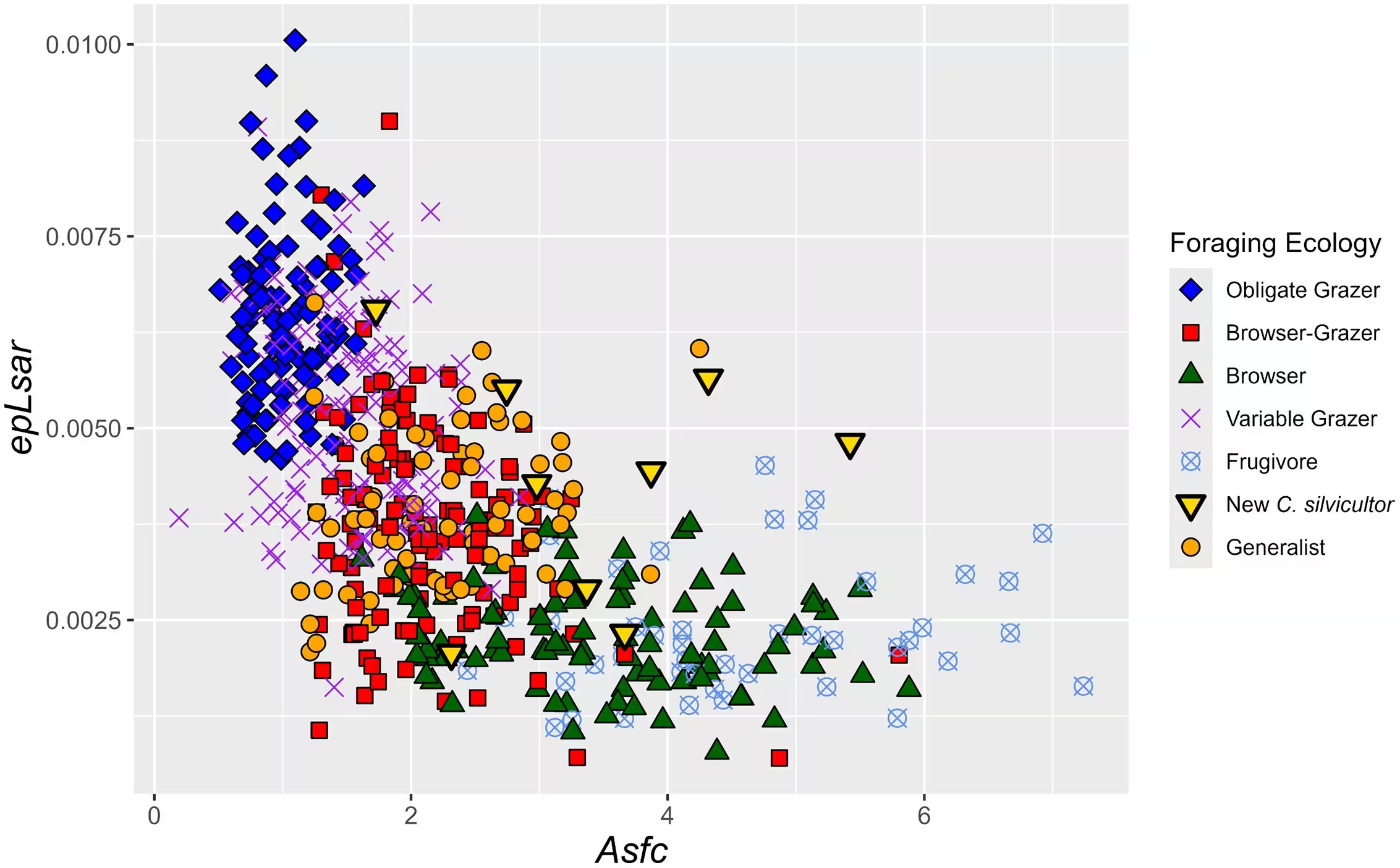
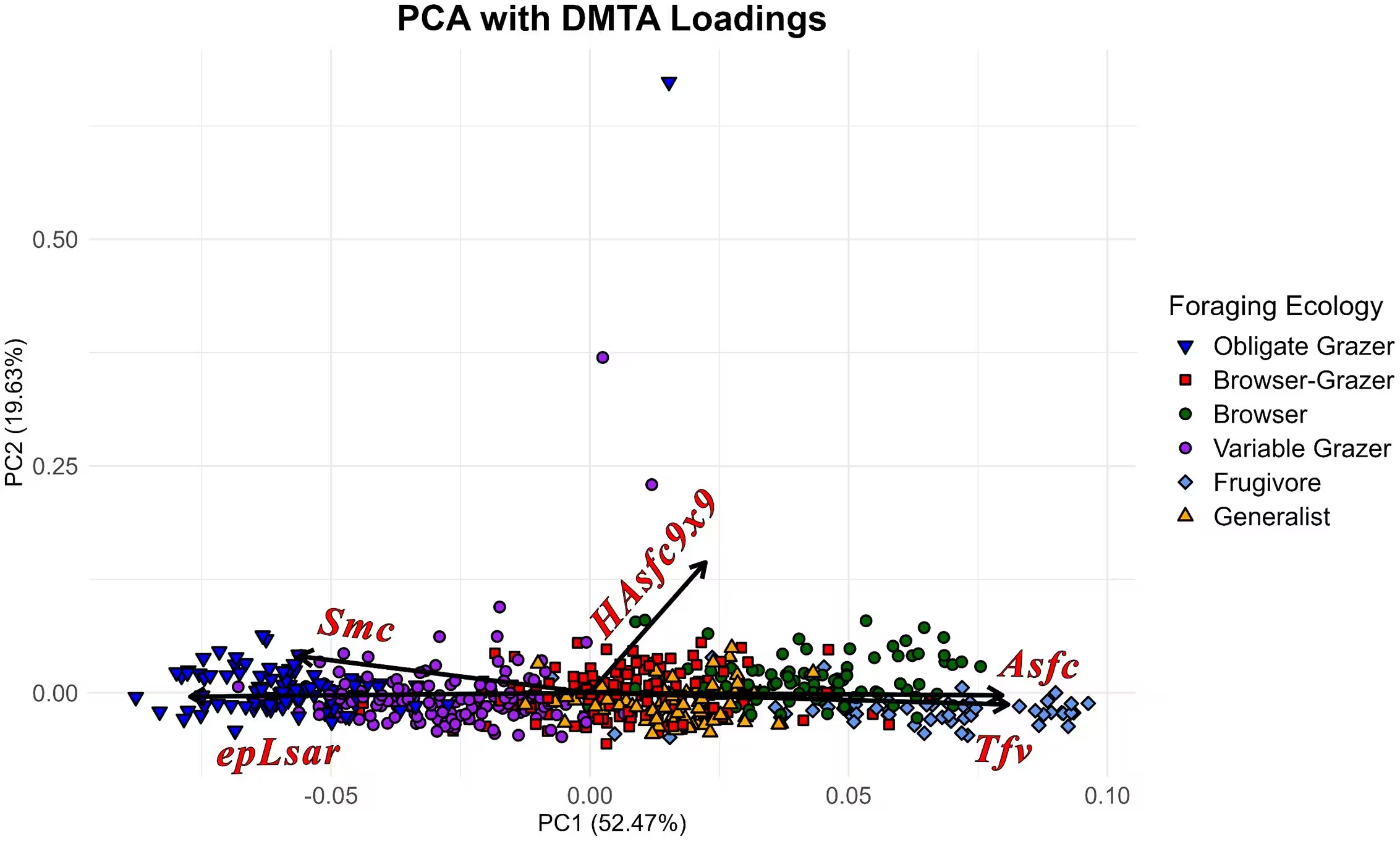
The findings were published in PLOS Ecosystems, providing new insight into how wildlife populations respond to historical environmental changes. To make sense of the vast amount of textural data, the authors ran statistical models including principal component analyses and quadratic discriminant analyses on hundreds of bovid specimens. This modeling demonstrated that dental microwear can successfully classify antelope species into distinct foraging guilds, such as browsers, frugivores, and grazers, with an overall resubstitution accuracy of eighty percent.
Contrasting Diets Among Forest Antelopes
While all three duiker species belong to the same taxonomic subfamily, their dental wear patterns showed clear differences that match their distinct feeding habits rather than their shared ancestry. The frugivorous yellow-backed duiker and blue duiker exhibited significantly higher surface complexity than the browser common duiker, reflecting the consumption of diverse, fracture-prone fruits and dicotyledonous browse. However, the yellow-backed duiker showed higher anisotropy, or directional scratch uniformity, than the smaller blue duiker, suggesting regular ingestion of tougher vegetative matter like forbs and shrub leaves alongside forest fruits.
Body size likely plays an important physiological role in these dietary differences through the principles of mammalian herbivore ecology. Weighing considerably more than blue duikers, yellow-backed duikers process lower-quality, more fibrous forage more efficiently through prolonged digestive retention times. Yet when the researchers tracked dental wear across the twentieth century specifically within the yellow-backed duiker specimens, they detected statistically significant temporal trends that were entirely absent in the blue and common duikers over comparable sampling intervals.
Possible Drivers of Twentieth Century Dietary Shifts
Between 1913 and 1989, yellow-backed duiker dental complexity increased while anisotropy decreased, signaling a transition toward more brittle and less fibrous food items. The authors evaluated several potential explanations for this temporal trend, noting that human populations across central Africa expanded dramatically during the same period, growing from roughly nine million to over thirty-five million people in the Democratic Republic of the Congo alone. This human expansion drove increased bushmeat hunting and regional land-use changes.
One hypothesis proposed by the study is that sustained hunting pressure could have exerted evolutionary or behavioral selection favoring earlier sexual maturation, a life-history shift in mammals that is frequently supported by the consumption of high-energy, nutrient-dense foods such as fruits and seeds. Alternatively, changing environmental factors such as increased atmospheric dust deposition or regional climate shifts might have introduced exogenous grit onto forest fruits and seeds, altering the abrasive properties of their diet. Because the current dataset cannot directly measure past hunting intensity or fine-scale habitat composition, the authors emphasize that these behavioral mechanisms remain speculative and require further investigation combining stable isotope analysis with microscopic tooth wear.
The research was published in PLOS Ecosystems on November 5, 2026.
This article has been fact checked for accuracy, with information verified against reputable sources. Learn more about us and our editorial process.
Last reviewed on .
Article history
- Latest version
Reference(s)
- Schwartz, Andrew., et al. “Historical dietary ecology of the Yellow-backed Duiker traces dietary change across the 20th century.” PLOS Ecosystems, vol. 1, no. 3, November 5, 2026, pp. e0000035 Public Library of Science (PLoS), doi: 10.1371/journal.pesy.0000035. <https://doi.org/10.1371/journal.pesy.0000035>.
Cite this page:
- Posted by Farah Siddiqui