Why Are Pregnant Women in Vietnam Missing Early Screening Tests for Preventable Infections
A new multicenter study investigates patient barriers and clinician practices across four provincial hospitals in northern Vietnam to improve newborn health outcomes.

Pregnant women in northern Vietnam who miss early screening tests for dangerous infections face higher risks of passing preventable illnesses to their newborns, according to a recent study protocol. Researchers are investigating why gaps persist in maternal healthcare despite high attendance rates at clinics across the region.
Mother-to-child transmission of human immunodeficiency virus (HIV), hepatitis B virus (HBV), and syphilis remains a leading cause of fetal loss, neonatal illness, and long-term disability worldwide. While antenatal care coverage is widespread in Vietnam, healthcare experts note that timely screening and complete follow-up care often fall short. When diagnostic testing occurs late in pregnancy or during labor, medical teams lose the critical window needed to administer effective preventive treatments such as antiretroviral therapy, penicillin, or newborn immunizations.
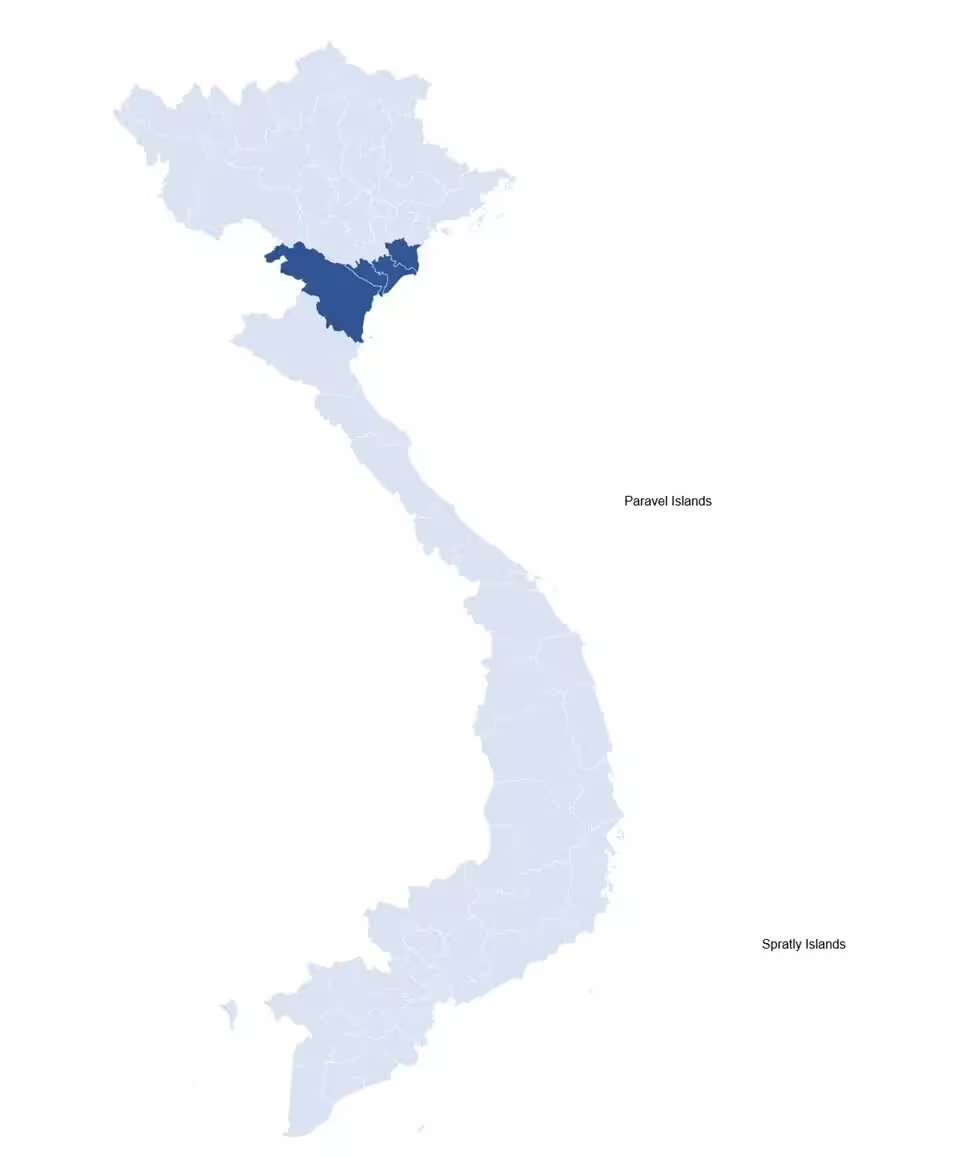
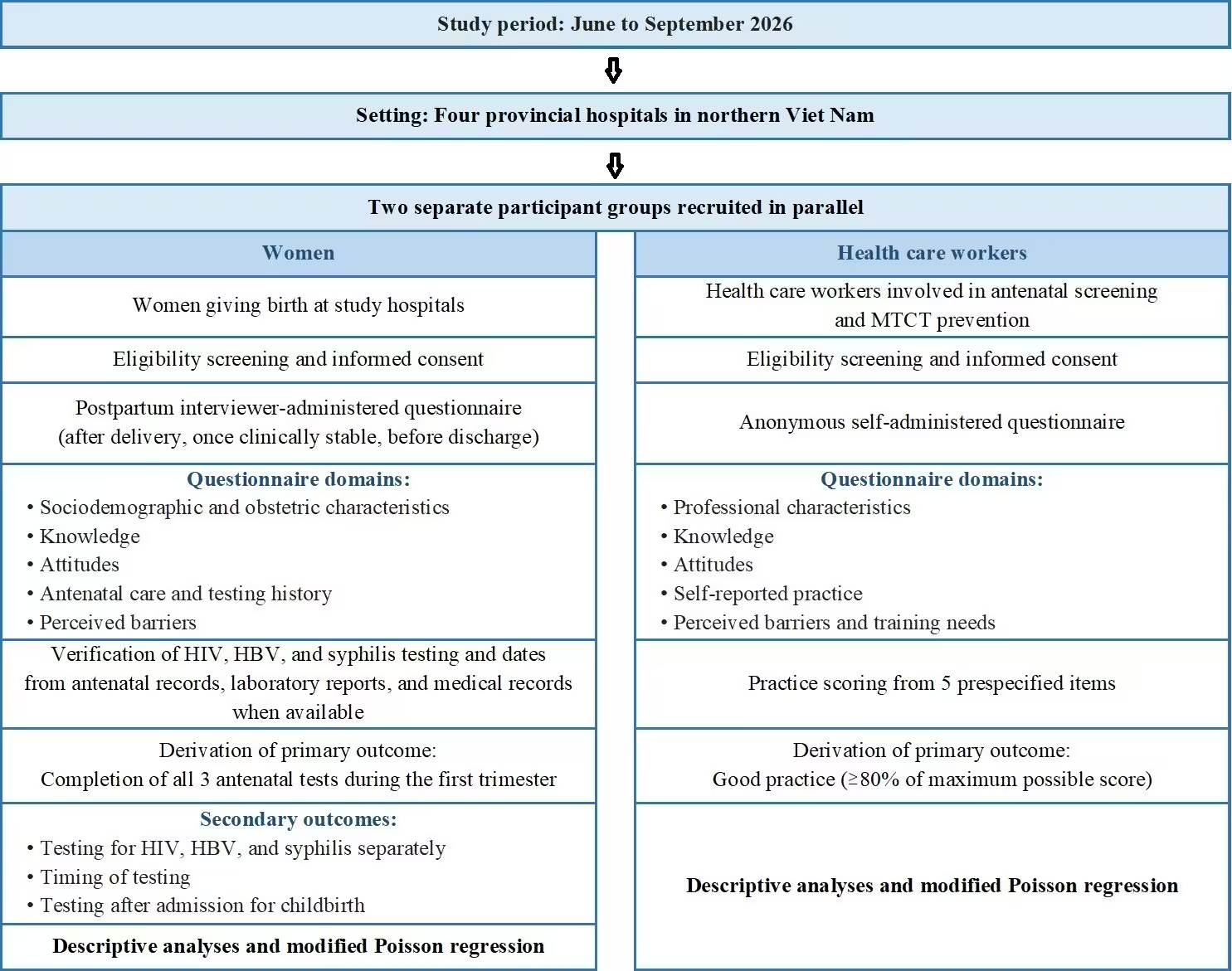
Led by Thi Loi Dao from Thai Binh University of Medicine and Pharmacy, the investigation was published in JMIR Research Protocols to outline the methodology for a multicenter cross-sectional study. Conducted across four provincial hospitals in northern Vietnam from June to September 2026, the project successfully recruited 601 postpartum women and 601 healthcare workers to examine the underlying drivers of screening delays.
How Do Patient Knowledge and Healthcare Barriers Impact Screening Rates?
The study evaluates two distinct participant groups to capture both sides of the maternal healthcare experience. Postpartum women complete interviewer-administered questionnaires after delivery, detailing their antenatal care visits, personal knowledge of transmission risks, attitudes toward testing, and perceived obstacles such as medical costs, travel distance, and social stigma. To ensure accuracy, the research team verifies self-reported testing histories against official hospital records, laboratory reports, and maternal health books whenever available.
In parallel, healthcare workers complete anonymous self-administered surveys assessing their clinical training, familiarity with national guidelines, counseling habits, and workplace constraints. By analyzing these separate datasets, the authors aim to identify specific individual and service-related factors associated with optimal screening behaviors. The primary outcome for patients is defined as completing all three infection tests during the first trimester, whereas the primary outcome for clinicians is achieving a high score on a standardized index of good practice.
What Limitations Shape the Interpretation of These Findings?
Because the investigation relies on cross-sectional data gathered from four provincial hospitals, the authors emphasize that the results will demonstrate statistical associations rather than prove direct cause and effect. Furthermore, the findings reflect hospital-based populations in northern Vietnam and cannot be generalized to women receiving care in district facilities, private clinics, or at home.
Despite these structural boundaries, the detailed analysis plan utilizes modified Poisson regression with robust variance to account for variations across hospital sites. The project aims to pinpoint actionable gaps in medical training, patient counseling, and service delivery, providing essential evidence to guide future healthcare interventions and strengthen regional disease prevention programs.
The research was published in JMIR research protocols on November 19, 2026.
This article has been fact checked for accuracy, with information verified against reputable sources. Learn more about us and our editorial process.
Last reviewed on .
Article history
- Latest version
Reference(s)
- Nguyen, Trung Kien., et al. “Knowledge, Attitudes, and Practices of Pregnant Women and Health Care Workers Regarding Antenatal Testing for HIV, Hepatitis B Virus, and Syphilis in Vietnam: Protocol for a Multicenter Cross-Sectional Study.” JMIR Research Protocols, vol. 15, November 19, 2026, pp. e95313-e95313. JMIR Publications Inc., doi: 10.2196/95313. <https://doi.org/10.2196/95313>.
Cite this page:
- Posted by Susan White