Neural Gene Activity in Lung Tumors Points to Immunotherapy Resistance
A thirty-gene neural signature correlates with advanced disease stages and reduced treatment response in non-small cell lung cancer patients.
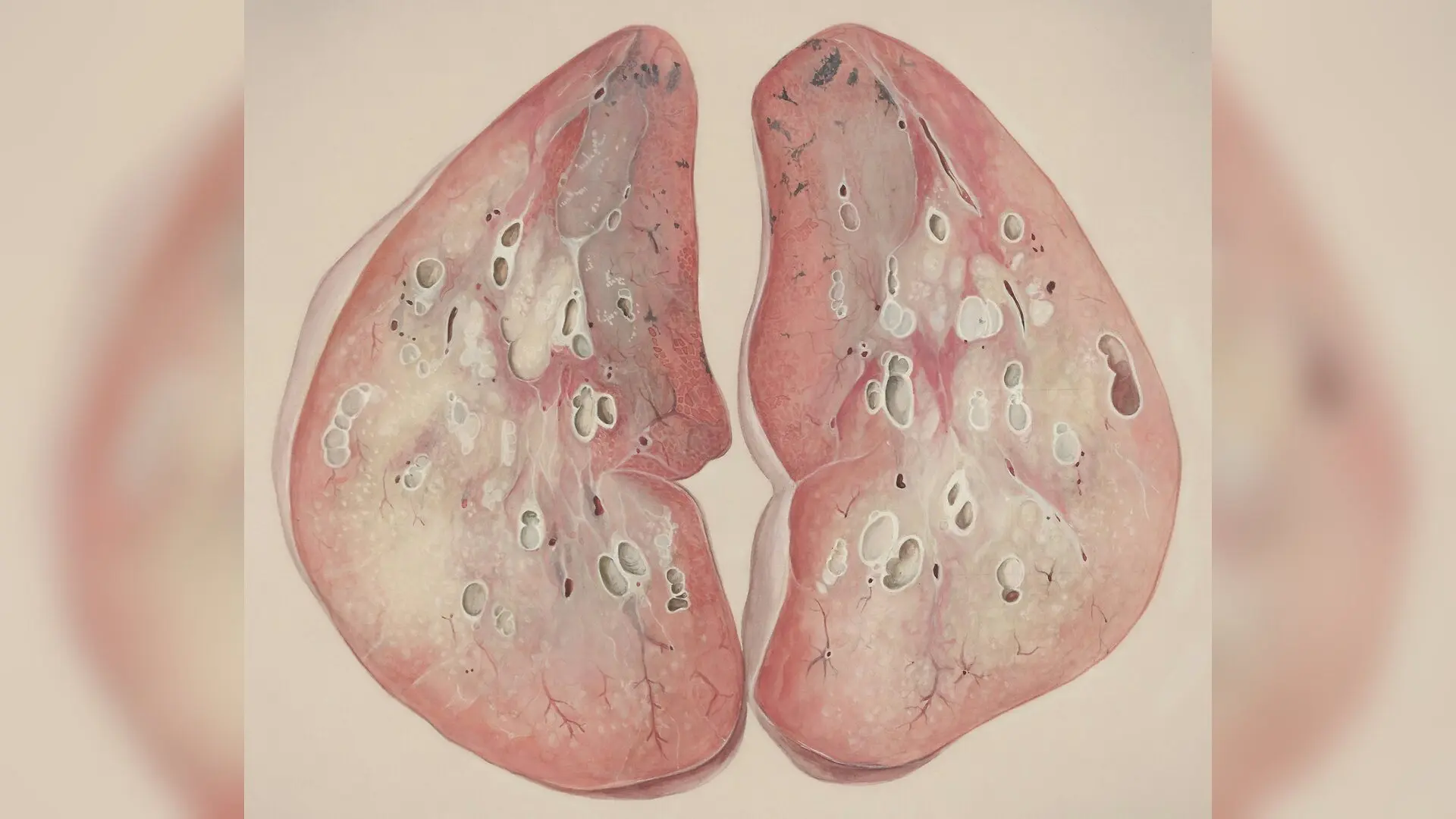
A specific genetic signature linked to nerve signaling in lung tumors points to why some patients fail to respond to immunotherapy. Researchers discovered that non-small cell lung cancer, the most common form of lung cancer, often exhibits elevated activity in genes typically associated with the nervous system. This molecular pattern correlates with poorer survival rates and a lower likelihood of major tumor shrinkage after combined chemotherapy and immunotherapy.
While immunotherapy drugs have transformed cancer care, only a fraction of patients experience long-lasting benefits. Standard biomarkers like tumor mutational burden, which measures genetic mutations, do not fully explain this variation. Scientists are increasingly looking at cancer neuroscience, exploring how peripheral nerves and neural pathways within the tumor microenvironment influence tumor growth and immune resistance.
To investigate this, a team of researchers designed a fixed, unweighted thirty-gene panel representing various neural programs, including adrenergic, cholinergic, neurotrophic, and synaptic functions. They evaluated this neural-related transcriptional signature across large public databases and clinical patient groups. The detailed findings were published in Cancer Communications.
How Neural Gene Activity Shapes Patient Survival
When the investigators analyzed transcriptomes from The Cancer Genome Atlas, they found that the thirty-gene panel was broadly upregulated in over one thousand lung tumors compared to healthy lung tissue. Patients with high signature scores experienced shorter overall survival, with a median of 47.4 months compared to 89.4 months for those with low scores. Their progression-free interval was also significantly reduced.
In multivariable statistical models adjusted for age, sex, histological subtype, and pathological stage, high signature status remained independently associated with both overall survival and disease progression. Furthermore, these neural-related transcriptional scores were notably higher in lung squamous cell carcinoma than in lung adenocarcinoma, though they did not differ significantly by smoking history or epidermal growth factor receptor mutation status.
What Happened When Patients Received Chemo-Immunotherapy
The research team next tested the signature in two independent clinical cohorts receiving neoadjuvant chemo-immunotherapy, which involves treatment before surgical removal of the tumor. In a training cohort of 68 patients, a major pathological response, defined as having ten percent or less residual viable tumor in the resected tissue, occurred in 32.4 percent of signature-low patients but only 11.8 percent of signature-high patients.
A validation cohort of 61 patients showed a similar trend, where major pathological responses occurred in 16.1 percent of signature-low individuals and zero percent of signature-high individuals. When the two clinical groups were pooled for survival analysis, high signature status was significantly associated with shorter disease-free survival. However, the pooled overall survival analysis showed a similar adverse trend that did not reach statistical significance.
Cellular Origins and Immune System Interactions
To understand which cells drive these patterns, the researchers examined single-cell ribonucleic acid sequencing data encompassing nearly 29,000 cells across 15 distinct cell types. The analyses showed that the neural-related signature was detectable not just in malignant cells, but also across various immune compartments, with particularly high representation in specific lymphoid and myeloid populations.
Cells with higher signature scores showed an enrichment of pathways related to reactive oxygen species, whereas metabolic processes like glycolysis and oxidative phosphorylation predominated in cells with lower scores. Additionally, protein staining for a neuronal marker called PGP9.5 showed a modest positive correlation with the genetic signature scores, though the authors emphasized that this marker is not exclusively nerve-specific.
Limitations and Next Steps for Cancer Neuroscience
The authors noted several important limitations to keep in mind. The clinical cohorts were relatively small, yielding very few major pathological response events in the validation group, and the observational design cannot establish whether neural signaling directly causes immune exclusion or treatment resistance.
Consequently, the signature should currently be viewed as an exploratory transcriptional correlate rather than a validated clinical biomarker. Prospective validation studies utilizing locked analytical workflows and nerve-specific morphological assessments will be necessary before these insights can guide patient care in clinical settings.
The research was published in Cancer communications (London, England) on November 18, 2026.
This article has been fact checked for accuracy, with information verified against reputable sources. Learn more about us and our editorial process.
Last reviewed on .
Article history
- Latest version
Reference(s)
- Wang, Yang., et al. “A Neural-Related Transcriptional Signature Is Associated with Reduced Immune Activity and Pathological Response to Neoadjuvant Chemo-Immunotherapy in Non-Small Cell Lung Cancer.” Cancer Communications, vol. 46, November 18, 2026 American Association for the Advancement of Science (AAAS), doi: 10.34133/cancomm.0073. <https://doi.org/10.34133/cancomm.0073>.
- Posted by David Anderson