Great Barrier Reef Study Reveals Striking Differences in How Individual Coral Zones Survive Heatwaves
High-resolution photo surveys at Heron Reef show that while some slopes bounce back after mass bleaching, others suffer persistent degradation.
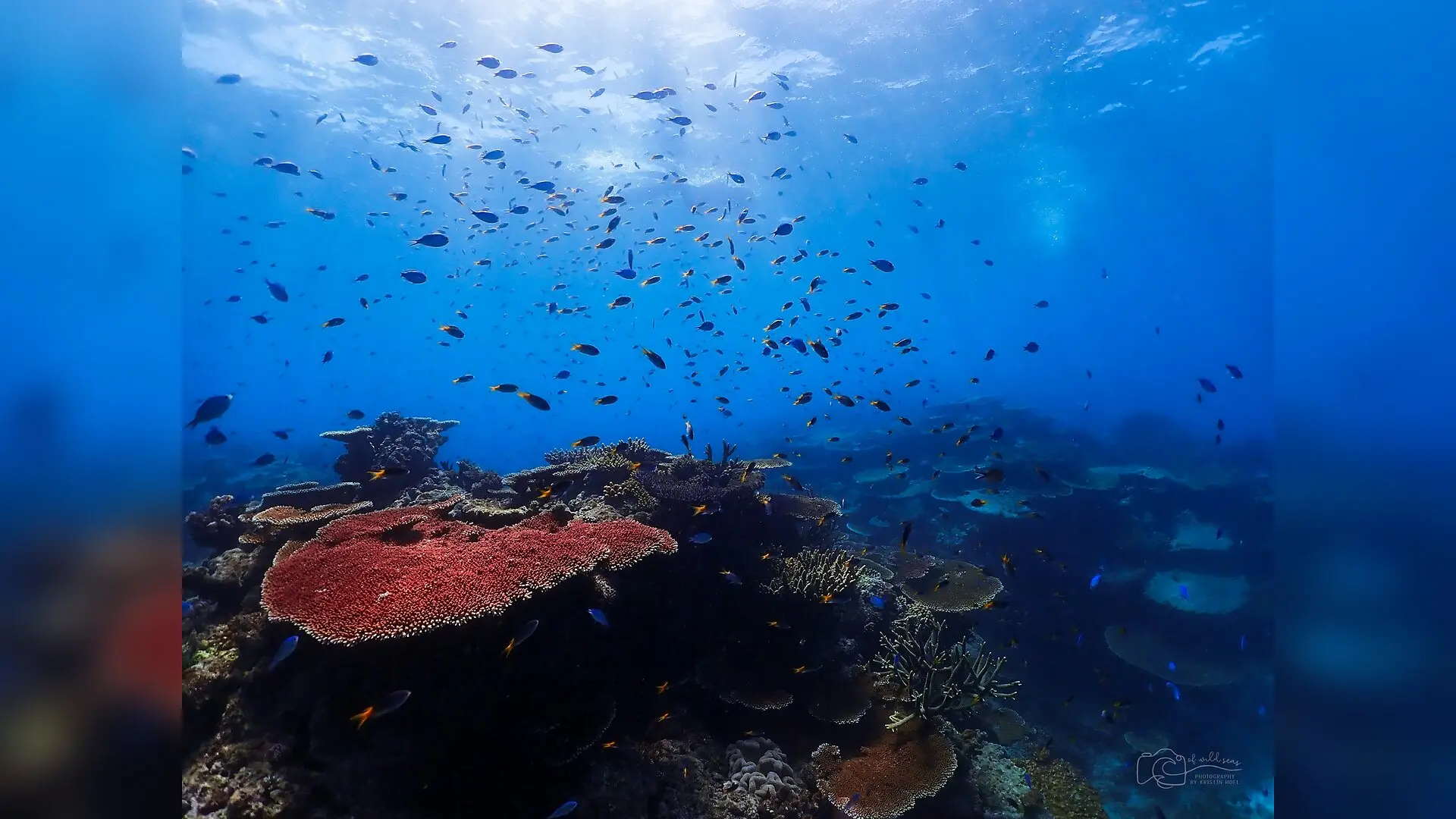
Coral reefs on the Great Barrier Reef in Australia are facing compounding environmental shocks that leave them little time to bounce back between major disasters. A team of marine scientists tracking Heron Reef in the Capricorn-Bunker Group found that different parts of a single reef respond to severe marine heatwaves and cyclones in completely contrasting ways. The researchers analyzed an archive of about ninety thousand geo-referenced photo quadrats collected across thirty-one transects from 2019 to 2025. Their study, published in Ecology and Evolution, reveals that while some reef zones show signs of resilience, others suffer from persistent damage that prevents recovery.
How did Heron Reef change during recent marine heatwaves and cyclones?
The southern region of the Great Barrier Reef experienced severe thermal stress during the global marine heatwave of 2024, followed shortly by the arrival of Cyclone Alfred in early 2025. Nicholas Hammerman from the University of Queensland and colleagues tracked changes in benthic structure, meaning the physical makeup of the sea floor, across four distinct geomorphic zones. These zones included the reef flat, the leeward north slope, the windward east slope, and the windward west slope. The team discovered that the 2024 bleaching event caused between forty-three and fifty-two percent bleaching of hard coral assemblages across the three reef slopes. Massive and encrusting corals were hit especially hard, with more than half showing bleaching symptoms across all slope zones.
Which parts of the reef showed signs of recovery and which remained degraded?
Post-disturbance trajectories diverged sharply among the different sections of the reef platform. The windward west slope demonstrated an encouraging recovery trend, with its deficit in non-bleached coral narrowing significantly by October 2025. By contrast, the windward east slope showed no sign of recovery, maintaining a persistent deficit in live coral cover alongside a lasting increase in turf algae growing over dead coral skeletons. The reef flat, which experienced milder bleaching during the peak thermal stress, returned to a state statistically indistinguishable from its pre-disturbance baseline by mid-2025. The authors note that these spatial differences highlight how local hydrodynamics and baseline community composition shape survival rates during climate-driven anomalies.
What limitations did the researchers encounter when tracking these shifts?
While machine learning platforms like ReefCloud helped process tens of thousands of underwater images efficiently, the authors point out several methodological constraints. The photographic analysis could not distinguish between newly broken storm rubble and older pre-existing debris, nor could it track individual colony survival or larval recruitment directly. Furthermore, percentage cover metrics can sometimes mask the loss of smaller or rarer coral colonies. Despite these challenges, the high-resolution dataset provides a clear warning that frequent disturbances are pushing coral ecosystems toward ecological thresholds where traditional recovery processes may eventually fail.
The research was published in Ecology and evolution on November 22, 2026.
This article has been fact checked for accuracy, with information verified against reputable sources. Learn more about us and our editorial process.
Last reviewed on .
Article history
- Latest version
Reference(s)
- Hammerman, Nicholas M.., et al. “Impact and Response to Recent Disturbance Vary Across Geomorphic Zones at Heron Reef (Great Barrier Reef, Australia).” Ecology and Evolution, vol. 16, no. 11, November 22, 2026 Wiley, doi: 10.1002/ece3.74594. <https://doi.org/10.1002/ece3.74594>.
Cite this page:
- Posted by Kamran Akhtar