Eighty Percent of Nurses Feel Unprepared For Artificial Intelligence in Clinics
A new study reveals that while primary care nurses overwhelmingly recognize the clinical benefits of artificial intelligence, a profound lack of training and murky legal accountability prevent everyday adoption.

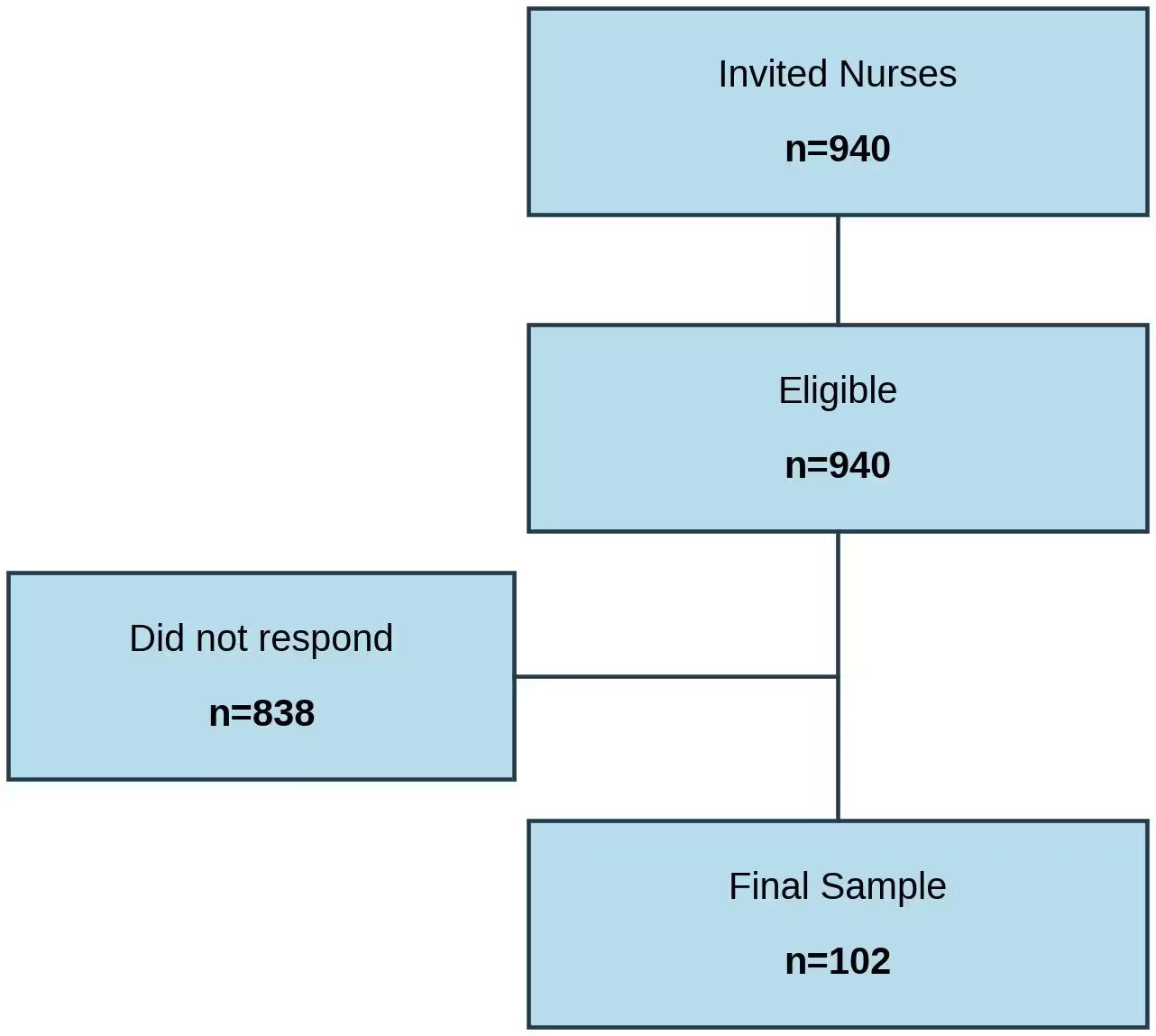
A new study reveals that while 81 percent of primary care nurses in Spain see immense promise in artificial intelligence, a striking lack of training leaves most feeling entirely unprepared to use it in daily clinics. The research, which surveyed 102 nurses across urban and rural healthcare centres, found that formal education is the single strongest factor separating those who currently use artificial intelligence tools from those who do not.
Measuring the Gap Between Perception and Practice
Artificial intelligence is expanding rapidly across healthcare systems, promising to streamline documentation, assist with diagnostics, and manage chronic disease. Yet, its actual adoption in everyday nursing remains limited. To understand the barriers holding professionals back, a team of researchers conducted a cross-sectional mixed-methods study published in PLOS One between April 1 and April 30, 2025.
The study evaluated 102 registered nurses working in primary care settings across Galicia, Spain. Participants completed the Shinners artificial intelligence perception questionnaire, a validated tool that measures two key dimensions, namely professional impact and technical preparedness. The research drew on a total regional nursing population of 14,218 registered nurses to establish a reliable benchmark, applying rigorous statistical models including Firth penalised logistic regression to analyze predictors of use.
High Hopes Coexist With Low Preparedness
The results uncovered a profound psychological and practical divide. On a scale from one to five, nurses rated the expected professional impact of artificial intelligence at a high 3.98 average. Participants strongly agreed that technology could improve patient care, enhance clinical decision-making, and eventually become a standard part of their jobs.
However, the preparedness dimension told a vastly different story, averaging a dismal 2.33 out of five. When asked specifically if they had been adequately trained to use artificial intelligence in their jobs, the average score plummeted to a meager 1.75. Furthermore, 80.4 percent of the surveyed nurses reported that they did not use artificial intelligence tools in clinical care.
What Drives Clinical Adoption?
Statistical modeling revealed that prior training was the only significant independent predictor of whether a nurse actually used artificial intelligence in clinical practice, yielding an odds ratio of 3.73. Nurses who had engaged in self-taught webinars, conferences, or on-the-job instruction were nearly four times more likely to incorporate these technologies into their workflows than those with zero background.
Interestingly, factors such as age, educational level, and whether a nurse worked in an urban or rural setting showed no statistically significant association with clinical use. This indicates that access to knowledge, rather than generational tech-savviness or geographic location, dictates whether health professionals embrace digital innovations.
Ethical Fears and Unclear Legal Accountability
Through open-ended qualitative questions, the researchers uncovered the primary obstacles blocking implementation. A lack of training and knowledge dominated the responses at 81.4 percent, followed by ethical and privacy concerns at 30.4 percent, and general implementation hurdles at 27.5 percent.
Nurses also expressed acute anxiety regarding legal liability. The item addressing whether all responsibility falls on the healthcare professional if an artificial intelligence system makes a mistake scored an average of 3.41. Qualitative feedback showed deep-seated fears of losing professional autonomy and being held entirely accountable for algorithmic errors they could not audit.
Nearly Half of Nurses Cannot Name a Learning Goal
While 99.0 percent of participants stated they wanted to receive training on artificial intelligence in health, a surprising nuance emerged when they were asked to specify an area of interest. Nearly half of the respondents were unable to name a concrete topic, pointing to a baseline literacy gap so wide that many professionals do not yet know what they need to learn.
The authors acknowledge several study limitations, including a modest sample size of 102 participants, a low response rate of 10.9 percent, and a heavy geographic concentration in a single health area. Because the number of active users was relatively small, the authors caution that the identified predictors should be viewed as exploratory rather than definitive.
Next Steps for Healthcare Integration
The findings suggest that health authorities cannot rely on self-directed learning to bridge the digital divide in nursing. Instead, institutions must design structured educational curricula that begin with fundamental literacy before advancing to clinical applications, all while establishing transparent legal and ethical frameworks to protect frontline providers.
The research was published in PLOS One on November 16, 2026.
This article has been fact checked for accuracy, with information verified against reputable sources. Learn more about us and our editorial process.
Last reviewed on .
Article history
- Latest version
Reference(s)
- Vences Garrido, Adrián., et al. “Perception, acceptance, and preparedness regarding artificial intelligence among primary care nurses: A cross-sectional mixed-methods study.” PLOS One, vol. 21, no. 11, November 16, 2026, pp. e0350702 Public Library of Science (PLoS), doi: 10.1371/journal.pone.0350702. <https://doi.org/10.1371/journal.pone.0350702>.
Cite this page:
- Posted by David Anderson