Parent Experience With Intestinal Ultrasound Shifts Views on IBD Monitoring
A new study reveals that families with firsthand exposure to bedside ultrasound report significantly higher preference and less discomfort than those relying on traditional tests.

Parents whose children undergo real-time intestinal ultrasound to monitor inflammatory bowel disease report vastly higher preference and less discomfort with the procedure compared to families relying on traditional testing. The cross-sectional study, which evaluated 62 parents of pediatric patients at a tertiary care center, reveals how firsthand familiarity with point-of-care imaging transforms caregiver perspectives on chronic disease management.
Inflammatory bowel disease, including Crohn’s disease and ulcerative colitis, requires continuous monitoring to track intestinal inflammation and guide therapy. Traditional monitoring methods often rely on invasive procedures like colonoscopies or resource-intensive cross-sectional imaging such as magnetic resonance imaging or computed tomography scans, which frequently demand bowel preparation, sedation, or oral contrast. In contrast, intestinal ultrasound is a noninvasive, radiation-free imaging tool performed directly at the point of care during routine clinic visits without requiring fasting or sedation. To understand whether experiencing this technology alters parental viewpoints, researchers led by Hanna Mochida and Elizabeth A. Spencer at the Icahn School of Medicine at Mount Sinai published in JPGN Reports a detailed analysis of caregiver attitudes stratified by prior ultrasound exposure.
Why Prior Ultrasound Experience Shifts Family Preferences
The investigation divided participants into two equal groups of 31 parents, separating those whose children had previously undergone intestinal ultrasound from those whose children were entirely naive to the modality. Among parents with prior exposure, 83 percent reported a definite preference for intestinal ultrasound, compared to only 36 percent of unexposed parents. Furthermore, 67 percent of experienced parents rated the ultrasound as completely useful for tracking disease activity, versus just 27 percent in the unexposed group.
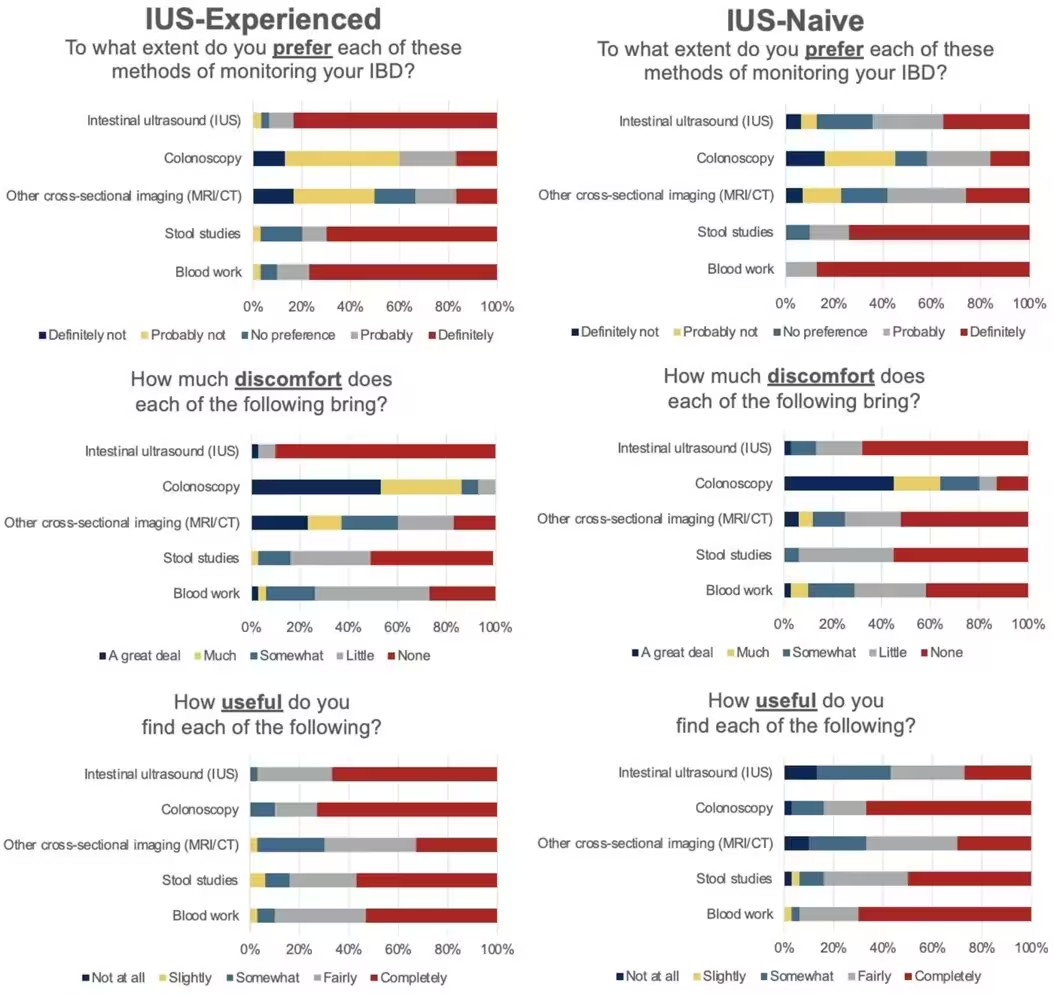
Discomfort perceptions also varied significantly across monitoring techniques. Ninety percent of parents with ultrasound experience reported zero perceived discomfort with the procedure, compared to 68 percent of naive parents. Across the entire cohort, colonoscopy remained the most burdensome test, with more than 45 percent of all parents reporting a great deal of discomfort. Interestingly, parents familiar with ultrasound reported higher perceived discomfort regarding traditional cross-sectional imaging, suggesting that experiencing a quick, noninvasive bedside scan may recalibrate parental expectations for what constitutes acceptable diagnostic burdens.
Understanding the Broader Impact on Clinical Care
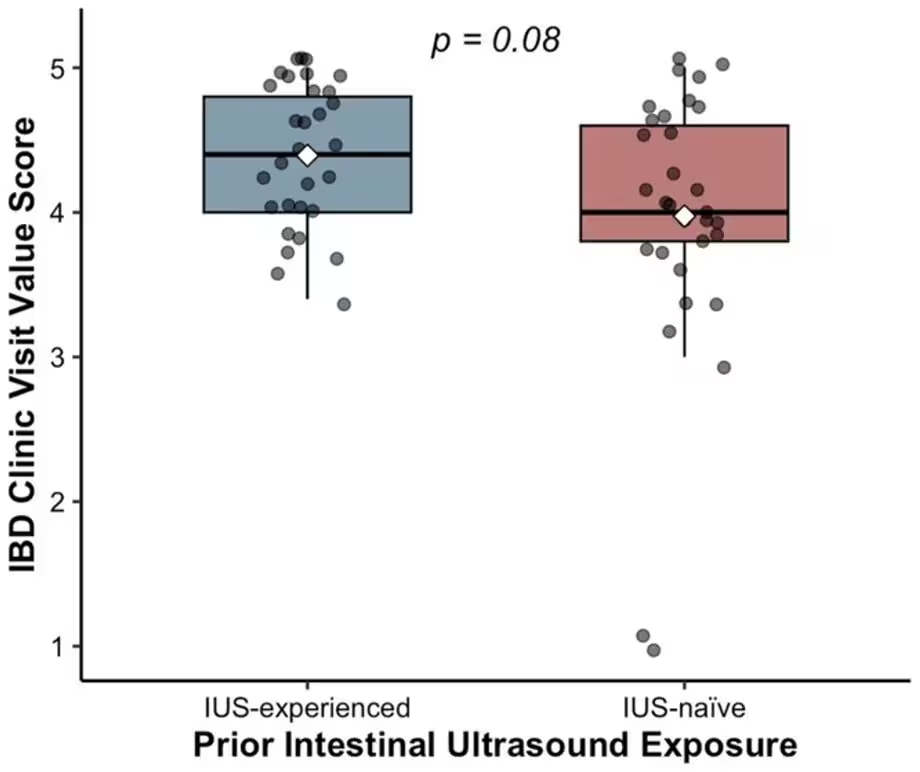
The authors also measured parent engagement and medication adherence using validated tools such as the parent-patient activation measure and the Morisky Medication Adherence Scale. Across both study groups, caregiver engagement and medication adherence remained uniformly high, indicating a highly dedicated patient population at the specialized center. While measures of visit value and trust in physician recommendations trended higher among ultrasound-experienced families, these differences did not reach statistical significance.
Qualitative feedback from 19 parents provided deeper context, with respondents highlighting the speed, reassurance, and avoidance of harsh bowel preparations as major emotional benefits. One parent described the ultrasound experience as life-changing because it provided immediate peace of mind during routine appointments. Another noted that avoiding harsh colonoscopy preparations spared their child significant distress.
What Are the Limitations of the Study?
The researchers noted several limitations that affect the interpretation of these findings. Because the study relied on a single tertiary pediatric center with established ultrasound expertise, the results may not generalize directly to community clinics lacking specialized imaging equipment. Additionally, the two comparison groups were recruited through different methods, with experienced families invited via electronic registry and naive families approached in person during clinic visits, potentially introducing selection bias. Because point-of-care ultrasound was concentrated among specific trained clinicians, provider communication styles may have also influenced parent perceptions independently of the imaging technology itself.
The research was published in JPGN reports on November 17, 2026.
This article has been fact checked for accuracy, with information verified against reputable sources. Learn more about us and our editorial process.
Last reviewed on .
Article history
- Latest version
Reference(s)
- Mochida, Hanna., et al. “Parent perceptions of disease monitoring in pediatric inflammatory bowel disease: The influence of intestinal ultrasound exposure.” JPGN Reports, November 17, 2026 Wiley, doi: 10.1002/jpr3.70297. <https://doi.org/10.1002/jpr3.70297>.
Cite this page:
- Posted by David Anderson