Clearing Out Gut Microbes Reverses Physical Frailty in Aging Mice
Eliminating intestinal bacteria in older male mice lowers frailty scores and reduces liver inflammation, revealing a direct link between the microbiome and physical decline.
Clearing out the gut microbiome in older male mice successfully reverses physical decline and reduces bodily frailty, pointing to a direct biological link between intestinal bacteria and the aging process. While chronological age marches onward, the physical vulnerability known as frailty turns out to be partly maintained by the trillions of microbes residing in our digestive tracts.
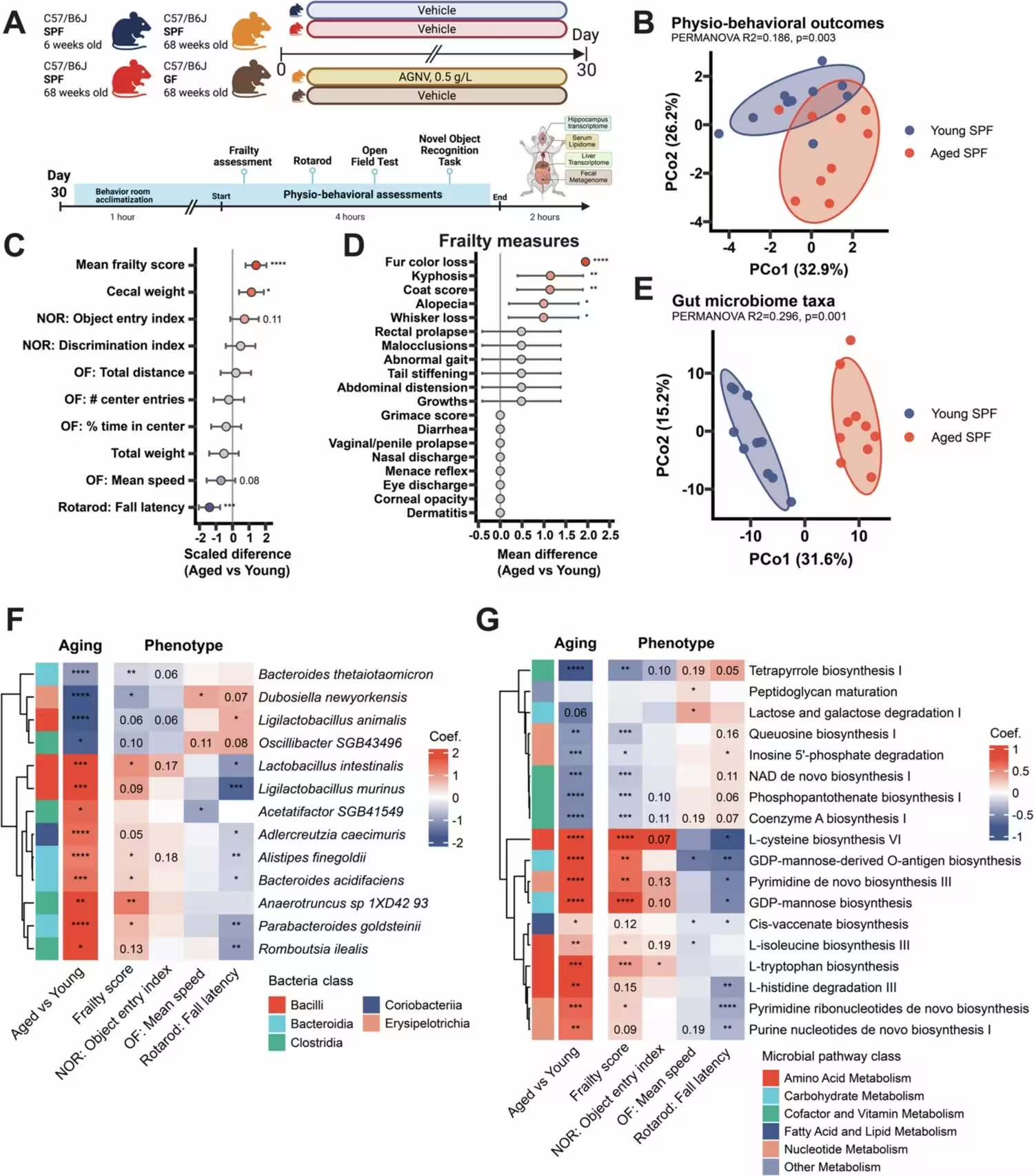
Researchers at the University of California, Los Angeles, set out to determine whether reshaping the intestinal ecosystem could influence aging traits. By studying young 10-week-old mice alongside middle-aged 72-week-old male mice, the team mapped six different biological layers, ranging from physical behavior and fecal genetics to blood lipid profiles and liver and brain tissue transcriptomes. Their findings are published in Gut Microbes Reports.
How Eliminating Gut Bacteria Reshaped Aging
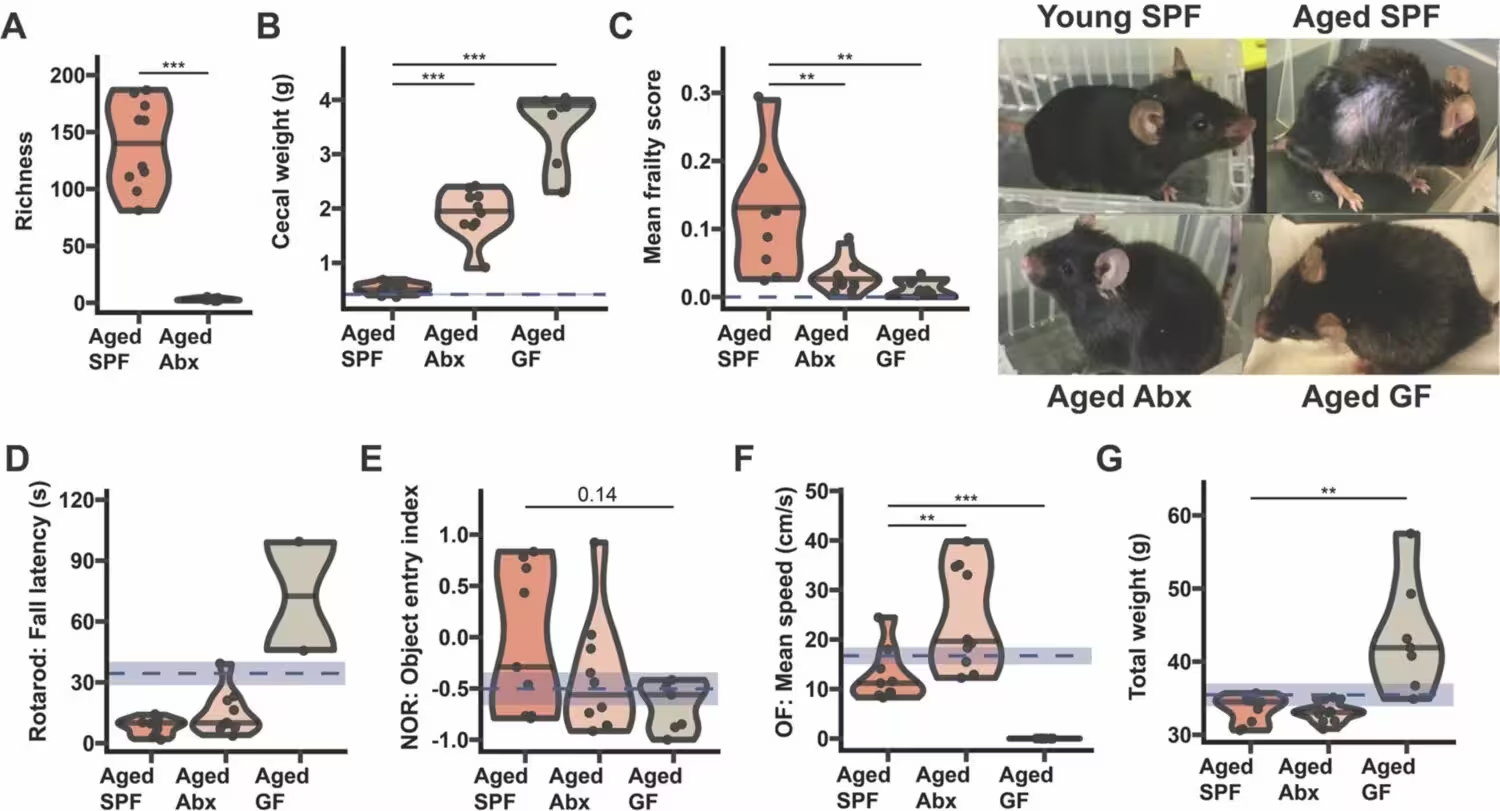
To test whether the microbiome drives physical decline rather than merely coexisting with it, the team used two distinct depletion methods. They administered broad-spectrum antibiotics for four weeks to 68-week-old mice and also evaluated a separate cohort of germ-free mice raised entirely without microbes from birth.
Both interventions led to a striking result. The overall frailty scores of the aged mice dropped significantly, shifting downward toward the levels observed in young, healthy mice. However, the microbiome depletion did not rescue all aging symptoms, as motor coordination and recognition memory tests remained unchanged. This selective improvement suggests that gut bacteria specifically govern frailty-related vulnerabilities rather than orchestrating every single aspect of biological aging.
Connecting Intestinal Microbes to Liver Inflammation
To understand the biological mechanisms behind this improvement, the investigators examined the liver, which acts as a central command hub for metabolism and immunity. Aged mice displayed elevated markers of chronic low-grade inflammation, including increased expression of acute-phase proteins and disrupted fatty acid and bile acid balances.
When the microbiome was depleted, many of these inflammatory liver signatures were reversed. Multi-omics network analysis pointed to specific microbial pathways, including those involving cell wall components of certain Gram-positive bacteria that promote oxidative stress and cellular senescence in the liver. Additionally, beneficial microbial metabolites linked to longevity and immune regulation were found to be depleted in aged animals, removing crucial protective signals that normally keep inflammation in check.
What This Means for Future Healthy Aging Research
The study highlights how closely interconnected our metabolic health, immune system, and intestinal flora become as we grow older. Although the research was conducted entirely in male mice, the findings reinforce the idea that the gut microbiome is a modifiable contributor to physical frailty.
Because diet heavily influences the composition of gut bacteria, these insights support the pursuit of targeted nutritional strategies to promote healthier aging in humans. Future investigations will need to explore whether similar microbiome-driven pathways operate identically in female populations and how precise bacterial consortia might be deployed to protect against age-related physical decline.
The research was published in Gut microbes reports on November 16, 2026.
This article has been fact checked for accuracy, with information verified against reputable sources. Learn more about us and our editorial process.
Last reviewed on .
Article history
- Latest version
Reference(s)
- Chandra, Franciscus., et al. “Late-life depletion of the gut microbiome attenuates aging-induced frailty in male mice.” Gut Microbes Reports, vol. 3, no. 1, November 16, 2026 Informa UK Limited, doi: 10.1080/29933935.2026.2763224. <https://doi.org/10.1080/29933935.2026.2763224>.
Cite this page:
- Posted by Elizabeth Taylor