Dead Gut Microbes Ease Stress-Induced Bowel Symptoms in Rats
Heat-killed and live preparations of a beneficial bacterium reduced digestive stress markers, though female subjects showed more pronounced responses.
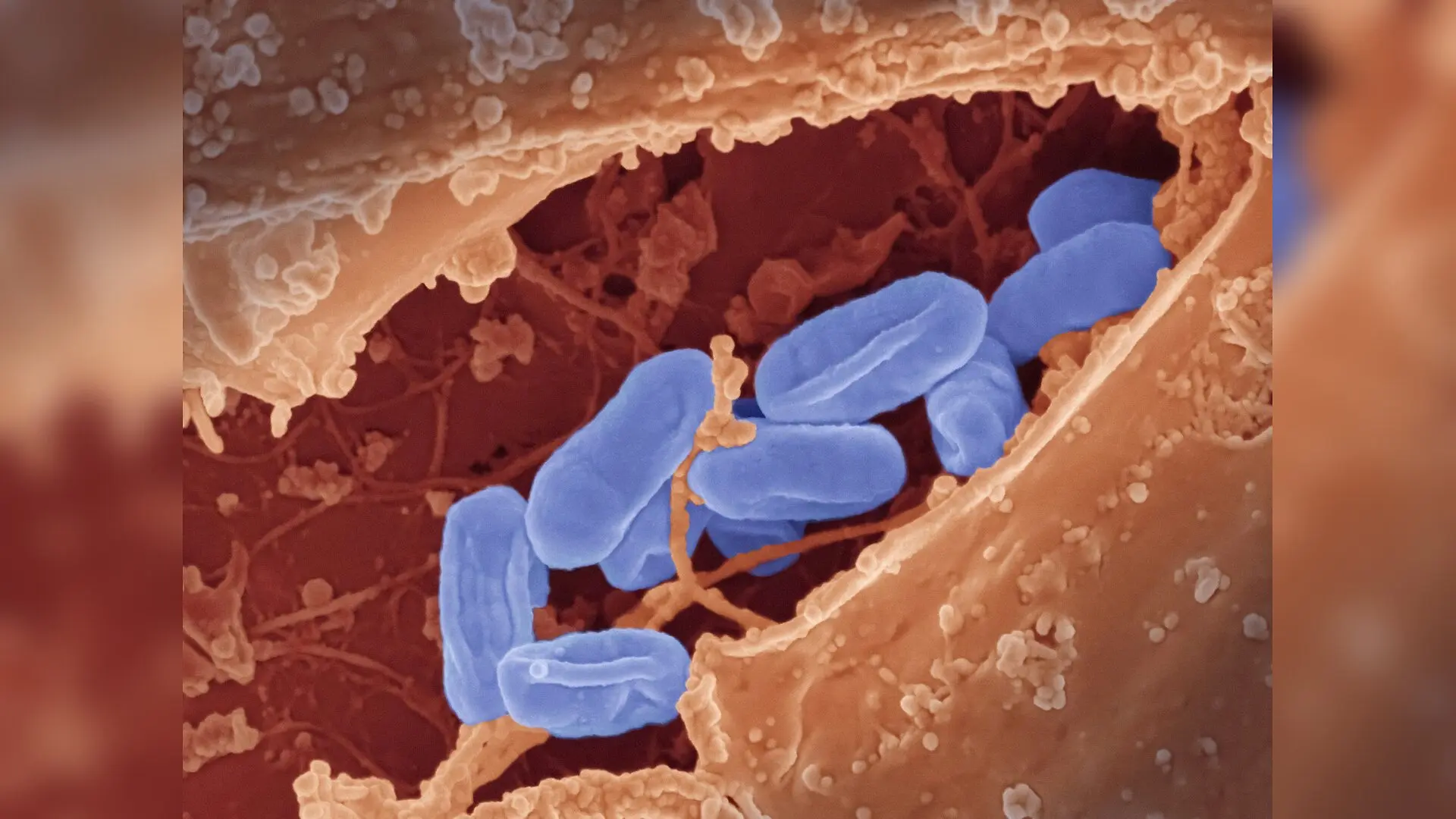
A specific gut microbe preparation can ease stress-induced digestive surges in rats, and dead bacterial cells work just as well as live ones. Researchers explored how both viable cells and heat-killed preparations of the beneficial bacterium Roseburia faecis influence stress-related bowel symptoms in male and female Wistar rats.
Irritable bowel syndrome affects roughly 11 percent of people worldwide, frequently triggered or worsened by psychological stress. To simulate these conditions in a laboratory setting, scientists exposed seven-week-old rats to daily water avoidance stress for 10 consecutive days. This standard protocol reliably causes animals to produce more fecal pellets, indicating accelerated gut motility, alongside increased immune cell activity in the colon.
During separate experimental rounds published in PLOS One, the team administered daily doses of either heat-killed bacteria or a preparation containing viable cells to the stressed animals. Both versions of the microbe successfully lowered the elevated fecal pellet output in both male and female rats. The findings suggest that bacterial viability is not strictly required to achieve these calming effects on gut motility.
How Did Male and Female Gut Responses Differ Under Stress?
Female rats consistently showed a more pronounced functional response to the stress protocol and a clearer reduction in symptoms following treatment. In daily cumulative tracking, female rats experienced significant drops in pellet output that spanned several days of the trial. Male rats also showed general reductions, but those changes did not reach statistical significance.
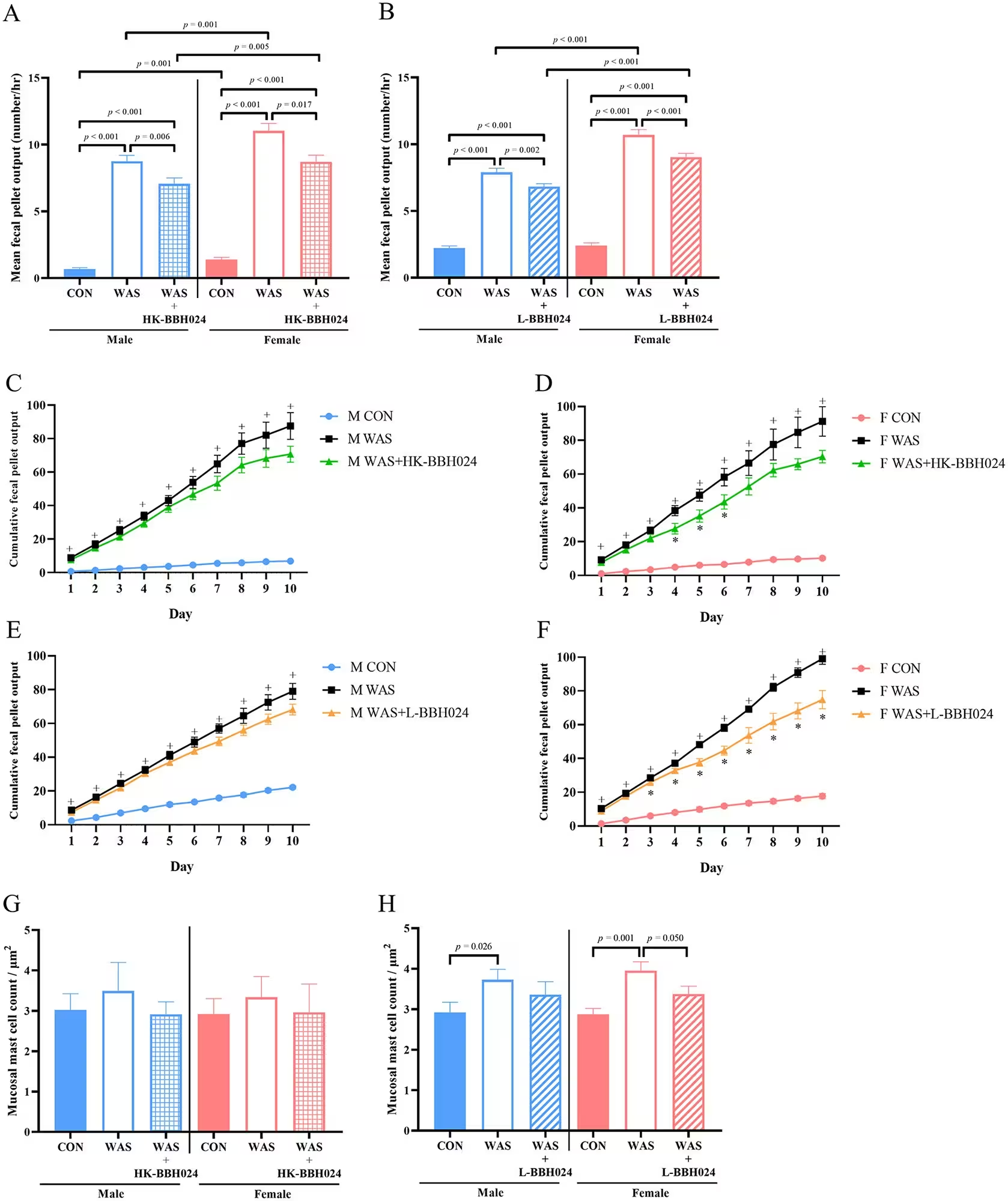
The treatments also influenced specific molecular markers linked to digestive inflammation. In the group receiving viable cells, researchers observed that female rats experienced a borderline decrease in mast cell infiltration within the colon tissue. Mast cells are immune cells that release inflammatory chemicals when activated by stress.
Which Genetic and Microbial Changes Occurred After Treatment?
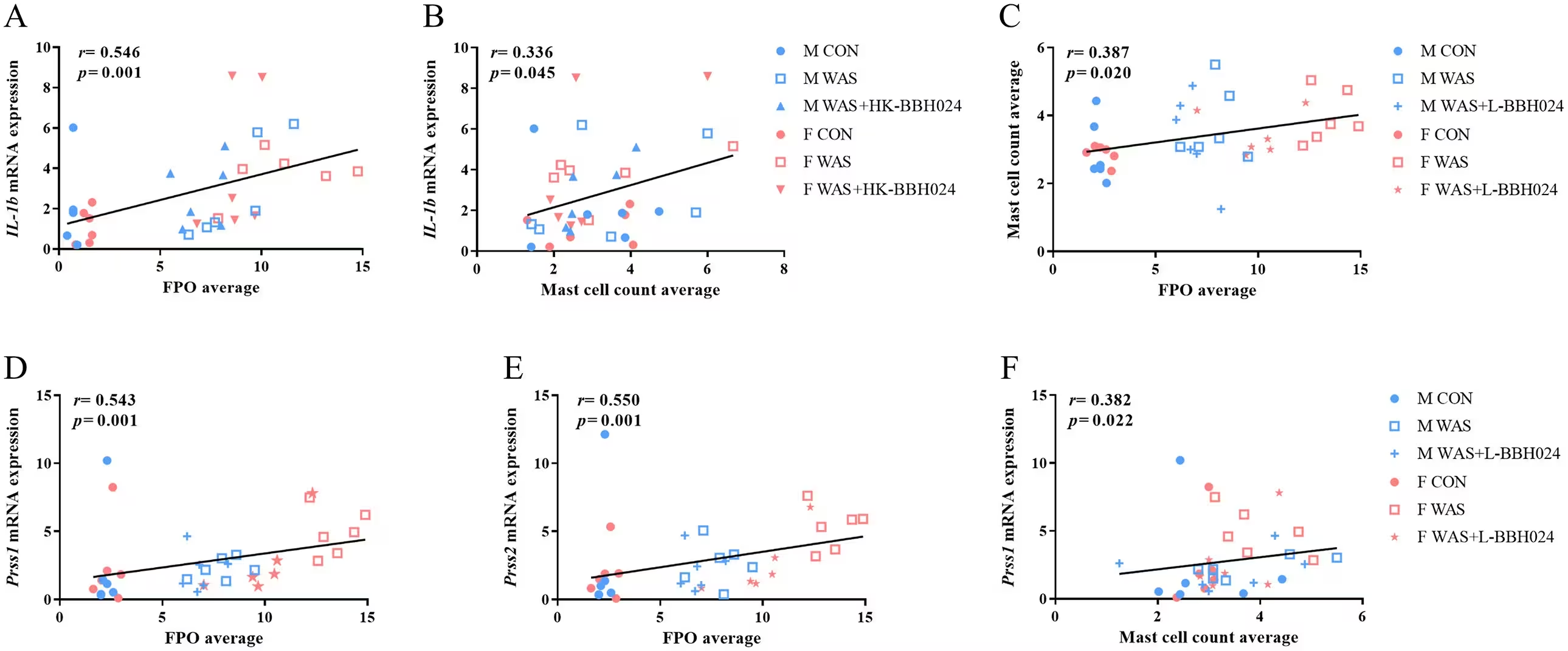
The study measured the expression of several serine protease genes, which are enzymes that help regulate gut sensitivity and barrier function. Under stress, female rats exhibited higher messenger RNA expression levels of genes called Prss1 and Prss2, while males showed elevations in a related gene called Prss3. Administering viable bacterial cells significantly suppressed these stress-induced elevations in a sex-specific manner.
Microbial profiling revealed that stress restructured the composition of gut bacteria primarily in female subjects. Sequencing bacterial ribosomal RNA showed that stress altered beta diversity and shifted the abundance of specific taxa such as Blautia faecis and Bacteroides vulgatus. Administering the heat-killed bacterial preparation partially reversed these specific microbial shifts in female rats.
What Are the Limitations of This Animal Study?
The authors noted several important caveats regarding the experimental design. Because the live-cell and heat-killed preparations were tested in separate experimental rounds with independent control groups, direct head-to-head comparisons cannot be made. Furthermore, the live-cell preparation contained a relatively low proportion of viable bacteria due to the oxygen-sensitive nature of the obligate anaerobe during industrial processing.
Additionally, researchers measured gene expression only at the messenger RNA level without testing direct enzyme activity. Future investigations will require direct metabolomic profiling, longer tracking periods, and balanced dosages to confirm how these postbiotic strategies translate to human gastrointestinal health.
The research was published in PLOS One on November 13, 2026.
This article has been fact checked for accuracy, with information verified against reputable sources. Learn more about us and our editorial process.
Last reviewed on .
Article history
- Latest version
Reference(s)
- Ha, Sungchan., et al. “Sex differences in the effect of viable cell-containing and heat-killed Roseburia faecis on repeated water avoidance stress-induced irritable bowel syndrome Wistar rat model.” PLOS One, vol. 21, no. 11, November 13, 2026, pp. e0360294 Public Library of Science (PLoS), doi: 10.1371/journal.pone.0360294. <https://doi.org/10.1371/journal.pone.0360294>.
Cite this page:
- Posted by Elizabeth Taylor