Advanced Gene Editing Transforms Aspergillus Fungi Into Green Chemical Factories
New review highlights how CRISPR and artificial intelligence are overcoming decades of biomanufacturing bottlenecks in industrial fungi
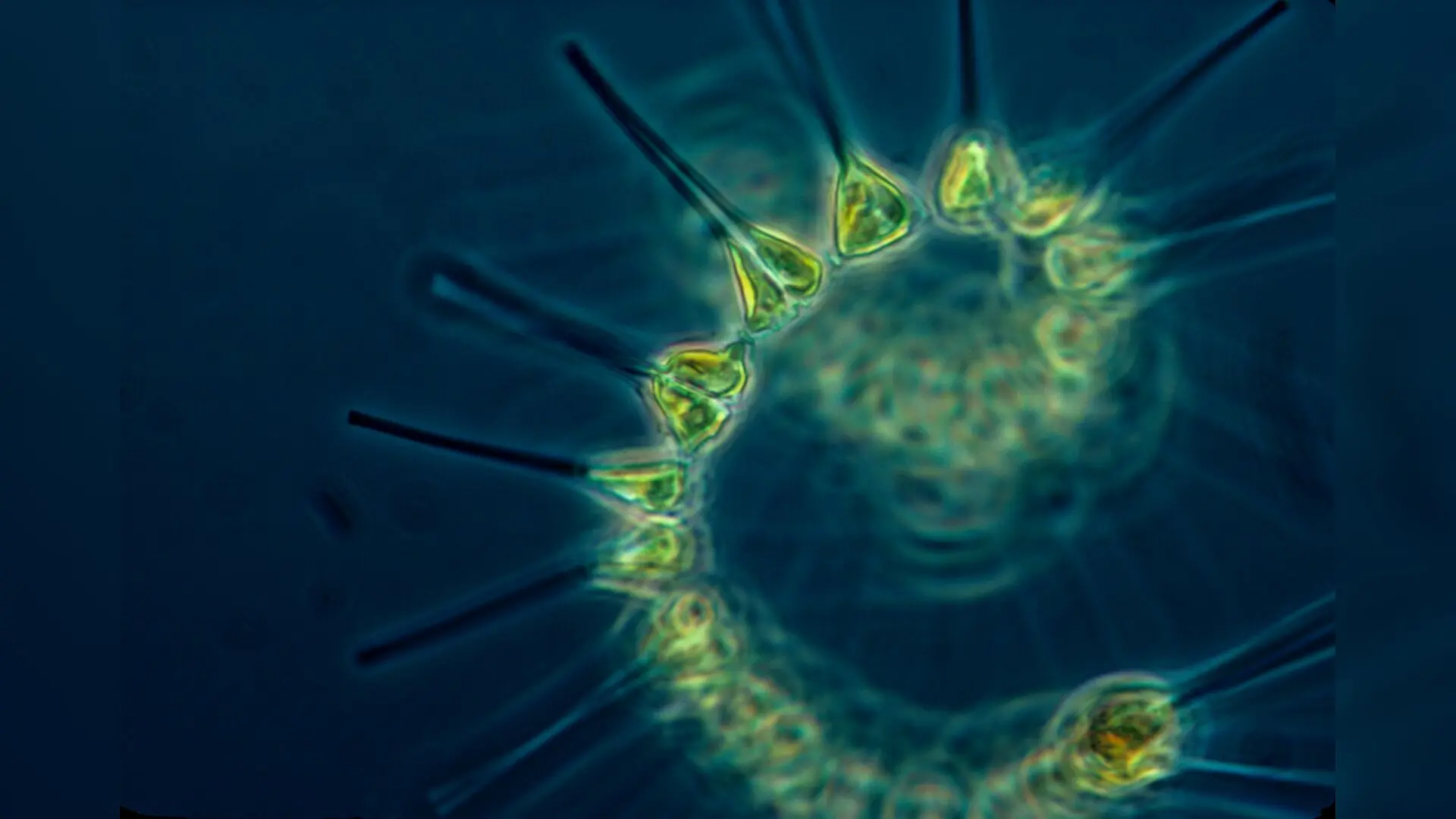
Fungal cell factories belonging to the genus Aspergillus are undergoing a major technological transformation, enabling them to convert agricultural waste and industrial by-products into high-value green chemicals and sustainable bioresources. A comprehensive review published in RSC Advances outlines how recent breakthroughs in genetic engineering and artificial intelligence are turning these versatile filamentous fungi into powerful platforms for a fossil-free economy.
How Can Gene Editing Turn Common Fungi Into Industrial Powerhouses?
For decades, researchers have relied on natural strains of Aspergillus to produce multi-ton quantities of commercial organic acids like citric, malic, and itaconic acid, alongside a massive share of the global industrial enzyme market. Species such as Aspergillus niger and Aspergillus oryzae have earned Generally Recognized as Safe status from regulatory authorities, making them ideal hosts for large-scale biomanufacturing. However, wild-type strains often suffer from slow growth, sensitivity to fermentation inhibitors, and limited yields when grown on complex waste streams rather than pure sugars.
To overcome these roadblocks, scientists led by Deeksha Gopaliya and Vinod Kumar at Cranfield University and the University of Houston evaluated how modern synthetic biology is reshaping fungal biotechnology. By deploying precise genetic tools, researchers can now reprogram cellular machinery to eliminate competing metabolic pathways and boost the production of target molecules. For instance, targeted genetic modifications have enabled engineered strains of Aspergillus niger to achieve staggering organic acid titers exceeding two hundred grams per liter in fed-batch fermentation.
What Makes Aspergillus So Difficult to Modify in the Laboratory?
Despite their immense industrial promise, engineering filamentous fungi comes with severe technical challenges that set them apart from single-celled bacteria and yeasts. Their rigid cell walls require intensive enzymatic digestion to generate fragile protoplasts for DNA uptake, a process complicated by strain-dependent variations and low regeneration rates. Furthermore, wild-type Aspergillus cells heavily favor non-homologous end joining for DNA repair, a mechanism that frequently causes random insertions and disrupts precise genome editing.
To bypass these hurdles, the review highlights the adoption of advanced CRISPR-Cas systems, including Cas12a nucleases capable of multiplex gene editing and large-scale fragment deletion exceeding one hundred kilobases. Researchers are also utilizing autonomously replicating plasmids based on the AMA1 sequence from Aspergillus nidulans. These episomal vectors allow high-copy-number gene expression without permanent chromosomal integration, serving as invaluable tools for high-throughput screening of metabolic pathways before final strain stabilization.
Can Artificial Intelligence Predict the Behavior of Engineered Fungal Strains?
The integration of multi-omics datasets with genome-scale metabolic models has opened new avenues for rational strain design. Computational models allow scientists to simulate intracellular metabolic flux distributions and predict how genetic modifications will affect cellular redox states and cofactor availability. Artificial intelligence and machine learning algorithms are increasingly being applied to interpret complex omics data, helping researchers identify non-intuitive engineering targets that traditional trial-and-error methods might miss.
Despite these computational advances, the practical application of artificial intelligence in fungal biotechnology remains largely at the proof-of-concept stage. Filamentous fungi exhibit complex morphological variations during submerged fermentation, shifting between dispersed mycelia and dense pellets that create internal gradients of oxygen and nutrients. These physical heterogeneities, combined with limited standardisation in high-throughput screening platforms, make it difficult to train predictive models with the same precision achieved for bacterial systems.
What Lies Ahead for Sustainable Biomanufacturing Platforms?
Moving forward, the successful commercialization of next-generation Aspergillus cell factories will depend on interdisciplinary collaboration between process engineers, synthetic biologists, and data scientists. Developing robust chassis strains with improved hyphal morphology, enhanced stress tolerance, and streamlined secretory pathways will be essential for maintaining process stability in large-scale industrial bioreactors. By combining advanced genome-editing precision with AI-driven metabolic modelling, researchers are steadily closing the gap toward efficient, scalable, and fully sustainable bio-based manufacturing.
The research was published in RSC advances on November 25, 2026.
This article has been fact checked for accuracy, with information verified against reputable sources. Learn more about us and our editorial process.
Last reviewed on .
Article history
- Latest version
Cite this page:
- Posted by Faisal Qureshi