Eighty-One Vietnamese Children With Pompe Disease Reveal Twenty-Eight Gene Variants
A large pediatric cohort study uncovers five novel gene alterations and links predicted immune status to greater heart muscle thickening.

Eighty-one Vietnamese children with infantile-onset Pompe disease, a severe genetic disorder causing progressive muscle and heart damage, carry twenty-eight distinct gene variants, including five never reported before.
Researchers examined medical records and genetic data collected between 2015 and 2025 at the Vietnam National Children’s Hospital in Hanoi. The findings were published in PLOS One by Giang Thi Kim Dang and colleagues, providing a detailed look at how genetic mutations manifest physically in Southeast Asian pediatric patients.
What Is Infantile-Onset Pompe Disease and Why Does It Happen?
Infantile-onset Pompe disease is a rare inherited condition caused by harmful variants in the GAA gene, which instructs the body to produce an essential enzyme called acid alpha-glucosidase. Without enough of this enzyme, a complex sugar called glycogen builds up inside cellular compartments known as lysosomes, gradually destroying muscle and heart tissues. Most affected children suffer from severe heart enlargement, low muscle tone, and feeding difficulties before they reach their first birthday.
In this cohort, the median age at diagnosis was about four and a half months. Nearly all patients, or ninety-nine percent, displayed cardiac hypertrophy, which is an abnormal thickening of the heart muscle. Over seventy percent experienced muscle weakness, while close to sixty percent suffered from pneumonia.
Which Genetic Mutations Dominate the Vietnamese Patient Group?
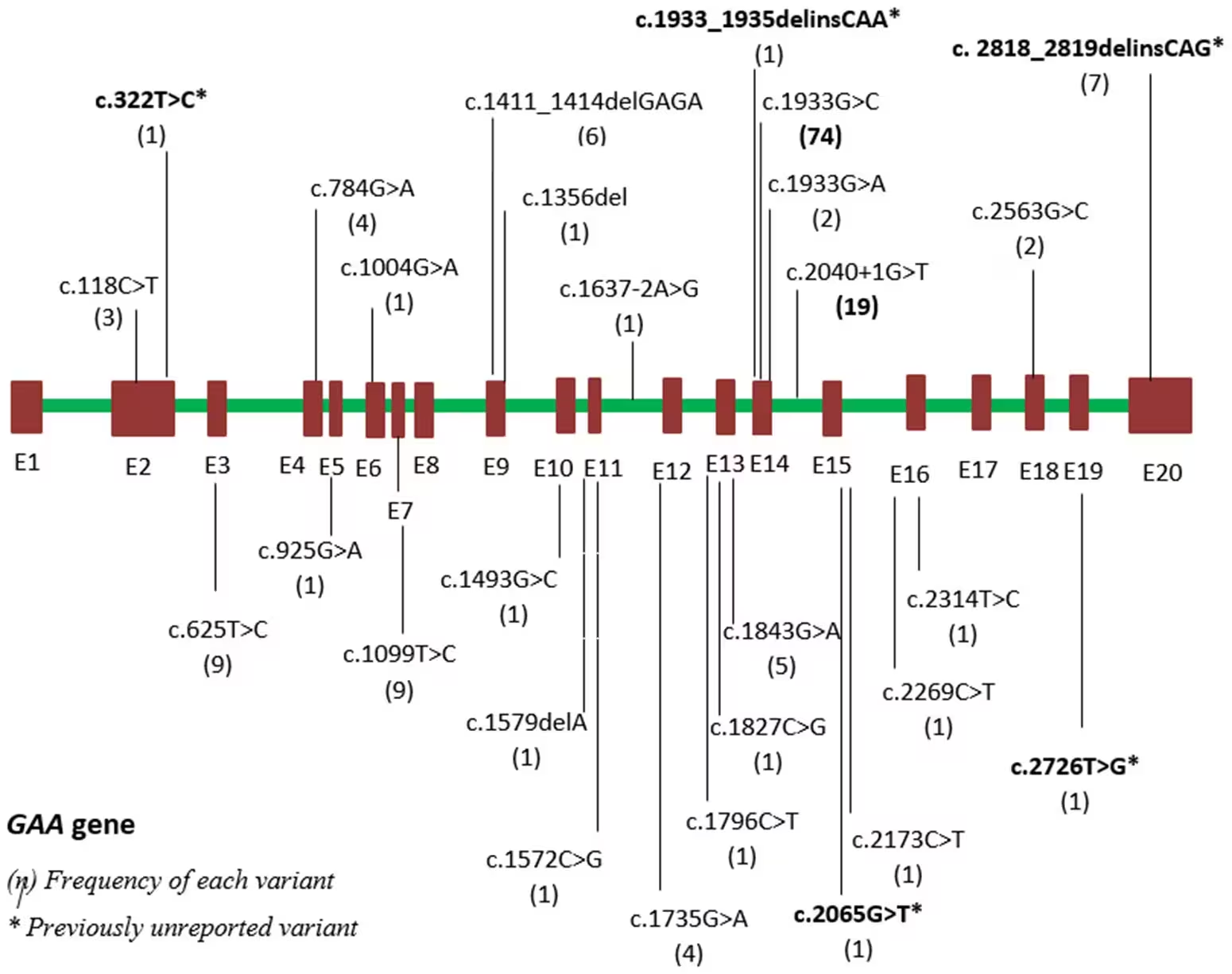
Direct sequencing of the GAA gene revealed significant differences compared with populations in other regions. A single variant named c.1933G>C appeared in over sixty percent of the patients, accounting for nearly forty-six percent of all disease-associated alleles. Another frequent mutation, c.2040+1G>T, was found in about seventeen percent of the children.
Five previously undocumented variants were discovered during the genetic screening: c.322T>C, c.1933_1935delinsCAA, c.2065G>T, c.2726T>G, and c.2818_2819delinsCAG. Computational tools predicted that most of these novel alterations damage protein structure and function, potentially stopping normal enzyme production entirely.
Does Predicted Immune Status Impact Heart Severity?
Doctors often classify patients by their predicted cross-reactive immunologic material status, which indicates whether the body produces any trace amounts of the normal enzyme. Patients lacking this material face a higher risk of developing immune reactions against replacement therapies. In this study, seven children were predicted to be negative for this material, while seventy-four were predicted to be positive.
Children predicted to be negative for the immunological material showed significantly higher left ventricular mass index values and z-scores, pointing toward more severe heart muscle thickening. However, the authors noted that this specific cardiac comparison relied on a very small subset of patients, meaning the observation must be interpreted with caution.
What Are the Limitations of the Study?
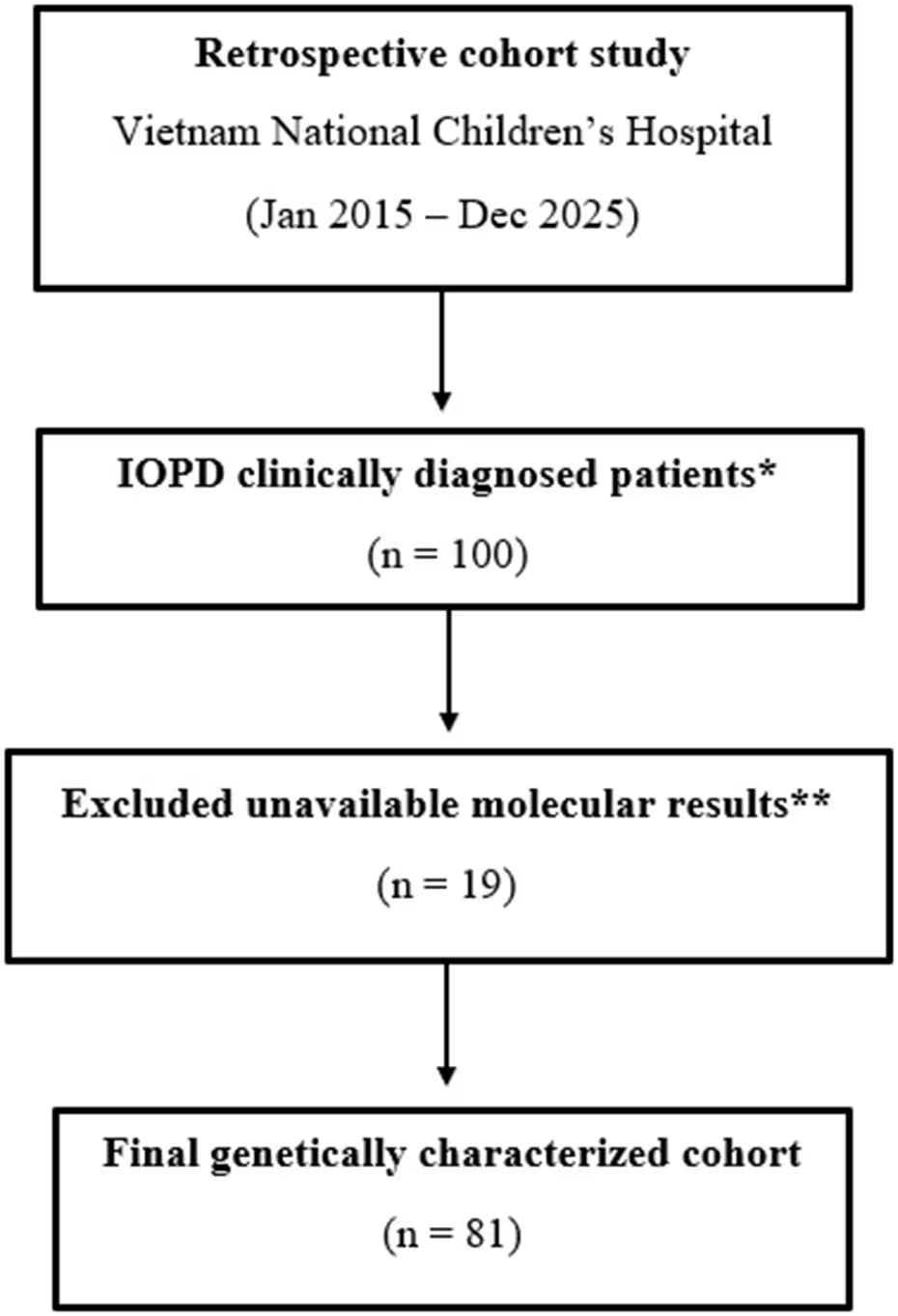
Several constraints might affect how broadly these findings apply. The retrospective design restricted the ability to track early disease progression precisely, and the immune status was predicted from genetic codes rather than tested directly in laboratory assays. Additionally, nineteen children out of the initial hundred were excluded from the genetic analysis because complete molecular test results were unavailable.
The authors emphasize that broader multicenter studies and experimental laboratory testing of the newly found variants will be necessary to confirm their exact biological impacts. Expanding genetic screening across Southeast Asia will help clinicians diagnose infants earlier and tailor treatments more effectively.
The research was published in PLOS One on November 24, 2026.
This article has been fact checked for accuracy, with information verified against reputable sources. Learn more about us and our editorial process.
Last reviewed on .
Article history
- Latest version
Reference(s)
- Dang, Giang Thi Kim., et al. “Genetic and clinical spectrum of infantile-onset Pompe disease: A Vietnamese cohort study.” PLOS One, vol. 21, no. 11, November 24, 2026, pp. e0363248 Public Library of Science (PLoS), doi: 10.1371/journal.pone.0363248. <https://doi.org/10.1371/journal.pone.0363248>.
Cite this page:
- Posted by Elizabeth Taylor