Over One Hundred High-Entropy Alloys Outperform Traditional Steels in Solar Plant Storage Tests
A new database screening reveals advanced metal coatings that could extend the lifespan of high-temperature solar energy storage tanks.
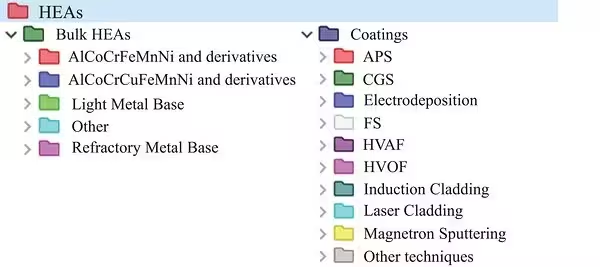
Advanced thermal energy storage systems in concentrated solar power plants suffer from severe internal tank corrosion when operating at temperatures reaching six hundred degrees Celsius, which threatens long-term facility reliability. Researchers addressed this vulnerability by evaluating complex multicomponent mixtures known as high-entropy alloys as protective internal tank linings or bulk structural walls. Lorena Betancor-Cazorla and colleagues at the Universitat de Barcelona compiled a massive database of over nineteen hundred candidate materials to identify optimal formulations that can withstand extreme operational stress.
The evaluation framework, published in Advanced Science, established three distinct material indexes to evaluate mechanical strength, corrosion resistance, and wear performance under simulated industrial environments. Because solar power facility storage tanks function essentially as large pressure vessels, the team calculated a mechanical index balancing yield strength against material density. They also integrated electrochemical corrosion data and pin-on-disk wear metrics to generate a global durability index for every alloy in the repository.
How Do High-Entropy Alloys Compare With Traditional Stainless Steels?
Traditional facilities rely on standard austenitic stainless steels like AISI 347H and AISI 316L, which provide predictable behavior but suffer from gradual structural degradation and thermal fatigue. The database screening revealed that specific high-entropy alloy families, particularly AlCoCrFeNi and CoCrFeNi variants, deliver significantly superior mechanical strength and protective passivation compared to conventional steels. When subjected to rigorous screening constraints requiring a minimum hardness of two hundred Vickers and low corrosion current densities, more than one hundred candidate variations met the baseline criteria.
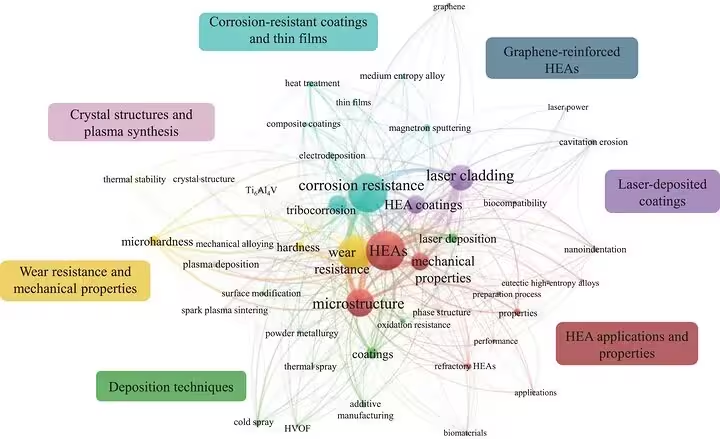
Advanced deposition techniques played a decisive role in identifying viable candidates. Cold gas sprayed and high-velocity air-fuel coatings, alongside laser-cladded variants reinforced with titanium carbide or molybdenum, exhibited exceptional durability indexes. While stainless steels display modest yield strengths and high densities, certain refractory-based and aluminum-enriched alloy compositions maintained remarkable structural integrity across wide thermal ranges.
What Obstacles Prevent Immediate Industrial Implementation?
Despite their exceptional performance metrics in laboratory evaluations, widespread commercial adoption faces significant economic and supply chain hurdles. Many high-entropy formulations incorporate critical raw materials that carry high market prices, strict supply risks, and substantial environmental footprints. The authors noted that raw material costs and specialized manufacturing requirements currently price these advanced alloys well above standard industrial steels.
To overcome these financial and ecological barriers, the research team outlined several sustainable manufacturing strategies. Replacing expensive or vulnerable elements with more abundant metals like aluminum, chromium, iron, manganese, or nickel can drastically lower production impacts. Additionally, synthesizing these alloys directly from secondary metal waste and electronic scrap offers a promising pathway to reduce embodied energy and production expenses.
What Steps Will Researchers Take Next?
The current screening methodology successfully narrows down thousands of possibilities into a manageable group of top-tier candidates, saving considerable time and resources prior to physical testing. However, the authors emphasized that further validation in representative molten salt environments remains necessary before these materials can line commercial solar power tanks. Future efforts will focus on testing specific alloy compositions in molten chloride and sulfate salt mixtures to confirm long-term chemical compatibility.
The research was published in Advanced science (Weinheim, Baden-Wurttemberg, Germany) on November 24, 2026.
This article has been fact checked for accuracy, with information verified against reputable sources. Learn more about us and our editorial process.
Last reviewed on .
Article history
- Latest version
Reference(s)
- Betancor‐Cazorla, Lorena., et al. “Materials‐based Design and Multi‐Criteria Selection of High‐entropy Alloys for Concentrated Solar Power Plants.” Advanced Science, November 24, 2026 Wiley, doi: 10.1002/advs.77429. <https://doi.org/10.1002/advs.77429>.
Cite this page:
- Posted by William Moore