Parasite Genome Overhaul Reveals 406 Corrected Gene Models
Researchers have revised hundreds of protein models in parasitic worms, uncovering structural quirks that could inspire new drug targets.
A comprehensive re-evaluation of 680 protein-coding genes across twelve human-infecting parasitic worms reveals that hundreds of previously published genomic models contained structural errors. Parasitic helminths infect nearly a quarter of the global population, but developing effective treatments has been hindered by inaccurate gene annotations that obscure potential drug targets. The new curation work, published in PLOS Neglected Tropical Diseases published in PLOS Neglected Tropical Diseases, focused on aminoacyl-tRNA synthetases, which are essential enzymes responsible for matching amino acids to their correct transfer RNA molecules during protein synthesis.
How Genomic Corrections Revealed Hidden Structural Variations
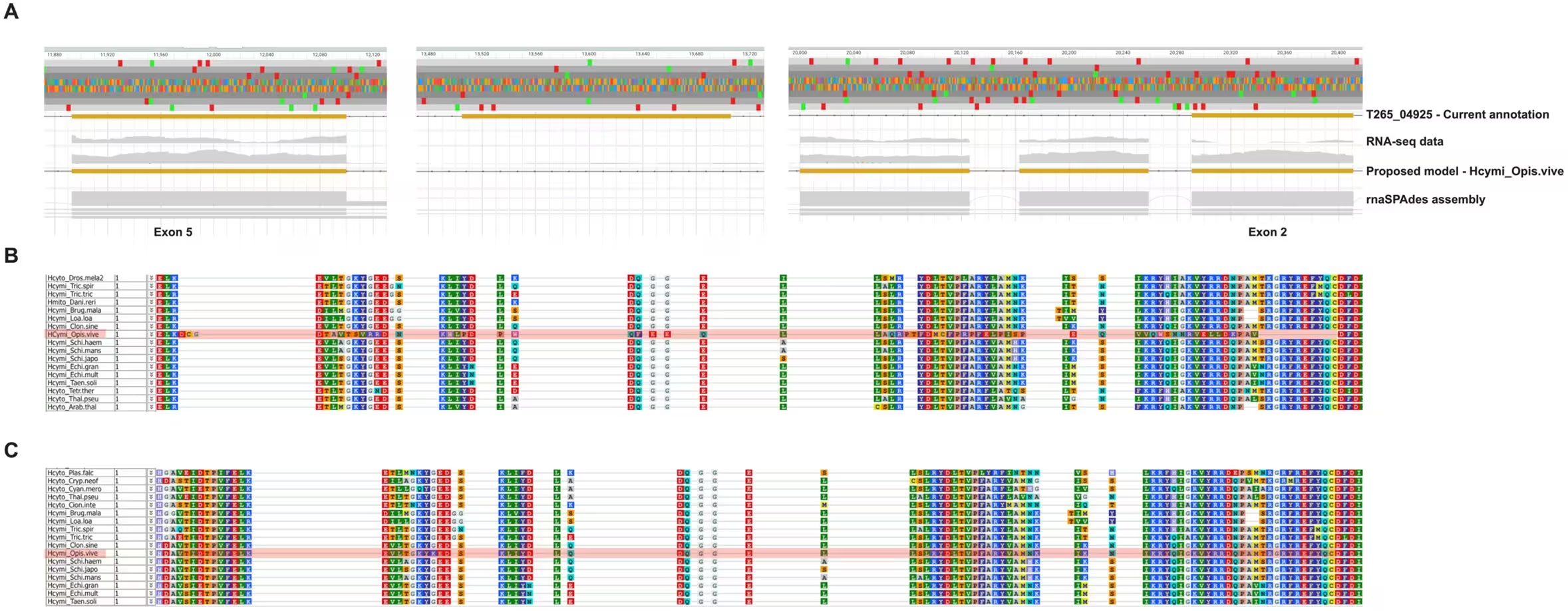
Researchers analyzed publicly available genomic and transcriptomic data from twelve medically relevant nematode and platyhelminth species, including the causal agents of schistosomiasis and lymphatic filariasis. By integrating RNA sequencing read alignments with rigorous protein sequence comparisons, the team revised 406 out of 680 predicted aminoacyl-tRNA synthetase gene models. An average of 2.7 modifications were made per gene, resolving incorrectly predicted intron-exon boundaries and removing spurious insertions that had long mismatched experimental expression data.
The corrected sequences showed significantly improved consistency in protein lengths and exon arrangements across related parasite species. This meticulous manual curation highlights a broader challenge in modern genomics, where automated annotation pipelines frequently misidentify gene structures in non-model organisms. The updated dataset provides a much more reliable foundation for understanding the fundamental biochemistry of these complex multicellular pathogens.
Why Parasite Enzymes Diverge Sharply From Human Counterparts
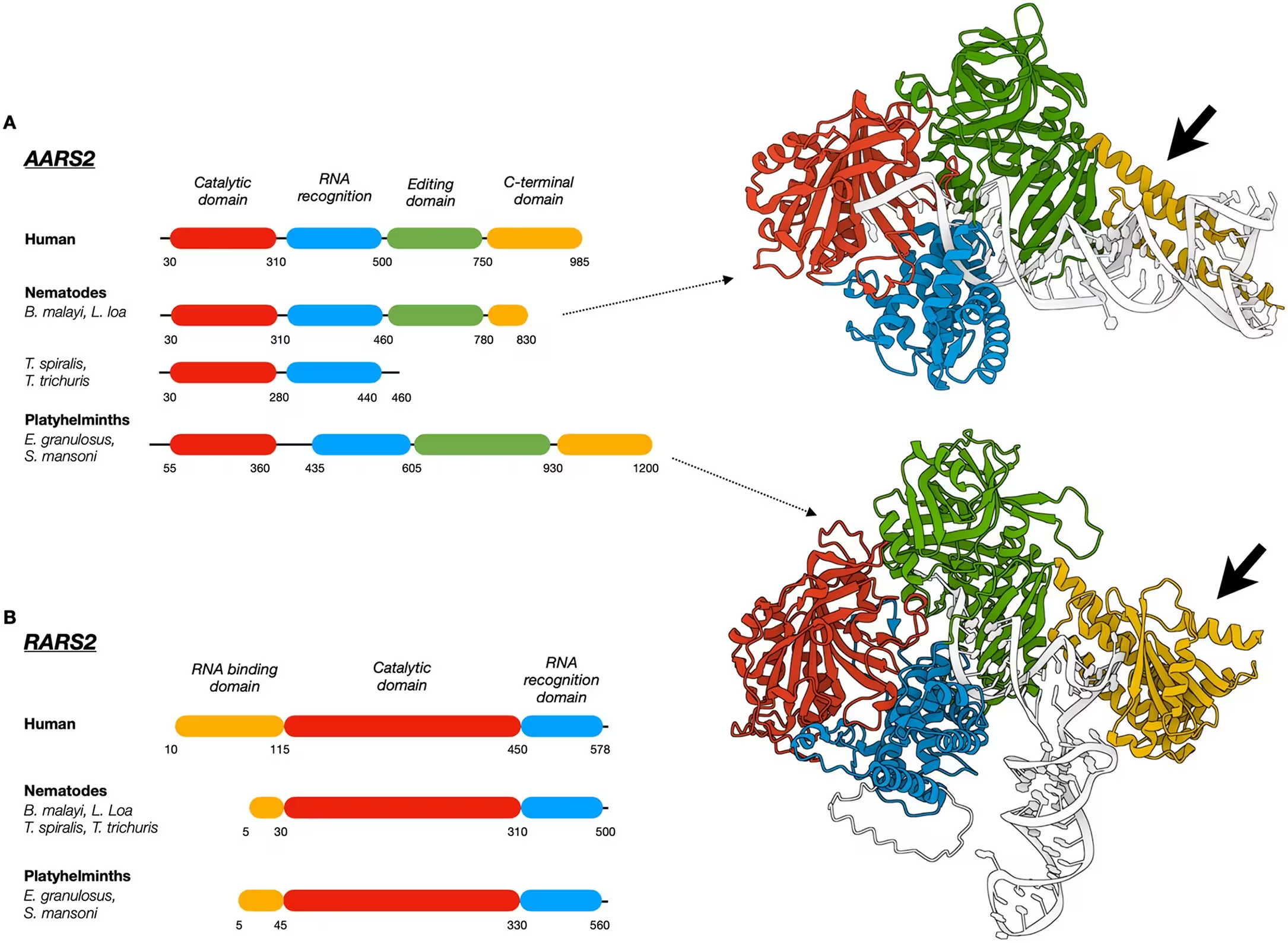
While most parasite proteins closely resemble their human homologs, the analysis uncovered striking clade-specific differences in enzymes targeted to mitochondria and those participating in large multi-synthetase complexes. Mitochondria in metazoan parasites contain unusually streamlined transfer RNA molecules that often lack standard structural features like the D- or T-loops. To accommodate these bizarre substrates, the corresponding mitochondrial synthetases have evolved distinct structural adaptations.
For example, all identified mitochondrial arginyl-tRNA synthetases lack the traditional N-terminal domain responsible for binding the RNA elbow. Furthermore, nematode mitochondrial alanyl-tRNA synthetases completely lack the C-terminal C-Ala domain, and certain tapeworm enzymes lack both the C-Ala domain and adjacent editing domains. Similar unusual truncations and extensions were found in cytosolic enzymes responsible for assembling multi-protein complexes, suggesting that parasite cellular machinery operates via unique protein-protein and protein-RNA interactions.
What These Discoveries Mean for Future Anthelminthic Drugs
Targeting aminoacyl-tRNA synthetases has proven highly successful in combating bacterial infections, inspiring efforts to develop similar small-molecule inhibitors against parasites that cause malaria and other neglected tropical diseases. These compounds typically bind to active or editing sites, exploiting subtle structural differences between pathogen and host enzymes. The newly refined helminth models reveal unexpected variations within core active-site motifs, such as modified Class I high-affinity sequence motifs in tapeworm mitochondrial isoleucyl-tRNA synthetases.
Beyond catalytic pockets, the discovery of parasite-specific appended domains and unique protein-interaction interfaces opens alternative avenues for drug discovery. Compounds designed to disrupt specialized macromolecular complexes or non-standard RNA recognition mechanisms could offer high target specificity. By mapping these structural peculiarities, the study paves the way for designing next-generation therapeutic agents against persistent parasitic infections.
The research was published in PLOS Neglected Tropical Diseases on November 17, 2026.
This article has been fact checked for accuracy, with information verified against reputable sources. Learn more about us and our editorial process.
Last reviewed on .
Article history
- Latest version
Reference(s)
- Block, Alison., et al. “Curation and revision of gene models reveals unique features of helminth aminoacyl-tRNA synthetases.” PLOS Neglected Tropical Diseases, vol. 20, no. 11, November 17, 2026, pp. e0014881 Public Library of Science (PLoS), doi: 10.1371/journal.pntd.0014881. <https://doi.org/10.1371/journal.pntd.0014881>.
Cite this page:
- Posted by Elizabeth Taylor