Iraqi Sludge Yields Plastic-Eating Bacterium That Attacks Persistent Microplastics
Scientists isolated a resilient microbe from recycling plant waste that successfully initiates the breakdown of three major synthetic polymers.
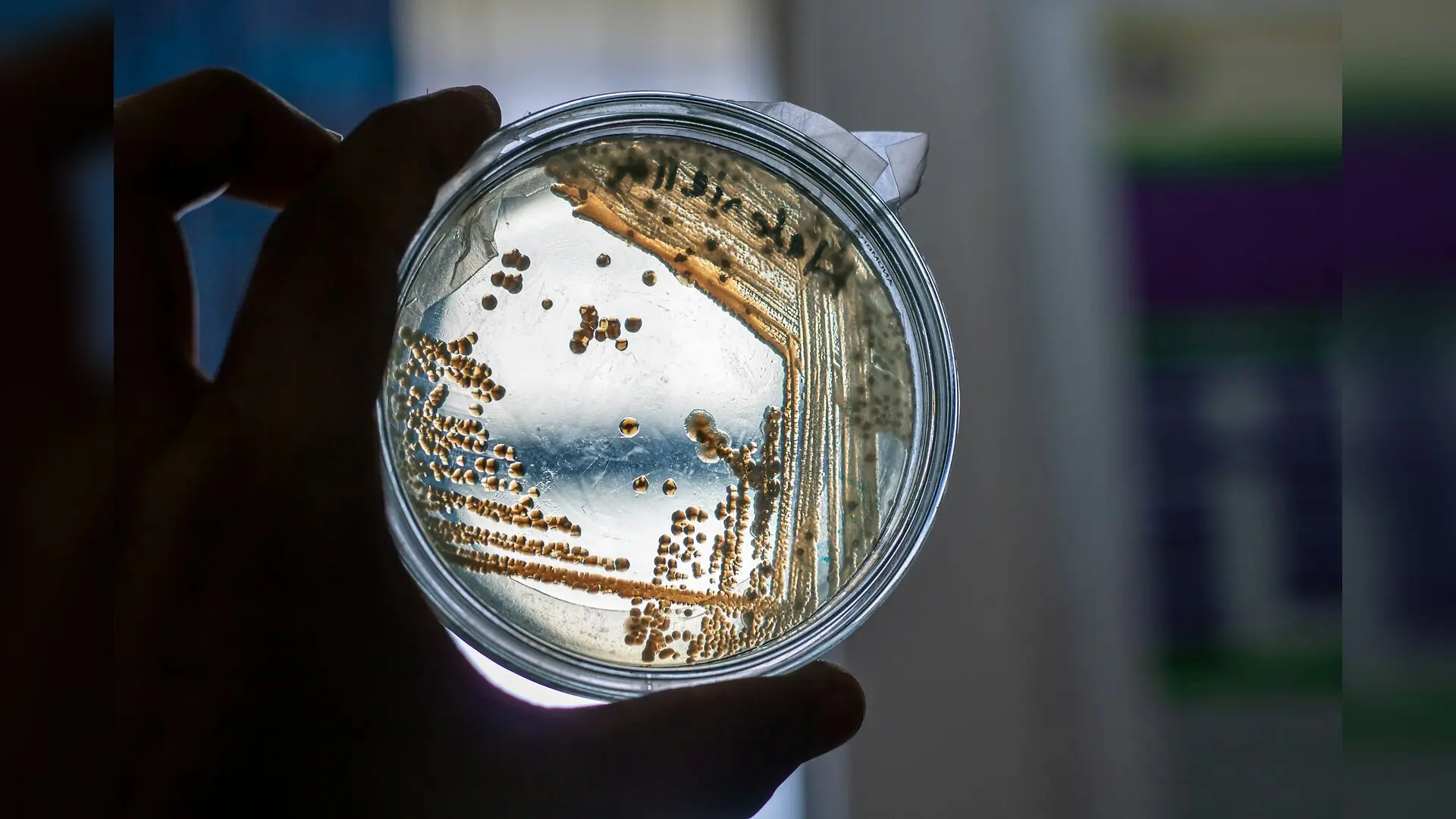
Tiny particles of everyday plastics are washing into waterways and accumulating in industrial sludge, but scientists in Iraq have discovered a resilient local bacterium that actively feeds on these stubborn pollutants. The newly studied microbe, named Pseudomonas monteilii strain HH187, shows a surprising ability to break down three of the most common and persistent synthetic polymers found in global waste: low-density polyethylene, polystyrene, and polyvinyl chloride.
How a Neglected Industrial Niche Yielded a Plastic-Eating Microbe
Plastic pollution has become an overwhelming global crisis, clogging marine sediments, soils, atmospheric dust, and even human tissues. Conventional waste management techniques like incineration and landfilling often fail to capture microscopic fragments, while generating secondary toxins or hazardous chemical leachates. In search of sustainable biological solutions, researchers turned to plastic wash sludge, a dense slurry of fragmented plastics and organic residues collected from a mechanical recycling facility and a polluted tributary in Sulaymaniyah, Iraq. This harsh, plastic-rich environment acts as a natural selective filter, favoring microorganisms capable of surviving off synthetic carbon.
Using an enrichment culture approach, the research team isolated eight distinct microbial strains capable of tolerating high concentrations of microplastics. Through rigorous biochemical profiling and molecular 16S rRNA gene sequencing, published in RSC Advances (RSC Adv., 2026, DOI: 10.1039/d6ra06272e), they identified the most robust isolate as Pseudomonas monteilii HH187 with 99 percent sequence similarity. While members of the Pseudomonas genus are well known for their metabolic versatility, this marks the first time this specific species has been documented interacting with low-density polyethylene, polystyrene, and polyvinyl chloride.
Measuring the Microbial Growth and Polymer Weight Loss
To evaluate how well the bacteria could utilize these plastics, the scientists cultured strain HH187 in a modified minimal salt medium where the microplastics served as the sole carbon source. Over a 10-day incubation period, viable bacterial cell counts measured by colony-forming units showed significant proliferation across all plastic types. Populations rose from an initial baseline of 8.0 up to 8.66 log10 colony-forming units per milliliter for low-density polyethylene, 8.36 for polystyrene, and 8.20 for polyvinyl chloride. In stark contrast, plastic-free control cultures failed to sustain growth and saw bacterial populations decline.
Gravimetric analysis, which measures precise changes in dry weight after removing surface cells with a detergent wash, confirmed measurable mass loss. After correcting for abiotic controls, net biodegradation-associated weight loss reached approximately 2 percent for low-density polyethylene, 1.4 to 1.6 percent for polystyrene, and 1.1 to 1.3 percent for polyvinyl chloride. The magnitude of net gravimetric loss consistently followed the order of low-density polyethylene outperforming polystyrene, which in turn outperformed polyvinyl chloride under these short-term laboratory conditions.
Chemical Evidence of Surface Modification and Future Challenges
Advanced analytical tools provided a closer look at how the bacteria altered the plastic surfaces. Fourier-transform infrared spectroscopy revealed polymer-specific changes in chemical bonds, including the introduction of carbonyl and hydroxyl functional groups that point to surface oxidation. Gas chromatography-mass spectrometry profiling detected novel extractable compounds in the polymer-amended cultures, such as fatty acid methyl esters and plasticizer-derived phthalate esters, which were entirely absent in the bacteria-only controls. Scanning electron microscopy further showed localized pitting, microcracks, and surface roughening on the recovered particles.
Despite these promising findings, the authors emphasize that the observed changes represent early-stage biodeterioration rather than complete polymer mineralization or extensive chain scission. The primary polymer backbones remained largely intact, and because the starting materials were mechanically ground fragments with irregular shapes, surface textures must be interpreted with caution. Furthermore, the experiments relied on pristine laboratory microplastics rather than weathered environmental particles, and examined only a single bacterial strain rather than a complex natural community. Future research will need to explore how this regionally isolated bacterium performs within microbial consortia and under fluctuating environmental conditions to determine its potential for large-scale bioremediation.
The research was published in RSC advances on November 17, 2026.
This article has been fact checked for accuracy, with information verified against reputable sources. Learn more about us and our editorial process.
Last reviewed on .
Article history
- Latest version
Reference(s)
- Darwesh, Hanaw., et al. “Initial biodeterioration of polyethylene, polystyrene, and polyvinyl chloride microplastics Pseudomonas monteilii isolated from plastic wash sludge in Iraq.” RSC Advances, January 1, 2026 Royal Society of Chemistry (RSC), doi: 10.1039/d6ra06272e. <https://doi.org/10.1039/d6ra06272e>.
Cite this page:
- Posted by Raj Joshi