Supermarket Food Waste Discards Reveal Surprising Environmental And Economic Trade-Offs
Researchers evaluate biochar conversion and municipal policies to tackle retail food loss in Bangkok.
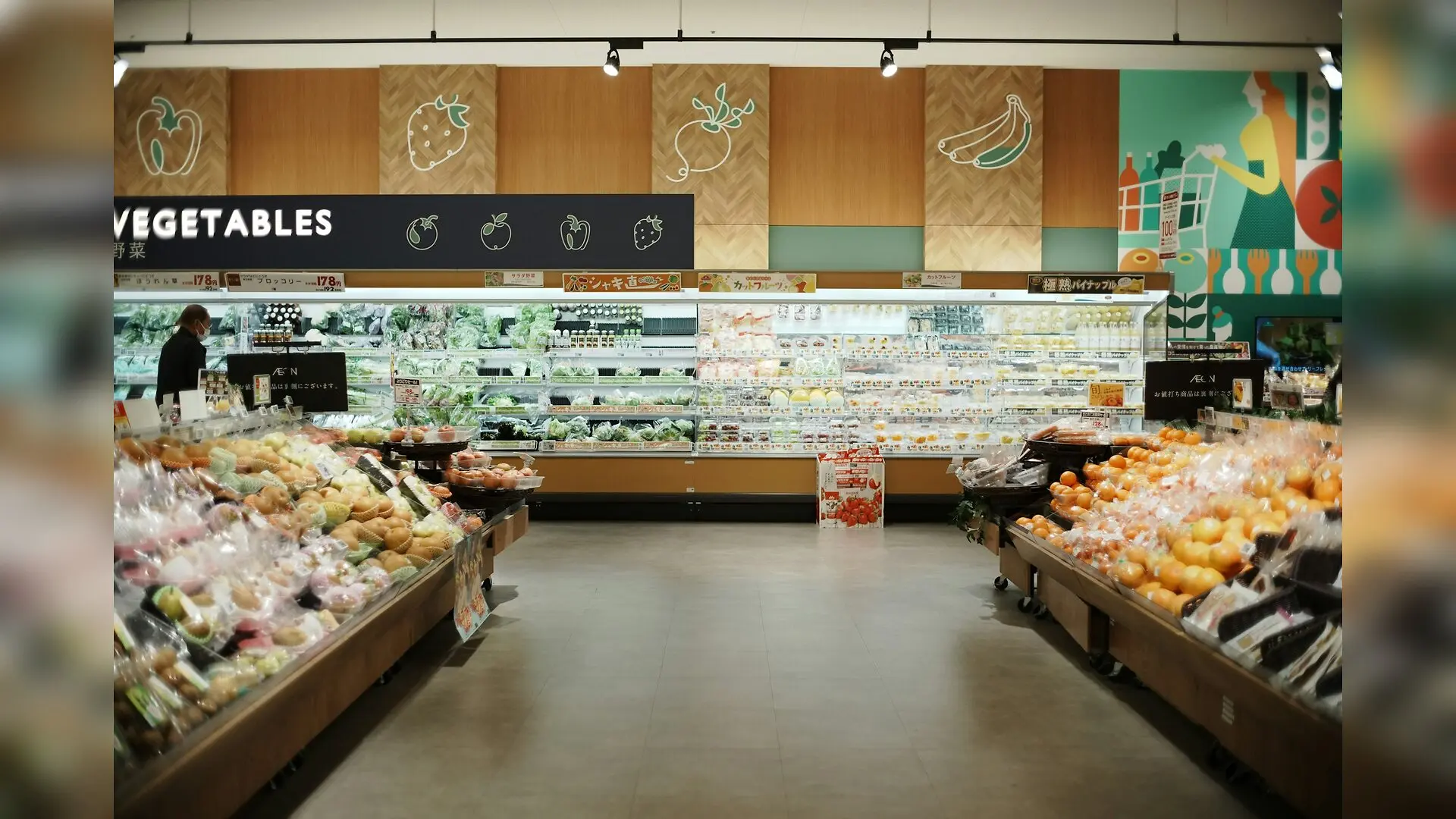
Supermarket shelves generate thousands of tons of edible fruits and vegetables that end up discarded every year, accounting for about thirteen percent of global food waste. A new study examining retail operations and municipal disposal systems in Bangkok reveals that while these uniform organic discards are prime candidates for upcycling into soil amendments and green energy, grocery chains and local authorities face steep economic and logistical hurdles that prevent widespread recycling.
How Much Food Waste Do Supermarkets Actually Generate Daily?
To quantify the exact scale of retail food loss, researchers analyzed generation records and conducted direct two-week weigh-ins across multiple grocery store formats in Thailand. The investigation, published in ACS Environmental Au, showed that a single premium grocery store branch discarded about one hundred thirty-nine thousand kilograms of supermarket food waste annually, generating a carbon footprint of seventy-eight thousand kilograms of carbon dioxide equivalents per year and costing nearly seven hundred thousand dollars in lost inventory.
Fresh fruits and vegetables dominated these waste streams, making up between forty-three and ninety-seven percent of all discarded items across the studied stores. Meat waste varied widely from less than two percent up to thirty-seven percent depending on the store format, while bakery items and dairy products appeared in smaller quantities at high-end locations but reached over twenty percent in standard hypermarkets.
Why Does Corporate Policy Change How Much Food Gets Thrown Away?
The study combined physical waste audits with qualitative interviews involving supermarket staff, municipal officers from the Bangkok Metropolitan Administration, and private waste contractors. The findings point to a major divide driven by corporate governance. Supermarket chains that enforced strict internal waste segregation policies generated significantly less waste per square meter of sales area than stores operating without mandatory separation rules.
Stores implementing evening price discounts, evening buy-one-get-one promotions, and donation networks successfully halved their daily food losses. However, some locations treated discarded produce with lime powder to deter pests and prevent theft. Researchers warn that this chemical treatment sharply raises pH levels and introduces heavy corrosion risks, rendering the organic waste completely useless for animal feed, composting, or agricultural recycling.
Can Converted Biochar Turn Grocery Trash Into Clean Fuel and Fertilizer?
The research evaluated two novel pathways for converting discarded supermarket food into biochar, which is a carbon-rich porous substance produced by heating organic matter in oxygen-limited chambers at temperatures between three hundred and nine hundred degrees Celsius. The first scenario tested using the resulting biochar as an alternative fuel source inside waste-to-energy municipal power plants, while the second scenario explored applying it directly to rice fields as an agricultural soil amendment.
Environmental modeling demonstrated that applying food waste biochar to agricultural land yielded a net carbon reduction of six hundred thirty kilograms of carbon dioxide equivalents per metric ton of waste managed. This impressive climate benefit stems from permanent carbon storage, avoided greenhouse gas emissions, and lower demand for synthetic nitrogen and potassium fertilizers. However, the life cycle economic assessment revealed that processing the waste into biochar incurred net positive costs of about sixty dollars per metric ton due to energy requirements, drying equipment investments, and specialized transport logistics.
What Economic and Regulatory Barriers Block Better Waste Recovery?
Evaluating waste handling through life cycle cost analysis exposed a consistent economic trade-off. Environmentally destructive disposal methods such as traditional landfilling remain cheap, whereas sustainable upcycling options require substantial upfront capital and ongoing labor investments. Simply separating organic food waste from plastic and paper packaging cost stores nearly forty-six dollars per ton, while recovering recyclable packaging materials offset only fifteen dollars of that expense.
Municipal collection systems in Bangkok also face severe practical constraints. Food waste contains high moisture content, decomposes rapidly, generates foul odors, and attracts disease vectors, making unsegregated commingled garbage hazardous for sanitation workers. Although the municipal zero waste campaign successfully expanded organic waste collection fivefold in a single year to nearly two hundred fifty-nine tons per day, legal frameworks still lack mandatory recycling thresholds for smaller retailers and uniform enforcement mechanisms.
The research was published in ACS environmental Au on November 21, 2026.
This article has been fact checked for accuracy, with information verified against reputable sources. Learn more about us and our editorial process.
Last reviewed on .
Article history
- Latest version
Cite this page:
- Posted by Raj Joshi