How Ramping Brain Waves In The Hippocampus Help Humans Hold Visual Memories In Mind
A study of epilepsy patients reveals that synchronized high-frequency brain ripples coordinate with the cortex to sustain visual short-term memory.

Brain waves known as ripples in the hippocampus ramp up in frequency during the brief moments humans hold visual details in mind, signaling a mechanism for short-term memory maintenance. While scientists have long linked these high-frequency neural oscillations to the consolidation of long-term memories during sleep, a new study reveals they also actively coordinate visual short-term memory while awake.
How Do Brain Waves Sustain Visual Short-Term Memory?
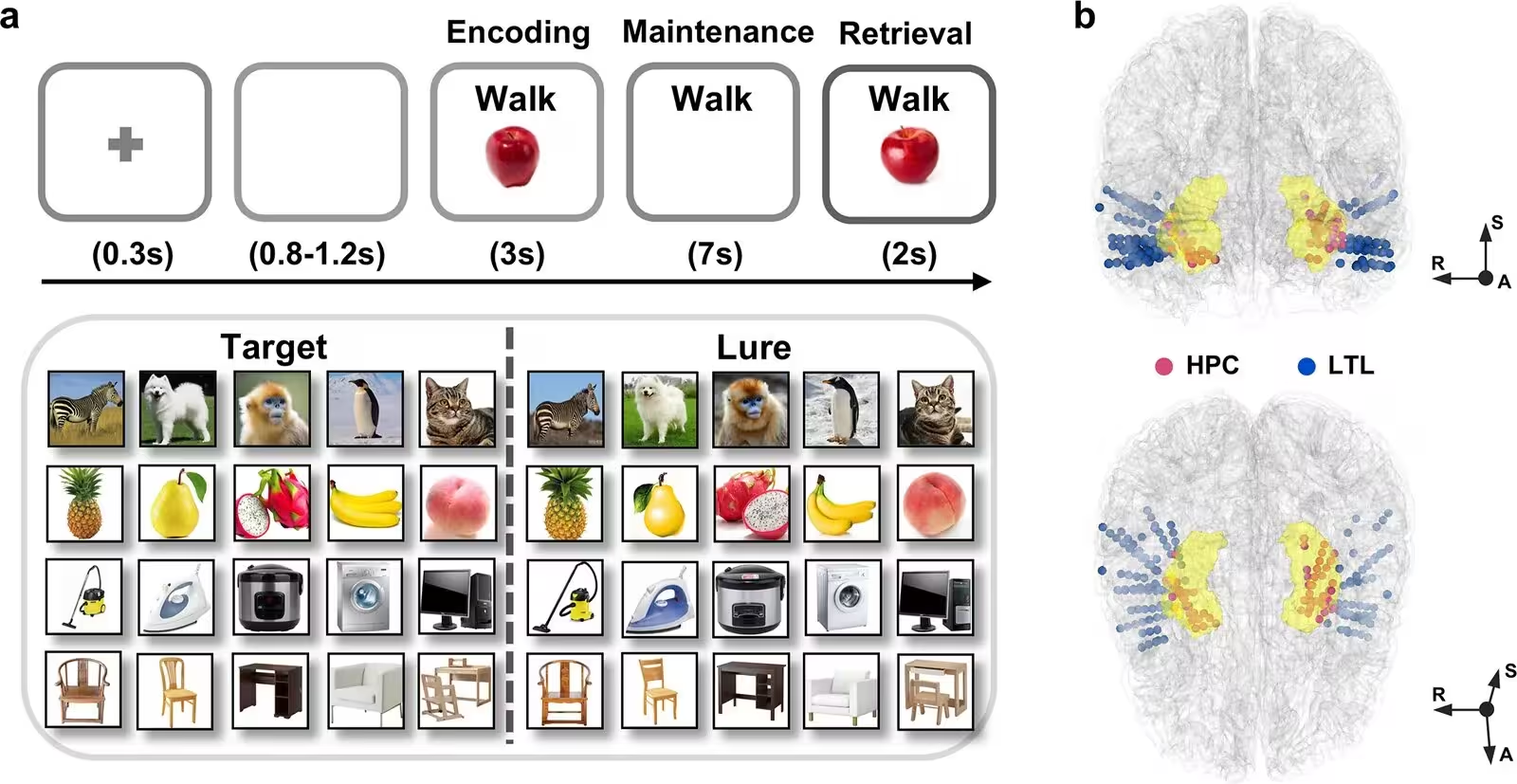
To investigate how the brain holds onto visual information over a delay, researchers led by Jing Liu at South China Normal University and Ying Cai at Zhejiang University analyzed intracranial electroencephalography data from 13 patients with drug-resistant epilepsy who had depth electrodes implanted for clinical evaluation. The participants performed a delayed match-to-sample task, viewing word-picture pairs, holding the image in mind across a seven-second maintenance period, and then identifying whether a probe picture matched the original target or a similar lure.
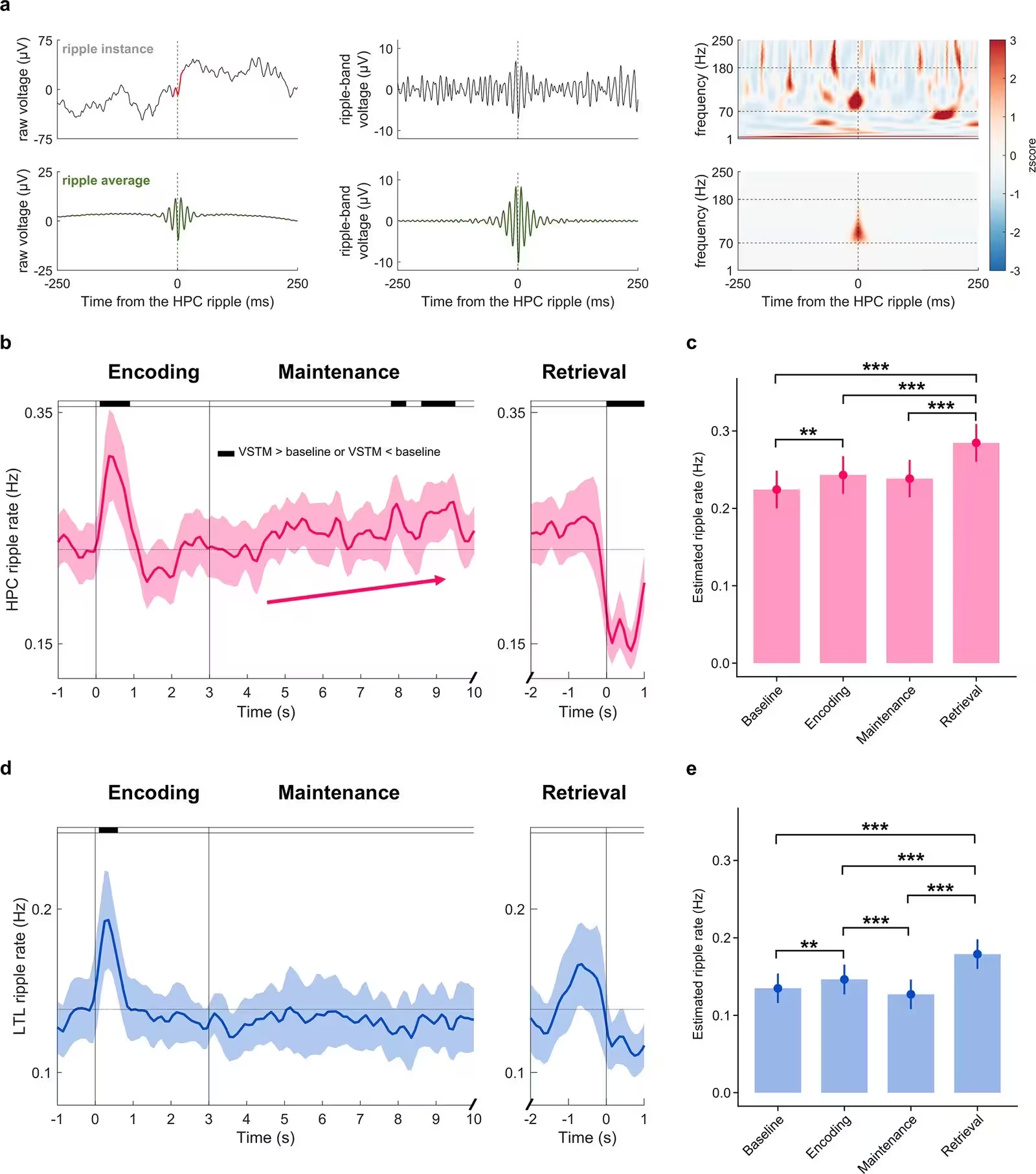
As the participants maintained the visual images, the rate of hippocampal ripples progressively increased over time, a pattern known as ramping up. The study, published in eLife, found that this ramping effect occurred exclusively on trials where the participants successfully remembered the images later, pointing to a direct link between rising ripple rates and memory accuracy.
Why Do Coupled Ripples Across Brain Regions Matter?
Beyond the hippocampus, the researchers examined electrical activity in the lateral temporal lobe, a region of the cortex involved in representing visual and semantic information. They discovered that hippocampal ripples were frequently coupled in time with ripples occurring in the lateral temporal lobe within a window of fifty milliseconds.
When these ripples synchronized between the two regions, they coincided with the reactivation of specific memory representations in the lateral temporal lobe. Multivariate decoding analysis of the neural data revealed that trials featuring these coupled ripples showed significantly higher decoding accuracy during the maintenance window, suggesting that the dialogue between the hippocampus and the cortex helps keep visual memories active.
What Distinguishes Short-Term Storage From Long-Term Consolidation?
A key question for the team was whether these short-term memory dynamics simply reflect the early formation of long-term memories. To address this, the authors separated the trials based on whether items were subsequently remembered or forgotten in a later long-term memory test. They observed that the hippocampal ramping effect and the coupled ripples did not differ between items that formed lasting memories and those that did not.
This dissociation suggests that the observed ripple dynamics specifically serve the online maintenance of visual information rather than long-term storage processes. The findings support a dynamic coding model of working memory, demonstrating that the brain recruits high-frequency oscillations and interregional coupling to sustain transient representations during conscious thought.
The research was published in eLife on November 20, 2026.
This article has been fact checked for accuracy, with information verified against reputable sources. Learn more about us and our editorial process.
Last reviewed on .
Article history
- Latest version
Reference(s)
- Liu, Jing., et al. “Ramping-up hippocampal ripples and their neocortical coupling support human visual short-term memory.” eLife, vol. 15, November 20, 2026 eLife Sciences Publications, Ltd, doi: 10.7554/eLife.111304. <https://doi.org/10.7554/eLife.111304>.
Cite this page:
- Posted by Rohan Kumar