Woody Shrub Waste Converted Into High-Protein Livestock Feed Using Fungi
Organic nitrogen supplementation supercharges fungal enzymes, breaking down tough plant lignin and boosting protein enrichment.
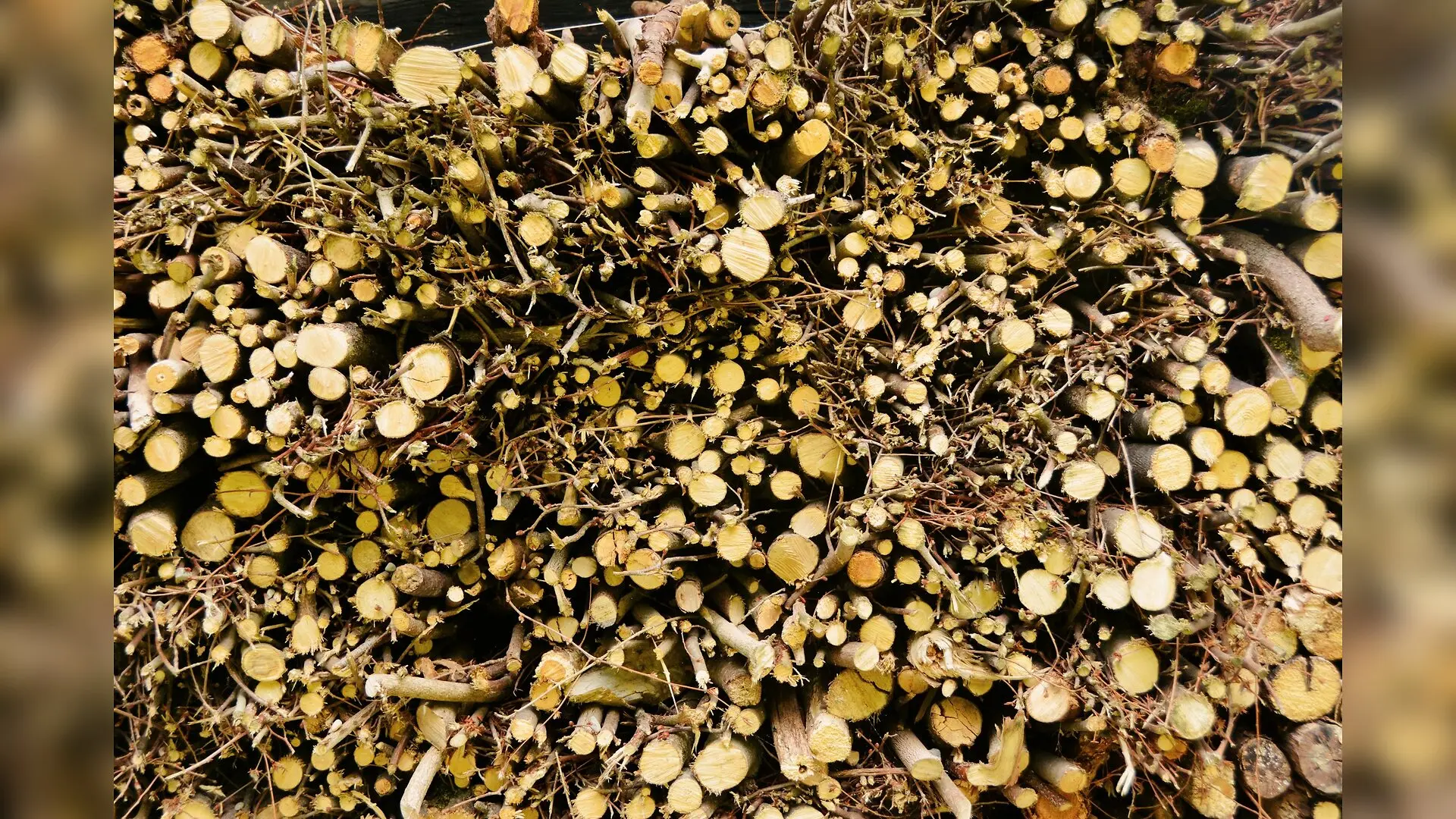
Adding organic nitrogen to woody shrub waste transforms tough plant fibers into high-protein animal feed while breaking down 34.58 percent of the stubborn lignin.
Researchers investigating sustainable ways to utilize woody biomass focused on Caragana korshinskii, a widely distributed shrub in Northwest China that covers millions of acres to prevent desertification. Despite yielding over four million tons of biomass annually, its tough mixture of cellulose, hemicellulose, and lignin makes it extremely difficult for animals to digest or for industrial enzymes to break down. To solve this bottleneck, scientists used the white-rot fungus Irpex lacteus to ferment the woody material under various nitrogen conditions in a laboratory study.
The results demonstrate that the choice of nitrogen additive dramatically alters how efficiently the fungus breaks down tough plant walls and enriches the material with microbial protein. The details of this investigation are published in Bioresources and bioprocessing, outlining how organic supplementation outperforms traditional inorganic fertilizers in biomass conversion.
Organic Versus Inorganic Nitrogen in Fungal Fermentation
During the 28-day solid-state fermentation experiments, the research team tested corn steep liquor, a nutrient-rich agricultural by-product of wet-milling corn starch, alongside three inorganic nitrogen sources: ammonium sulfate, potassium nitrate, and urea. These additives were supplied at equivalent nitrogen addition levels of 0.5 percent, 1.0 percent, and 1.5 percent. While urea completely inhibited visible fungal growth, the other nitrogen sources supported mycelial colonization with vastly different efficiencies.
Treatments supplemented with corn steep liquor at a 1.0 percent nitrogen addition level achieved a lignin degradation rate of 34.58 percent and a true protein increase of 40.48 percent. The total protein content in this optimized organic group climbed to 9.51 percent. In comparison, inorganic nitrogen treatments required more energy for cellular assimilation and yielded significantly lower protein enrichment and lignin removal.
Enzymatic Activities and Transcriptomic Mechanisms
To uncover why organic nitrogen worked so effectively, the team performed high-throughput RNA sequencing on the fungal cells after 28 days of growth. Transcriptomic analysis revealed that organic nitrogen significantly upregulated genes encoding key lignin-degrading enzymes, including manganese peroxidases, lignin peroxidases, and melanin-decolorizing enzymes. Enzyme activity assays confirmed that manganese peroxidase levels peaked at 29.17 units per liter in the corn steep liquor treatment group.
In contrast, ammonium treatments triggered nitrogen catabolite repression, a regulatory mechanism where easily accessible nitrogen suppresses the transcription of genes needed to break down complex substrates. Meanwhile, nitrate treatments forced the fungus to expend substantial cellular energy and reducing equivalents on nitrate reduction pathways, diverting metabolic resources away from oxidative lignin degradation.
Rumen Fermentation and Practical Implications
To evaluate the nutritional value of the upgraded biomass for livestock, the researchers conducted in vitro rumen gas production and volatile fatty acid assays using fresh rumen fluid from Angus bullocks. Substrates pretreated with organic nitrogen produced the highest cumulative gas volume at 181.35 milliliters per gram of dry matter, alongside increased propionate concentrations and lowered acetate-to-propionate ratios.
The authors acknowledge several limitations in their current study. Corn steep liquor is a complex mixture containing vitamins, trace minerals, and sugars alongside amino acids and peptides, meaning the observed benefits cannot be attributed solely to organic nitrogen. Furthermore, the transcriptomic findings await validation through quantitative PCR and targeted gene editing. Future pilot-scale evaluations must also assess economic feasibility, additive costs, and process stability before commercial adoption.
The research was published in Bioresources and bioprocessing on November 19, 2026.
This article has been fact checked for accuracy, with information verified against reputable sources. Learn more about us and our editorial process.
Last reviewed on .
Article history
- Latest version
Reference(s)
- Zhang, Fuqiang., et al. “Regulation of Irpex lacteus-mediated bioconversion of Caragana korshinskii lignocellulose by nitrogen source forms: transcriptomics evidence from lignocellulose degradation to protein enrichment.” Bioresources and Bioprocessing, vol. 13, no. 1, November 19, 2026 Springer Science and Business Media LLC, doi: 10.1186/s40643-026-01162-w. <https://doi.org/10.1186/s40643-026-01162-w>.
Cite this page:
- Posted by Robert Brown