Swiss Alpine River Study Reveals Surprising Truth About Genetic Water Testing Versus Physical Nets
Year-round sampling at two thousand meters shows that environmental DNA captures broader watershed biodiversity, but physical nets remain necessary for local population counts.

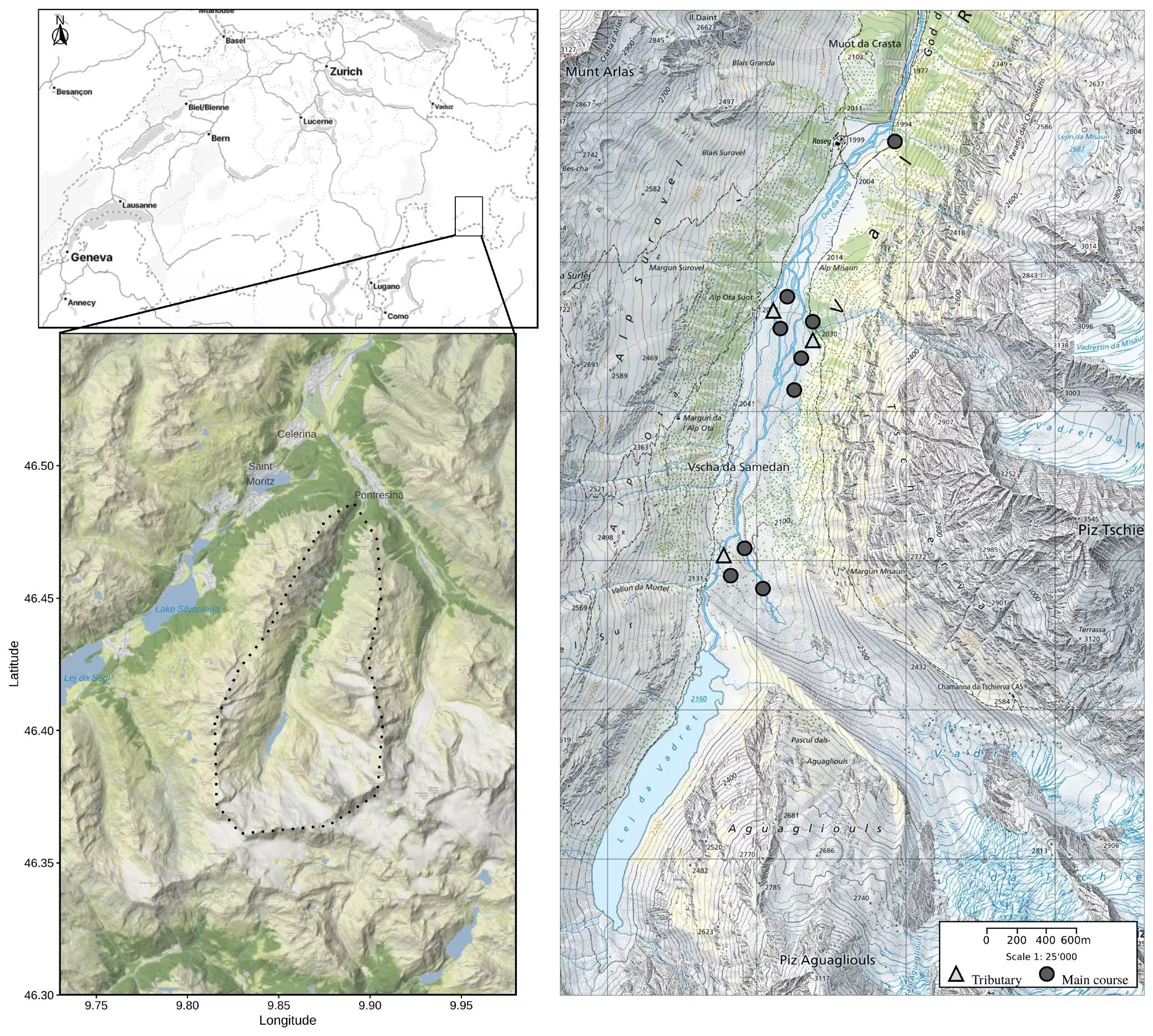
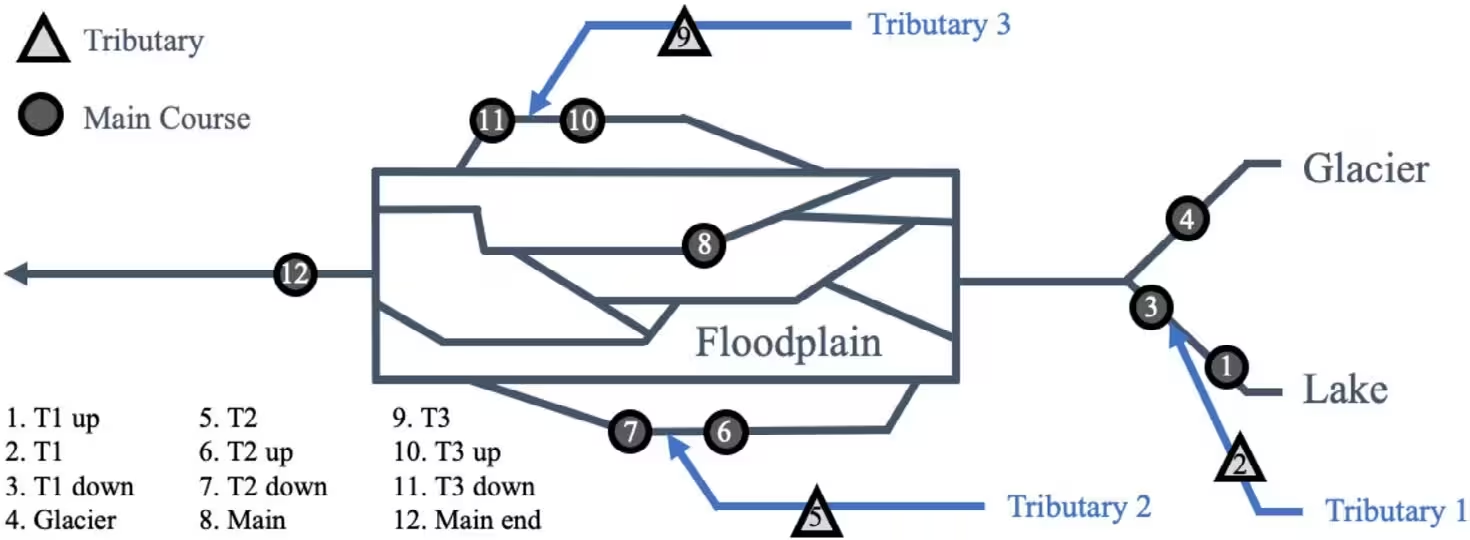
In an alpine river system in Switzerland, researchers tracking tiny aquatic creatures across twelve distinct sites discovered that modern genetic water testing methods and traditional physical net collections tell strikingly different stories about seasonal biodiversity. The year-round study, conducted in the Val Roseg valley at two thousand meters above sea level, monitored benthic macroinvertebrates, which are small bottom-dwelling animals such as aquatic insects, crustaceans, and worms that serve as vital indicators of river health.
Traditionally, scientists assess these river communities using physical tools such as the kick-net, where an operator wades into the current and disturbs the gravel stream bed to catch drifting organisms in a mesh net. While effective at measuring local populations, physical sampling is frequently dangerous or impossible during high summer glacier melts or freezing winter storms. To test whether genetic water screening could overcome these hurdles, Eduard Mas-Carrió from the University of Lausanne and his colleagues collected water and net samples every two months between October 2021 and August 2022. The detailed findings are published in Ecology and Evolution, offering new insights into how alpine river life shifts through the changing seasons.
How Well Do Environmental DNA and Kick-Nets Match Up?
The research team analyzed over eleven million genetic sequences from water filtration samples alongside nearly one hundred fifty thousand physical specimens collected via nets. When comparing the two methods, the authors found a significant correlation between the proportion of physical organisms captured in a net and their detection probability through genetic screening. This suggests that the genetic material shed into the water accurately reflects the presence of local taxa across most months of the year.
However, the two techniques diverged significantly when measuring relative abundances and specific indicator groups. While true-or-false detection rates aligned well, the quantitative genetic read abundances only matched physical counts during two months of the year, specifically October and February. Furthermore, while groups like true flies and mayflies showed strong positive correlations between the two sampling approaches, stoneflies and caddisflies did not show significant alignment.
Why Do Water Samples Detect Animals That Nets Miss?
One of the most revealing discoveries was that genetic screening identified roughly three times as many taxonomic families as physical net sampling. Traditional nets target shallow, fast-flowing gravel riffles where specific indicator insects thrive. In contrast, water filtration captures genetic material washed downstream from a much larger area, including upstream tributaries, ground soils, and terrestrial neighbors such as spiders and springtails.
This wide reach is a double-edged sword for ecologists. While genetic water testing provides a rapid, comprehensive overview of an entire watershed biodiversity without requiring researchers to brave hazardous glacial torrents, it introduces confounding variables. DNA can travel significant distances downstream, leading to false-positive local detections that do not reflect what is actually living in that exact patch of river bed.
Why Did Animal Counts Peak During the Dead of Winter?
The year-round sampling schedule revealed unexpected population dynamics in the pristine alpine river. Instead of peaking during the warm summer months when glacial meltwater swells the streams, physical invertebrate counts reached their maximum abundance during the coldest months of December, February, and April. The team observed that summer glacial melt brings heavy sediment loads and high water velocities that scour the river bed, creating harsh conditions for delicate aquatic invertebrates.
As water temperatures drop and glacial runoff subsides in winter, the river enters a more stable phase with minimal turbidity and maximum electrical conductivity. The authors suggest this creates a crucial window of opportunity for benthic arthropods to multiply before spring ice and snowmelt resume. Ultimately, the work indicates that environmental DNA can serve as a valuable substitute or complement for measuring overall biodiversity, but physical netting remains essential for fine-scale local population assessments.
The research was published in Ecology and evolution on November 23, 2026.
This article has been fact checked for accuracy, with information verified against reputable sources. Learn more about us and our editorial process.
Last reviewed on .
Article history
- Latest version
Reference(s)
- Mas‐Carrió, Eduard., et al. “Kick‐Net Versus eDNA: Year‐Round Methodological Comparison of Benthic Macroinvertebrate Community in an Alpine River.” Ecology and Evolution, vol. 16, no. 11, November 23, 2026 Wiley, doi: 10.1002/ece3.74625. <https://doi.org/10.1002/ece3.74625>.
Cite this page:
- Posted by Omar Mirza