Jujube Plant Extract And Graphene Oxide Destroy 99% Of Water Pollutants In Minutes, And Inhibit Skin Enzymes
New green trimetallic nanoparticles successfully break down stubborn industrial dyes and toxic chemicals while showing promise for medical and cosmetic applications.
Researchers in Pakistan have developed a new eco-friendly catalyst from jujube plant extract and graphene oxide that destroys 99% of toxic water pollutants in minutes. The sustainable nanomaterial breaks down stubborn industrial dyes and hazardous chemicals while also inhibiting key enzymes linked to skin pigmentation disorders.
Wastewater from textile, paint, and chemical factories often contains hazardous organic compounds and synthetic dyes that resist natural breakdown. These pollutants create colored films on water surfaces that block sunlight, destroy aquatic life, and release toxins dangerous to human health. Traditional methods used to manufacture cleanup catalysts usually require expensive equipment and toxic chemicals, making sustainable alternatives a major priority for environmental scientists.
How Plant Extracts Build Advanced Nanomaterials
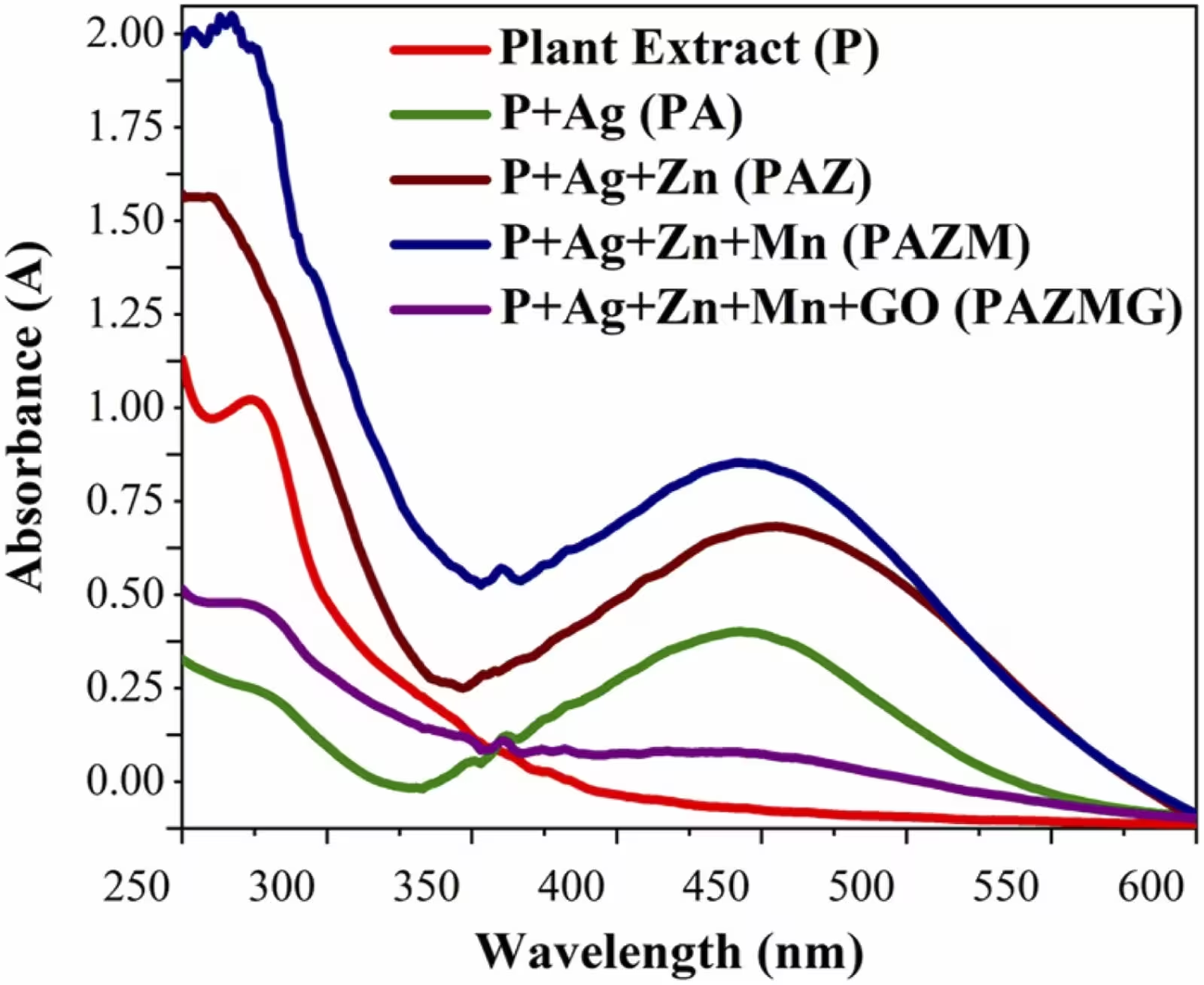
Led by Zarbad Shah at Bacha Khan University Charsadda, the research team used stem extracts from the Indian jujube plant, known scientifically as Ziziphus mauritiana, to produce trimetallic nanoparticles. Plant stem extracts contain natural secondary metabolites like flavonoids, polyphenols, and sugars that act as safe reducing and stabilizing agents. These natural compounds facilitated the simultaneous reduction of silver, zinc, and manganese ions into a homogeneous combination of metallic nanoparticles. The team then supported these composite nanoparticles on graphene oxide sheets, which provide a high surface area and excellent electrical conductivity.
The study published in RSC Advances details how the researchers tested various concentrations of plant extract and graphene oxide to optimize the structure of the catalyst. Analytical techniques including X-ray diffraction and scanning electron microscopy confirmed that the optimized material formed uniform porous structures with minimal nanoparticle aggregation. This porous architecture promotes rapid mass transfer and efficient electron movement during chemical reactions.
How the Catalyst Destroys Dyes and Pollutants
When tested in laboratory water samples, the newly synthesized nanocatalyst demonstrated remarkable degradation efficiency against a wide array of toxic substances. In the presence of a reducing agent, the material broke down about 99% of common organic pollutants like methylene blue, methyl orange, and rhodamine B within two to five minutes. The catalyst also successfully reduced hazardous nitroaromatic compounds, such as picric acid and 2-nitrophenol, into safer amino derivatives in a fraction of the time required by conventional methods.
The team evaluated the material against complex mixtures containing multiple dyes and nitroaromatic pollutants simultaneously. The catalyst maintained high efficiency in these mixed environments, proving its practical utility for treating real industrial wastewater. Furthermore, kinetic analyses confirmed that the degradation reactions closely follow pseudo-first-order kinetics, driven by the abundant active sites on the nanoparticle surfaces.
What These Nanoparticles Reveal About Enzyme Inhibition
Beyond environmental cleanup, the researchers tested the biological activity of the synthesized nanoparticles against tyrosinase enzymes, which control melanin production in humans and fungi. Over-expression of these enzymes can lead to hyperpigmentation conditions such as melasma and lentigo, while fungal tyrosinases cause unwanted browning in agricultural products. Laboratory assays revealed that specific nanoparticle compositions exhibited strong inhibitory effects against both human and mushroom tyrosinases.
Cytotoxicity tests performed on normal human cell lines indicated that the nanoparticles caused no toxic effects at the tested doses. This combination of strong catalytic performance and promising biopharmaceutical properties suggests potential applications in both wastewater remediation and cosmetic formulations.
Can This Material Withstand Repeated Industrial Use
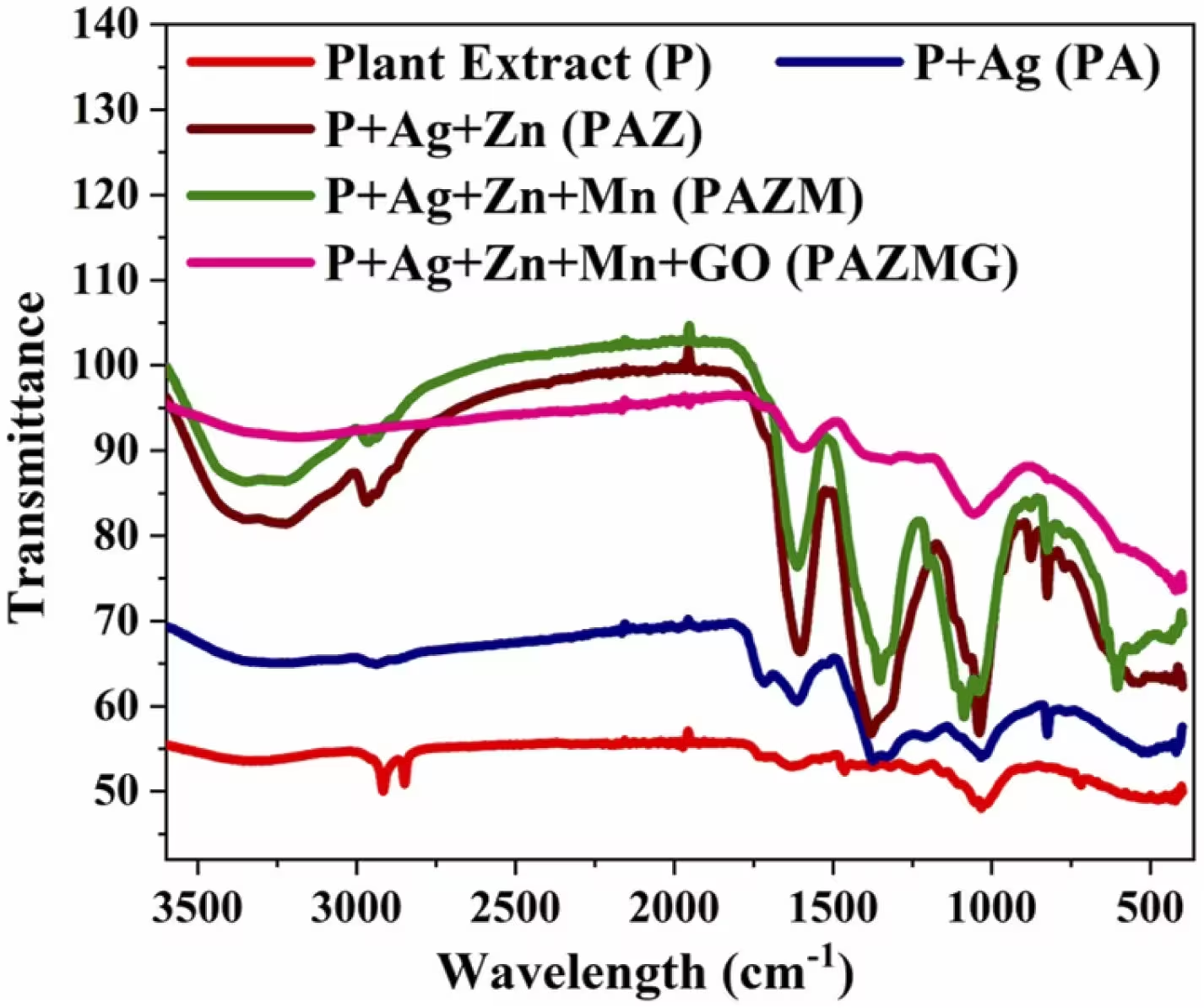
To determine practical viability, the researchers evaluated the reusability of the catalyst across 5 consecutive cycles of pollutant degradation. The material retained good structural stability, with degradation efficiencies for major pollutants dropping only slightly from 97% down to 91% after repeated use. X-ray diffraction and infrared spectroscopy analyses of the recovered catalyst confirmed that its core crystalline phases and functional groups remained largely intact.
The research was published in RSC advances on November 26, 2026.
This article has been fact checked for accuracy, with information verified against reputable sources. Learn more about us and our editorial process.
Last reviewed on .
Article history
- Latest version
Reference(s)
- Shah, Zarbad., et al. “Biosynthesized jujube mediated trimetallic (Ag–Zn–Mn) nanoparticles supported on graphene oxide: new tyrosinase inhibitors with environmental remediation applications.” RSC Advances, January 1, 2026 Royal Society of Chemistry (RSC), doi: 10.1039/d6ra07330a. <https://doi.org/10.1039/d6ra07330a>.
Cite this page:
- Posted by Vikram Desai