Texas A&M Researchers Build Open-Source 3D Bioprinter For 3,673 USD That Prints Complex Tissues With Variable Stiffness
Open-source DLP bioprinting platform automates resin vat switching and achieves variable hydrogel stiffness up to 2,000 kilopascals
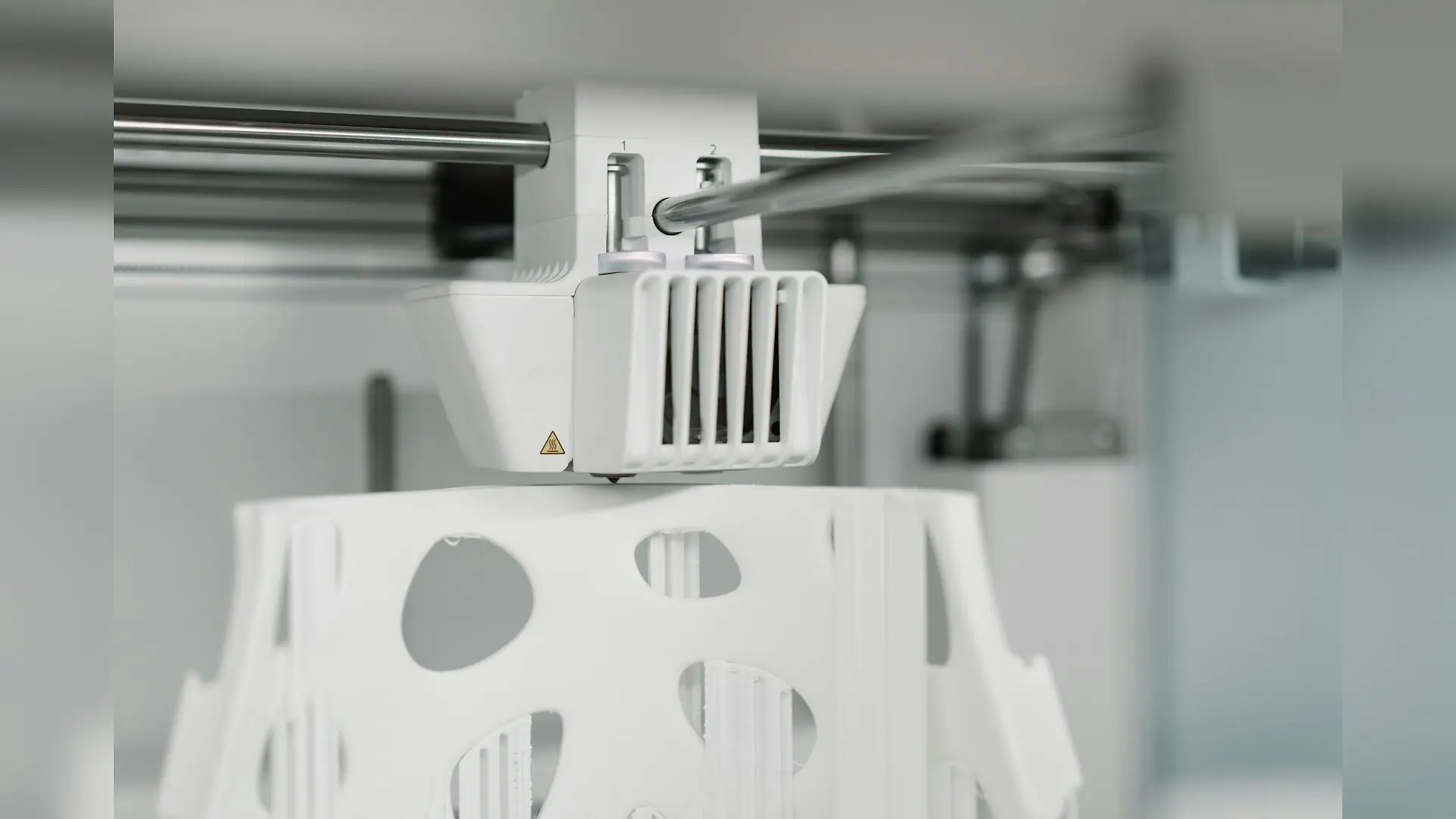
Researchers at Texas A&M University built an open-source 3D bioprinting platform for 3,673.02 USD that uses automated resin vat switching and programmable light exposure to create complex tissue models with a compressive modulus reaching 2,000 kPa. The technology aims to solve the high cost and limited customizability of commercial bioprinters, which often range from 5,000 USD to over 1,000,000 USD and restrict researchers to proprietary hardware.
Bioprinting creates three-dimensional structures out of living cells, biomaterials, and growth factors to mimic natural human tissues for drug testing and regenerative medicine. Digital light processing, known as DLP, uses projected light to solidify liquid polymer-based hydrogels layer by layer with high geometric precision. Most commercial DLP systems rely on a single resin vat, making it difficult to manufacture heterogeneous tissues that require multiple different materials or varying stiffness across a single construct.
For years, scientists seeking to build multi-material tissues faced a choice between expensive commercial machines or custom laboratory prototypes that lacked detailed assembly instructions and open software. Now, Syed Raza ur Rehman and their colleagues have published in ACS Omega an open-source alternative that combines parts from low-cost commercial desktop 3D printers with custom-designed mechanical components and Python-based control software.
How 3,673 USD Hardware Automates Multi-Vat Printing
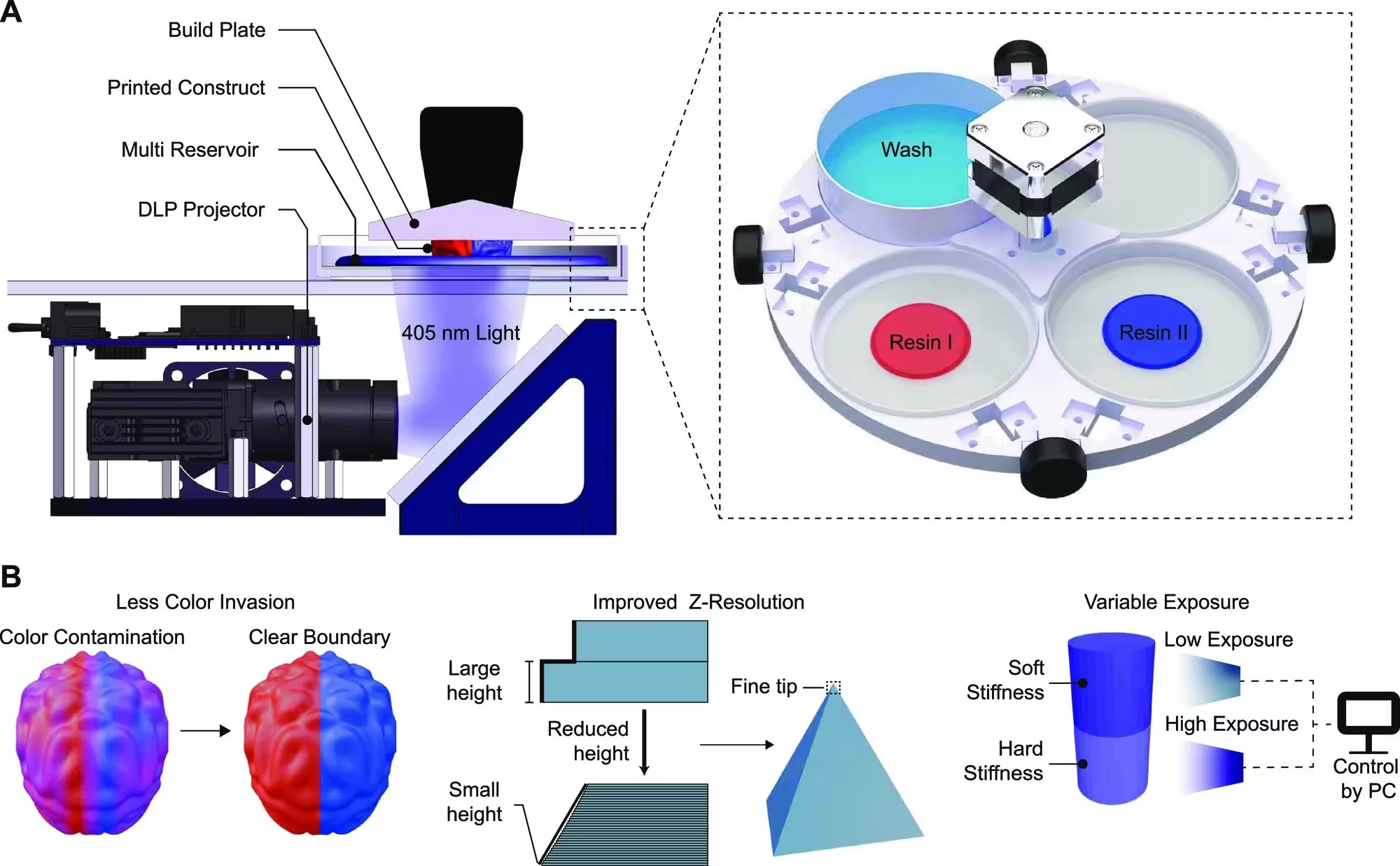
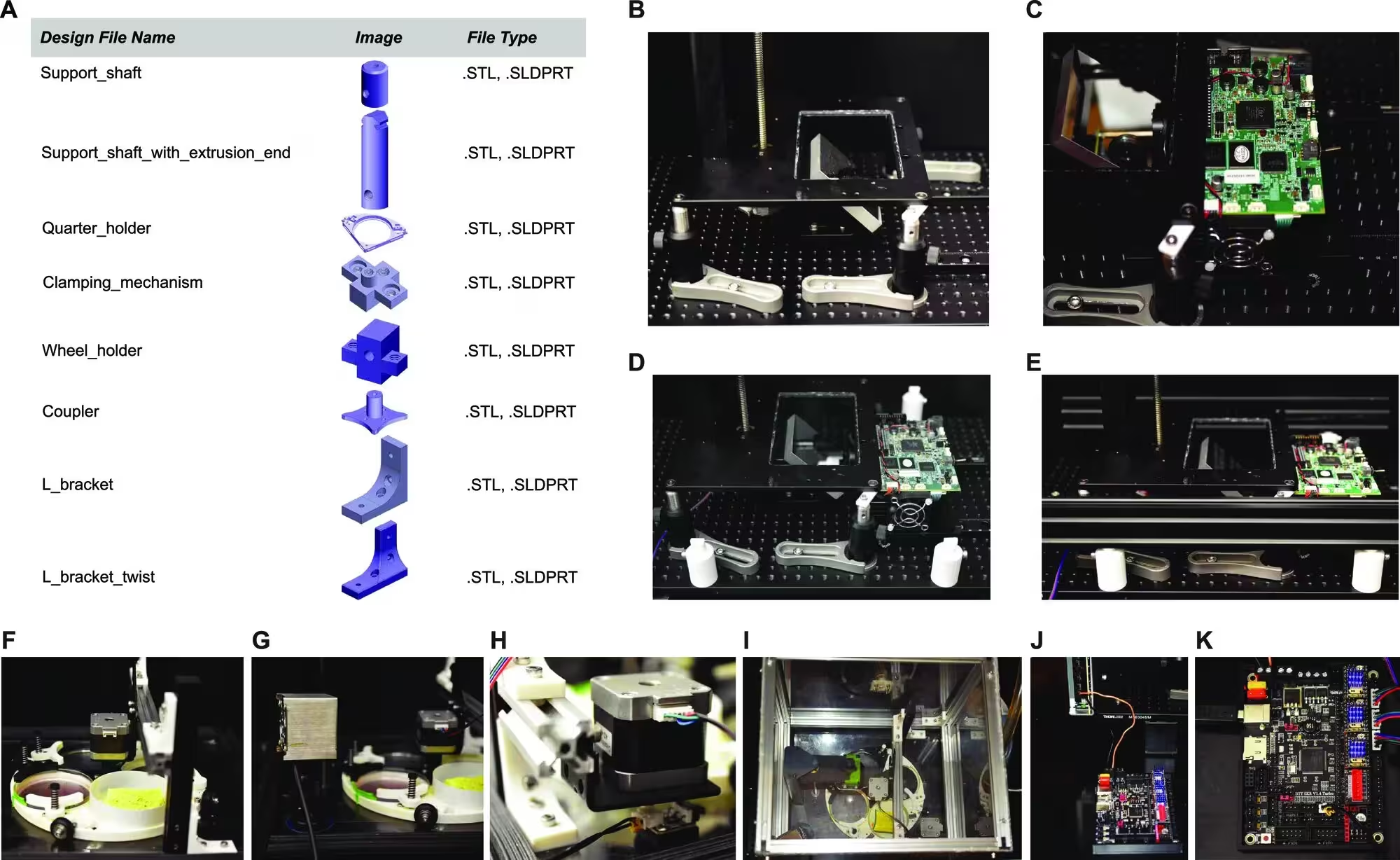
The new bioprinter integrates an Anycubic Photon Ultra resin printer and an Ender 3 Pro 3D printer, replacing proprietary electronics with an SKR V1.4 Turbo controller board. A custom rotary carousel holds multiple resin reservoirs, a PBS washing bath, and an absorbent foam drying station beneath the projection plane. This motorized carousel automatically rotates to exchange vats during a print job without requiring manual user intervention between layers.
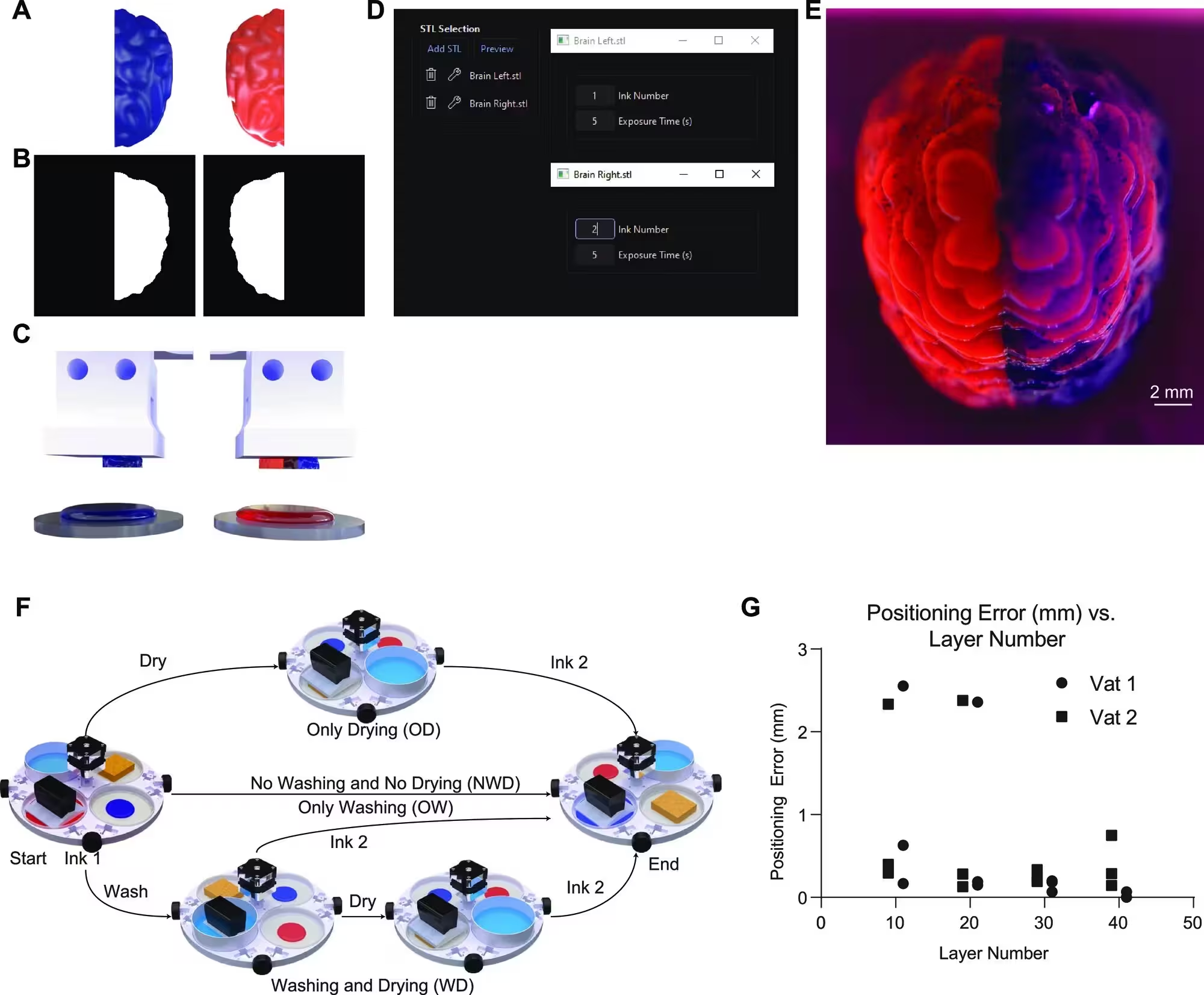
To ensure precise alignment between the build platform and each resin vat, the system uses a mechanical end-stop positioning mechanism. Testing across 40-layer dry-run sequences showed that mean positioning error remained between 0.05 and 1.1 mm without accumulating positional drift over time. This mechanical repeatability allows the printer to execute multi-material jobs reliably while maintaining spatial coordination across successive layers.
Why Washing And Drying Steps Prevent Cross-Contamination
Switching between different resin reservoirs often causes residual material carryover, leading to color bleeding and reduced interface fidelity between distinct regions of a printed object. To combat this issue, the research team evaluated five different cleaning workflows involving washing and drying steps. The optimal protocol immerses the build platform in a phosphate-buffered saline washing bath for 10 seconds and an absorbent foam drying station for 5 seconds after every vat transition.
Spectroscopic analysis using Rhodamine B dye demonstrated that this washing and drying workflow reduced relative resin carryover by about 25 percent compared to uncleaned prints. When printing multi-material objects such as ring and puzzle models, this approach maintained distinct boundaries between adjacent hydrogel formulations. The team also observed that increasing the build plate size from 20 to 50 mm elevated dye transfer due to larger surface areas retaining more residual liquid.
What 5 Micrometer Layers Mean For Complex Vascular Networks
While lateral resolution depends mainly on optical projection hardware, vertical resolution is governed by layer thickness control. Commercial printers often restrict minimum layer heights, but the custom software developed for this platform enables fabrication at layer heights down to 5 micrometers. This fine control allowed the authors to fabricate a nephron-inspired vascular construct with perfusable channel features measuring approximately 1 mm in diameter.
The platform also successfully reproduced complex anatomical geometries including heart models with enclosed internal channels, kidneys, and ear structures without structural collapse. A custom slicing pipeline developed using Trimesh and PySLM libraries preserves the original spatial coordinates of imported STL files. This ensures that multiple independently designed components retain their relative positions when assigned to separate resin vats.
How Variable Light Exposure Controls Local Hydrogel Stiffness
Native tissues possess varying mechanical properties, so the research team incorporated programmable light exposure to modulate hydrogel stiffness within a single formulation. Cylindrical specimens printed using exposure times of 5, 15, and 30 seconds exhibited compressive moduli ranging from approximately 70 kPa up to 2,000 kPa. Methylene blue dye mixed into the resin underwent partial photobleaching under prolonged light exposure, providing a visual confirmation of spatial control over exposure dosage.
Despite these advances, the authors note several limitations that require further development. The current cleaning workflow adds processing time, and highly cross-linked regions exhibited slight lateral expansion beyond intended boundaries due to light scattering and secondary photopolymerization. Furthermore, the platform was primarily validated using acellular hydrogel formulations, meaning future studies must incorporate cell-laden bioinks to evaluate long-term biological performance for regenerative medicine applications.
The research was published in ACS omega on November 9, 2026.
This article has been fact checked for accuracy, with information verified against reputable sources. Learn more about us and our editorial process.
Last reviewed on .
Article history
- Latest version
Reference(s)
- Raza ur Rehman, Syed., et al. “Designing an Open-Source Multi-Vat Digital Light Processing Printer.” ACS Omega, vol. 11, no. 46, November 9, 2026, pp. 72233-72243. American Chemical Society (ACS), doi: 10.1021/acsomega.6c07287. <https://doi.org/10.1021/acsomega.6c07287>.
Cite this page:
- Posted by Rohan Kumar