Freezing Fire-Damaged Soils Unlocks Hidden Microbial Ecosystems
A novel charcoal-based growth medium successfully isolates elusive fire-loving microbes that standard laboratory plates miss.
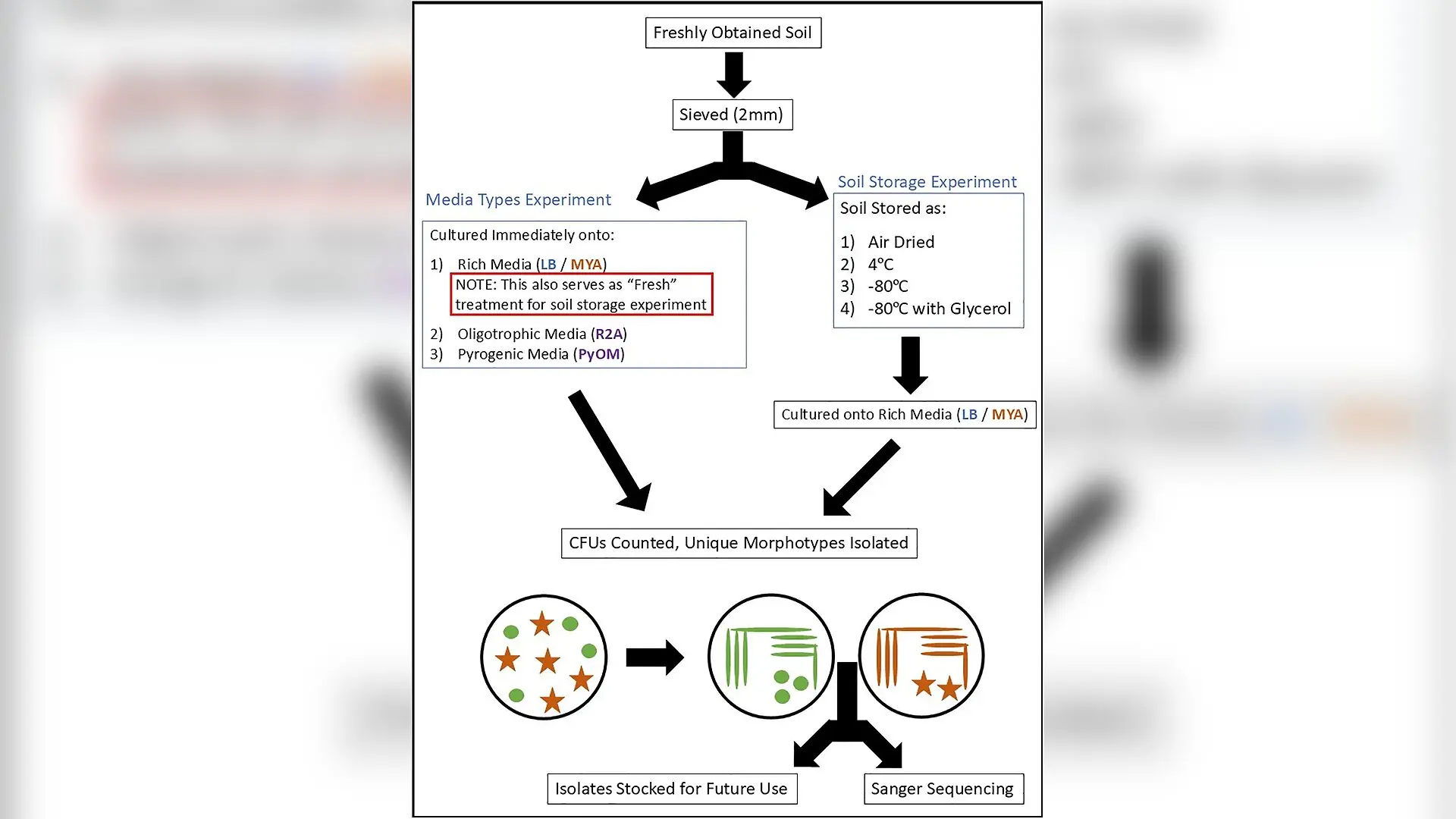
Soils collected six months after a severe California shrubland wildfire reveal that freezing samples without glycerol and cultivating microbes on low-nutrient media can successfully capture rare fire-loving organisms. Traditional laboratory approaches often fail to grow these specialized organisms because standard growth broths lack the complex carbon compounds created when intense heat transforms forest litter into charcoal. To solve this bottleneck, researchers tested multiple storage techniques and media types to build reliable microbial collections, with their findings published in PLOS One.
How Wildfires Transform Subsurface Soil Chemistry
High-severity fires radically alter the chemical landscape by vaporizing soil moisture, raising pH levels, and converting organic matter into pyrogenic organic matter, which is a complex form of charcoal rich in polycyclic aromatic hydrocarbons. These stubborn carbon structures can persist in ecosystems for more than a century, forcing surviving microorganisms to evolve specialized metabolic pathways. While many regular soil microbes perish during a blaze, fire-loving or pyrophilous species experience massive population explosions and drive post-fire ecosystem recovery.
Capturing these organisms in the laboratory remains notoriously difficult because standard nutrient-rich broths fail to mimic post-fire conditions. The research team collected soil samples from the high-severity El Dorado wildfire burn site in the Manzanita-dominated chaparral shrublands of Yucaipa, California. They set out to determine whether specific storage protocols and custom-made growth plates could improve the recovery of living bacteria and fungi.
Testing Storage Techniques and Custom Charcoal Media
The investigators divided fresh soil samples into four distinct storage environments for three months, including air-drying, refrigeration at four degrees Celsius, and freezing at minus eighty degrees Celsius both with and without a protective glycerol solution. For the cultivation phase, they compared standard rich media such as Lysogeny Broth for bacteria and Malt Yeast Agar for fungi against a low-nutrient option called Reasoner’s 2 Agar and a novel growth medium brewed in-house from charred wood collected directly from the burn scars.
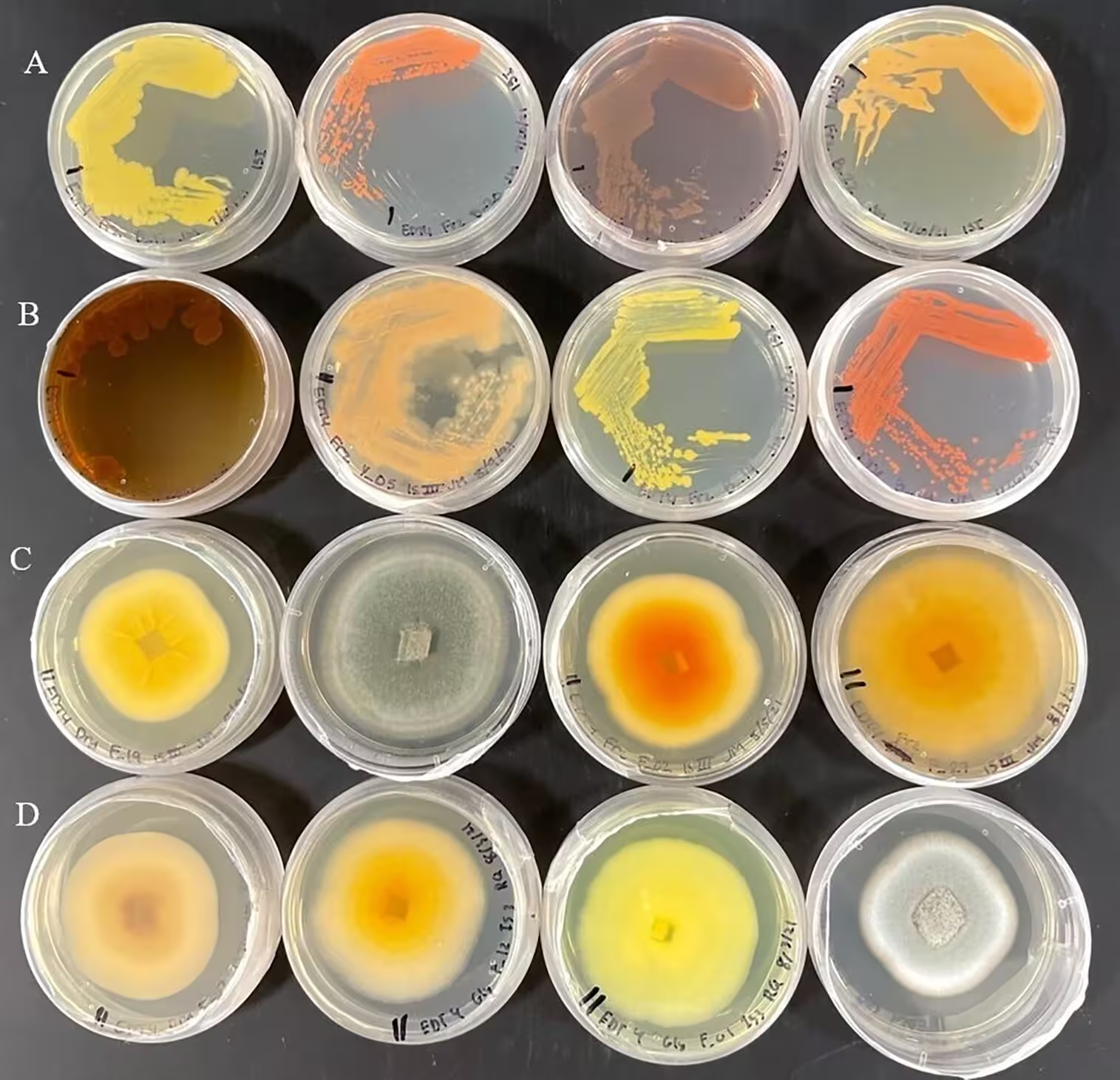
Freezing soil samples at minus eighty degrees Celsius without glycerol yielded the highest number of colony-forming units and the greatest diversity of pyrophilous bacterial genera when plated on rich media. Counter to initial assumptions that dry storage would work well because burned soils are arid, air-dried samples produced the lowest microbial diversity and the poorest overall recovery rates.
Why Low-Nutrient and Charcoal Plates Matter
While rich media generated the highest overall count of colonies, the low-nutrient Reasoner’s 2 Agar captured the richest diversity of pyrophilous genera for both bacteria and fungi. This unexpected outcome suggests that fire-adapted microbes thrive under oligotrophic, or nutrient-sparse, conditions when faced with environmental stress.
Furthermore, the custom charcoal growth medium proved essential for capturing elusive taxa that refused to grow on standard plates. Although the charcoal extract yielded lower overall colony counts, it was the only growth medium capable of isolating the fungus Neurospora and the bacterium Noviherbaspirillum soli. These specific organisms are known for harboring genetic plasmids that facilitate the breakdown of complex char, making them invaluable models for understanding post-fire nutrient cycling.
The research was published in PLOS One on November 13, 2026.
This article has been fact checked for accuracy, with information verified against reputable sources. Learn more about us and our editorial process.
Last reviewed on .
Article history
- Latest version
Reference(s)
- Enright, Dylan J.., et al. “Soil storage and growth media shape culture-based recovery of pyrophilous bacteria and fungi from burned soils.” PLOS One, vol. 21, no. 11, November 13, 2026, pp. e0359320 Public Library of Science (PLoS), doi: 10.1371/journal.pone.0359320. <https://doi.org/10.1371/journal.pone.0359320>.
Cite this page:
- Posted by Bilal Abbasi