Planted Dryland Trees Store Surprising Carbon in Two Years
Combining water, mulch, and compost in targeted planting pits helps fast-growing acacia trees bypass decades of successional delay in degraded soils.

Young black wattle trees can store surprising amounts of carbon in just two years when given the right care in degraded drylands. A team of researchers evaluated how watering, mulching, and compost applications affect the early growth and carbon storage of Acacia mearnsii seedlings planted across different pit sizes in Ethiopia. The study discovered that combining these active management practices accelerates carbon sequestration, reaching up to 140 metric tons of carbon dioxide equivalent per hectare in a remarkably short timeframe.
How Soil Treatments Outperform Time Alone
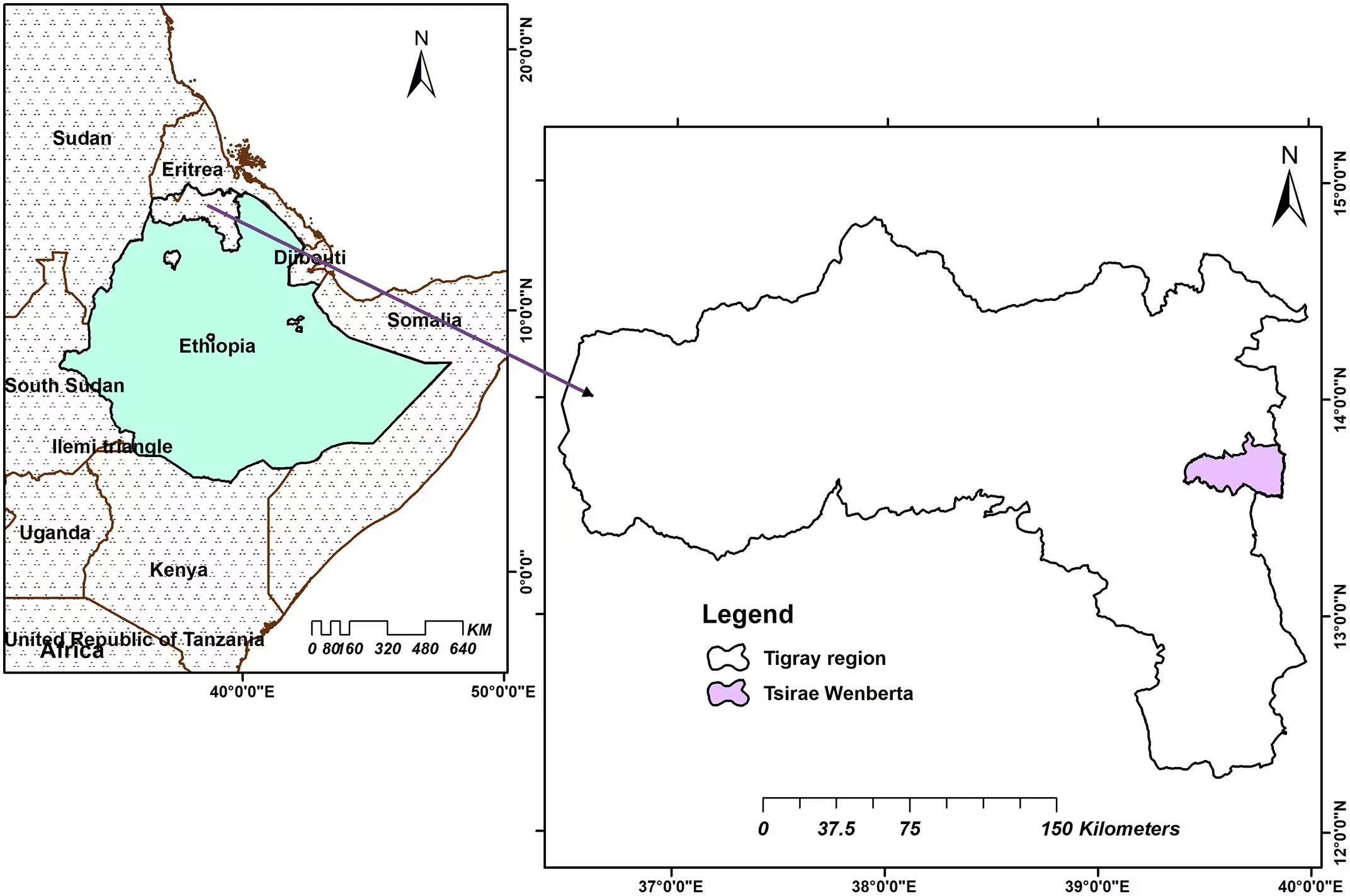
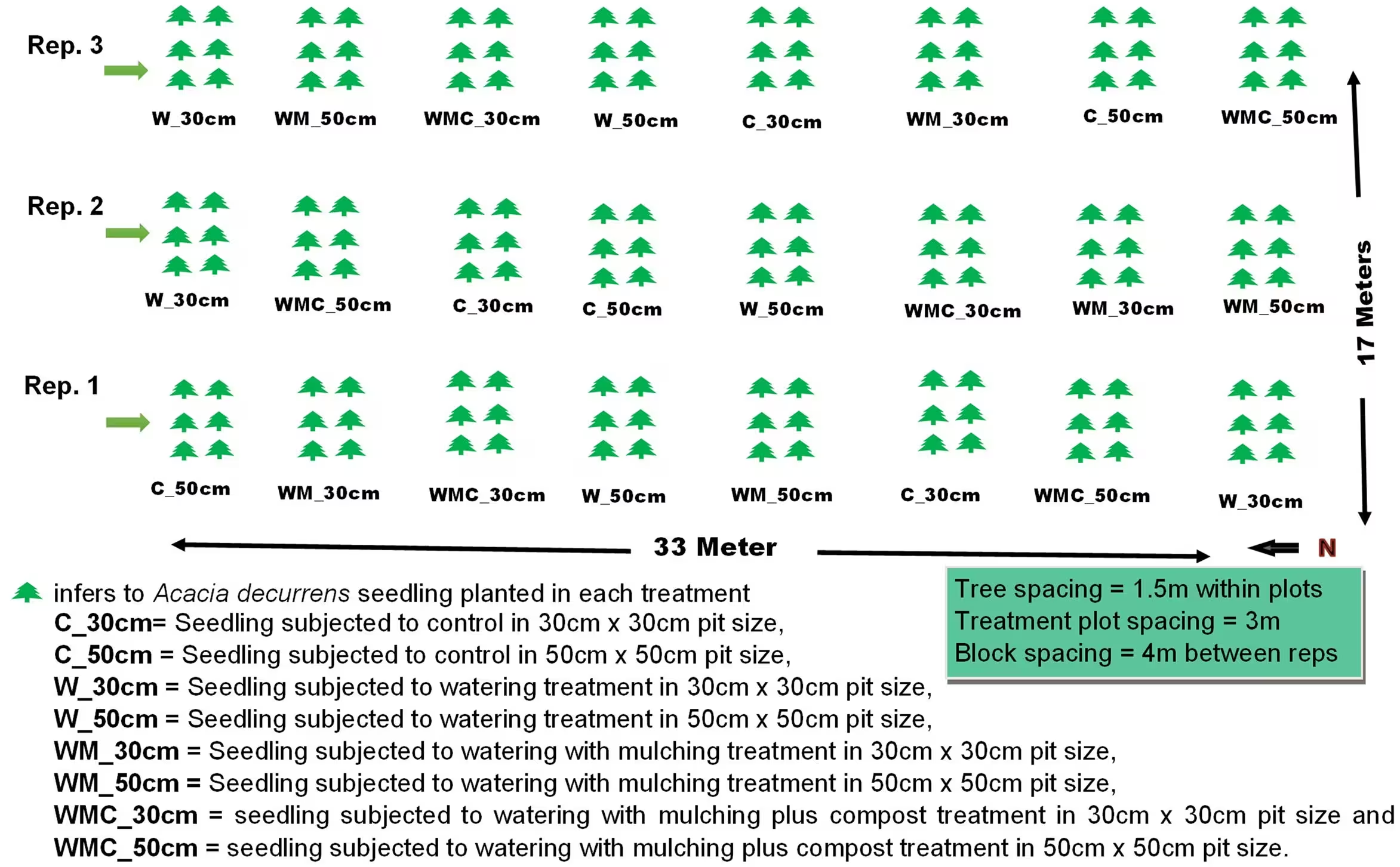
Land degradation severely strips drylands of their natural organic matter and soil nutrients, leaving vulnerable regions struggling to support plant life. To test whether targeted interventions can bypass years of slow recovery, the researchers established experimental plots in the semi-arid Tsirae Wenberta district of Eastern Tigray. They tested a factorial combination of two planting pit sizes, measuring 30 centimeters and 50 centimeters across, alongside four distinct management regimes ranging from an unmanaged control to fully integrated soil treatments.
The monitoring over a twenty-five-month period, published in PLOS Climate published in PLOS Climate, revealed that unmanaged control trees accumulated a total biomass carbon stock of roughly 47 tons of carbon dioxide equivalent per hectare. In stark contrast, trees receiving an integrated regimen of watering, mulching with dry grass, and periodic compost applications reached an impressive 140 tons of carbon dioxide equivalent per hectare. The findings indicate that active soil amendments can help fast-growing nitrogen-fixing trees bypass the typical delays seen in natural forest regeneration.
Aboveground Canopy Gains Versus Root Dynamics
The data showed a clear divergence in how different parts of the trees responded to management inputs. Aboveground biomass carbon was governed almost entirely by management intensity rather than the dimensions of the planting pit. While the control group averaged 38.3 tons of carbon dioxide equivalent per hectare aboveground, the fully integrated treatment surged to 123 tons in the same compartment, representing more than a threefold increase driven by enhanced canopy development.
Belowground root carbon stocks, however, displayed more complex interactions between soil amendments and pit dimensions. Smaller 30-centimeter pits occasionally promoted higher proportional root carbon allocation under specific treatments, whereas larger 50-centimeter pits combined with nutrient inputs optimized overall canopy growth. Statistical modelling confirmed that base-forming cations, available phosphorus, and soil organic carbon actively promoted carbon stabilization by improving soil structure and reducing bulk density.
What These Results Mean for Large-Scale Land Restoration
Dryland restoration projects frequently face high seedling mortality due to water shortages, low soil fertility, and environmental stress. The new evidence demonstrates that combining strategic soil amendments with optimized planting structures provides a reliable pathway to accelerate early climate-mitigation outcomes. By validating rapid carbon accumulation in managed woodlots, the work offers a quantitative foundation for integrating smallholder tree management into broader climate-finance and carbon-offset frameworks.
The authors note important boundaries to the study, pointing out that long-term monitoring is still required to track equilibrium dynamics and sustained stock trajectories over decades. Because the trials focused exclusively on a single fast-growing leguminous species in a specific regional climate, future research must validate whether similar carbon allocation patterns occur across diverse restoration taxa and soil types.
The research was published in PLOS Climate on November 19, 2026.
This article has been fact checked for accuracy, with information verified against reputable sources. Learn more about us and our editorial process.
Last reviewed on .
Article history
- Latest version
Reference(s)
- Gebre, Abrha Brhan., et al. “Effects of post-planting management practices on early Acacia mearnsii stand development and biomass carbon stock in drylands.” PLOS Climate, vol. 5, no. 11, November 19, 2026, pp. e0000992 Public Library of Science (PLoS), doi: 10.1371/journal.pclm.0000992. <https://doi.org/10.1371/journal.pclm.0000992>.
Cite this page:
- Posted by Anjali Singh