Processing Route Changes Strength and Wear Resistance in Refractory High-Entropy Alloys
Powder metallurgy creates harder heat-resistant alloys, while melting produces better compressive strength and ductility.
A novel alloy formulation made from five heat-resistant elements shows vastly different strengths depending on whether it is baked from powder or melted in a furnace. Researchers tested an equiatomic mixture of molybdenum, niobium, silicon, titanium, and tungsten, known as a refractory high-entropy alloy, to see how manufacturing techniques alter its physical durability.
How Powder Processing Creates Harder Metal Surfaces
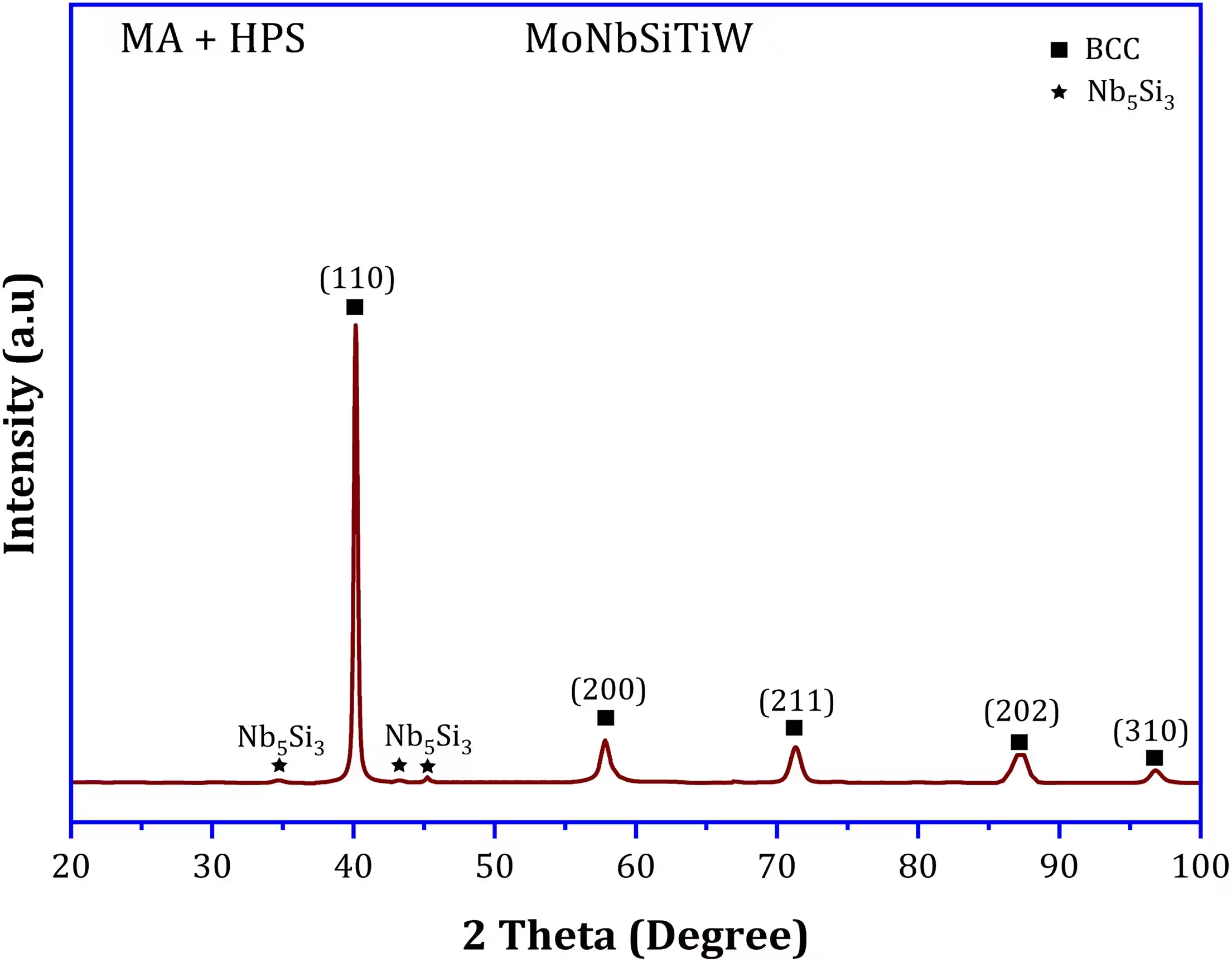
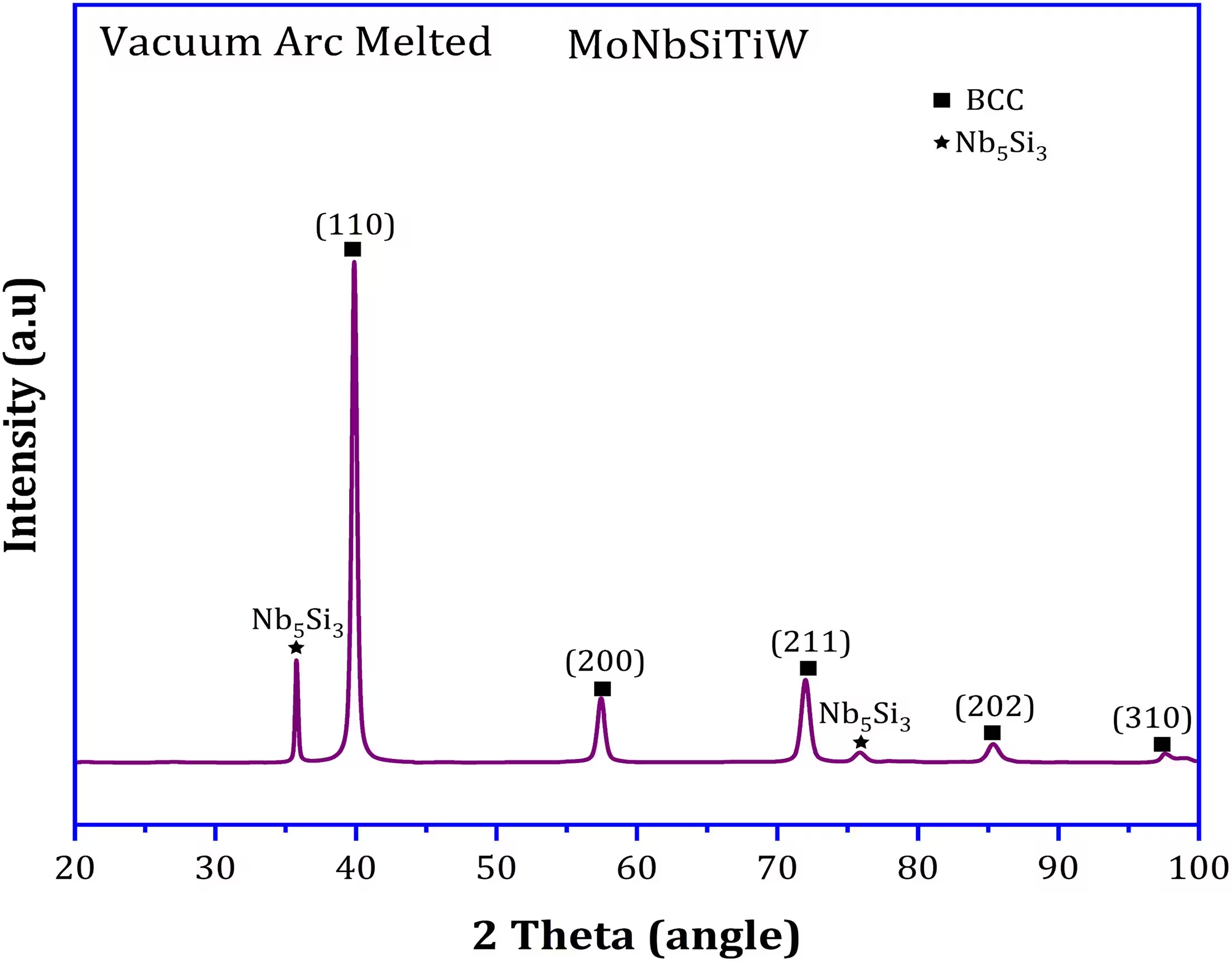
The team created identical chemical recipes using two distinct methods. The first route involved mechanical alloying through high-energy ball milling followed by hot-press sintering at 1600 degrees Celsius, while the second relied on vacuum arc melting to cast ingots from unmilled powders. When evaluated in detail, the work was published in PLOS One, detailing how the powder-metallurgy approach yielded nanocrystalline powders containing a metastable body-centered cubic phase alongside transient silicides.
After high-temperature consolidation, the sintered material transformed into a refined microstructure dominated by a body-centered cubic solid-solution matrix with a dispersed secondary phase of niobium silicide. This fine-grained architecture produced a Vickers microhardness of 1,120 Vickers, which outperformed the cast version significantly. The powder-processed samples also demonstrated superior wear resistance, recording a wear rate of 3.1 times 10 to the minus 5 cubic millimeters per Newton meter, which is roughly half the wear rate observed in the melted alloy.
Why Cast Ingots Win on Compression and Ductility
Despite the hardness advantages of powder metallurgy, the vacuum-arc-melted alloy dominated mechanical stress tests. The cast material achieved a room-temperature yield strength of 1,200 megapascals and an ultimate compressive strength of 1,960 megapascals, accompanied by a fracture strain of 12 percent. Under identical testing conditions, the sintered samples maxed out at a yield strength of 1,050 megapascals and a fracture strain of just 5 percent.
When researchers heated both materials to 1000 degrees Celsius, the cast alloy maintained its structural advantage by holding a yield strength of 700 megapascals and an 18 percent fracture strain. X-ray diffraction and microscopic imaging revealed that melting and re-solidifying the mixture produced coarser dendritic grains with a relative density approaching 99.07 percent. The powder-sintered samples, by contrast, reached a slightly lower relative density of 97.20 percent, leaving microscopic pores that made them more susceptible to premature cracking under heavy loads.
Weighing Corrosion and High-Temperature Oxidation Trade-offs
The choice of manufacturing method also dictated how the metal behaved in corrosive and oxidative environments. Electrochemical tests in a 3.5 percent sodium chloride solution showed that the cast alloy developed a more stable passive oxide film, resulting in lower corrosion current densities and superior resistance to metal dissolution.
However, when exposed to still air at 1000 degrees Celsius for 50 hours, the powder-sintered alloy turned the tables by gaining less mass than the cast version. Both materials formed protective outer layers composed of silicon dioxide, titanium dioxide, and niobium pentoxide, but the finer microstructure of the sintered samples helped restrict oxygen diffusion more effectively. These findings highlight that engineers can fine-tune this refractory alloy for specific industrial applications, choosing powder processing for wear resistance and oxidation protection, or melting for structural load-bearing tasks.
The research was published in PLOS One on November 19, 2026.
This article has been fact checked for accuracy, with information verified against reputable sources. Learn more about us and our editorial process.
Last reviewed on .
Article history
- Latest version
Reference(s)
- Prakash, Om., et al. “Comparative mechanical and physicochemical characterization of MoNbSiTiW refractory high-entropy alloys synthesized by hot-press sintering and vacuum arc melting.” PLOS One, vol. 21, no. 11, November 19, 2026, pp. e0362671 Public Library of Science (PLoS), doi: 10.1371/journal.pone.0362671. <https://doi.org/10.1371/journal.pone.0362671>.
Cite this page:
- Posted by Anjali Singh